


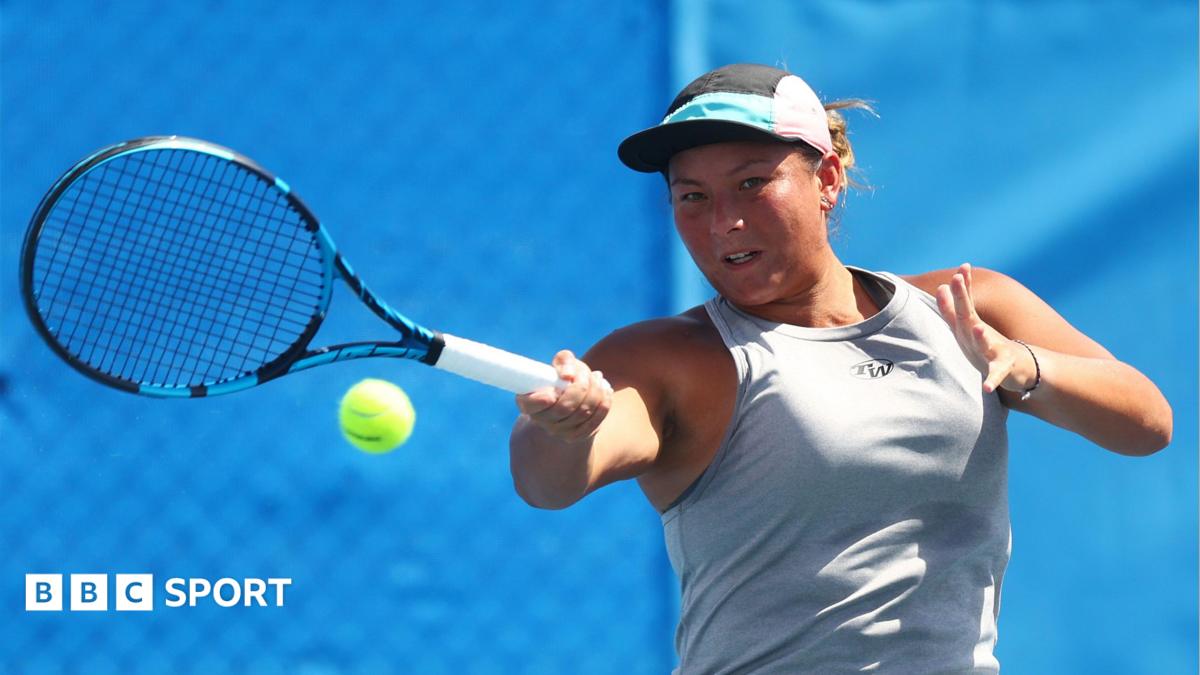
A United States federal court has dismissed British doubles player Tara Moore’s £15 million lawsuit against the Women’s Tennis Association, drawing a legal curtain on a case that has raised serious and uncomfortable questions about how professional tennis handles doping violations involving contaminated food.
nn
The United States District Court in New York ruled against Moore’s motion and directed that the matter be closed. For Moore, 34, who has maintained her innocence throughout and was actually cleared of intentional wrongdoing by an independent tribunal, the decision is another bitter turn in what she describes as an absolute ordeal.
nn
What the Case Was Actually About
nn
In April 2022, Moore tested positive for nandrolone and boldenone at a WTA 250 tournament held in Bogota, Colombia. Both substances are on the prohibited list, and a positive test for either would, in most circumstances, trigger a serious sanction. But Moore’s situation was never straightforward.
nn
An independent tribunal, after thorough examination, ruled in December 2023 that the source of the prohibited substances was contaminated meat consumed at the Colombian tournament. This is not a new phenomenon in sport. Meat contamination cases, particularly involving clenbuterol and other growth-promoting agents used in livestock farming in parts of Latin America, have surfaced in football, cycling, and athletics over the years. The science is well-established and widely acknowledged within international sporting bodies.
nn
Crucially, that same tribunal found Moore bore no fault or negligence whatsoever. She did not cheat. She did not knowingly consume a banned substance. The contamination happened to her, not because of her.
nn
Given that finding, Moore’s legal argument against the WTA centred on a specific and logical grievance: that the governing body failed to adequately warn players about the risks of eating meat at tournaments hosted in regions where contamination is a known concern. It is a reasonable argument. If a governing body knows a risk exists and says nothing, players cannot be expected to protect themselves from a threat they have not been told about.
nn
The Court’s Decision and Moore’s Response
nn
The New York court did not agree with Moore’s legal framing, dismissing the motion entirely. The ruling does not mean Moore cheated. It does not mean the WTA acted impeccably. It simply means the court found the legal basis for the damages claim insufficient to proceed.
nn
Moore’s reaction, speaking to BBC Sport after the ruling, was raw and pointed. She called the entire experience a “nightmare” and went further, saying it exposes how broken the anti-doping system is within tennis. Those are strong words. They are also words that deserve serious engagement rather than dismissal.
nn
The ITIA Appeal That Changed Everything
nn
Here is where the story becomes genuinely difficult to defend from the establishment’s perspective. After the independent tribunal cleared Moore of any intentional violation and found she bore no fault, the International Tennis Integrity Agency, known as the ITIA, chose to appeal that decision. The result of that appeal is a four-year ban that will keep Moore out of professional tennis until the start of the 2028 season.
nn
Read that again slowly. A player was found, by an independent body, to have done nothing wrong. No fault. No negligence. And yet she will spend four years on the sidelines, her career effectively consumed by a ban during what should have been some of her most productive years as Britain’s leading women’s doubles player.
nn
The logic of pursuing an appeal against a “no fault” finding is something the ITIA will need to justify far more convincingly than it has done publicly. Anti-doping frameworks are designed to protect clean sport. When they are applied in ways that punish athletes already exonerated of wrongdoing, they risk becoming instruments of institutional cruelty rather than guardians of fair competition.
nn
Why This Case Matters Beyond One Player
nn
Moore’s case is not an isolated curiosity. It sits within a broader pattern of contamination cases in sport that have tested anti-doping systems worldwide. The challenge with contamination defences is that they require athletes to prove a negative, to demonstrate that something happened to them involuntarily in circumstances often outside their control. The burden is heavy, the process is long, and the personal cost is enormous.
nn
Moore spent years fighting. She secured an independent verdict in her favour. She then watched that verdict get appealed. She attempted legal redress against the governing body she holds partly responsible. And now, at 34, she faces years away from the sport she built her career in, with no financial compensation from the lawsuit and a professional clock that keeps ticking regardless.
nn
For younger players watching this unfold, the lesson is a sobering one. Travel to certain tournaments, eat at the wrong venue, and the consequences could follow you for the rest of your career, regardless of what any independent body concludes about your innocence.
nh2>Where Tennis Goes From Here
nn
The WTA, the ITIA, and the broader tennis ecosystem have an opportunity to learn from the Moore case rather than simply move past it. At minimum, governing bodies should establish clear protocols for warning players when tournaments are held in regions with documented histories of meat contamination. That is not an extraordinary ask. It is basic duty of care.
nn
Stronger still would be a genuine review of whether the current appeals framework appropriately balances the integrity of anti-doping rules with fairness to athletes who have been cleared of intentional violations. A system that can exonerate someone and then ban them for four years on appeal is a system that needs examining with fresh eyes.
nn
Moore called it broken. A court in New York may have closed her case, but it has not closed the argument she is making. And that argument deserves a proper answer from the sport she gave her career to.
nn
So here is the question worth sitting with: if an athlete is found to bear no fault for a doping violation, is it ever just for the sport’s governing body to pursue an appeal that results in a multi-year ban? What exactly is that system trying to protect?