







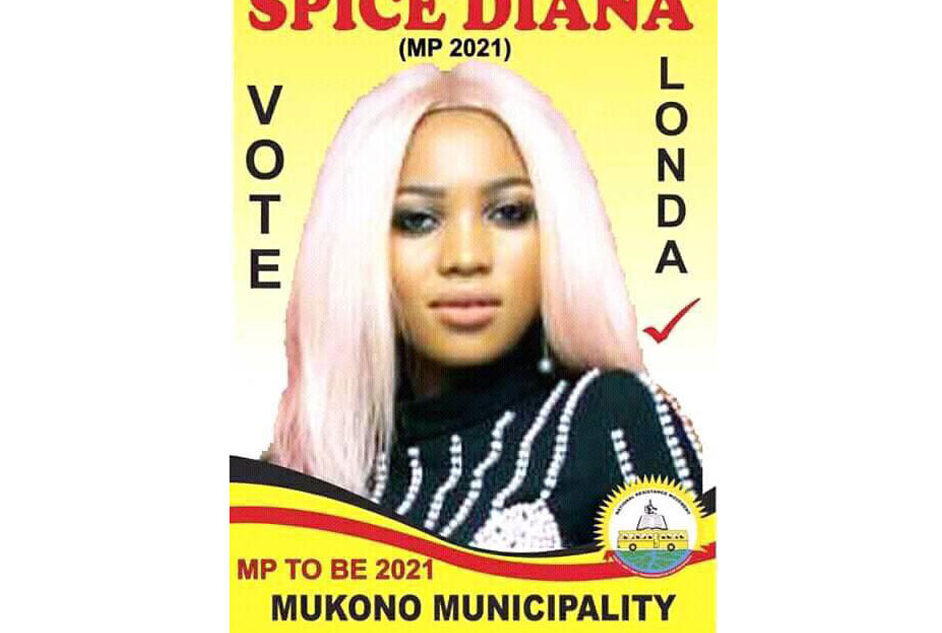
She is one of Uganda’s most recognized voices in music, but this week Spice Diana is commanding attention for something that has nothing to do with a chart-topping single. The singer stepped into a conversation that many in Uganda find uncomfortable, speaking bluntly about domestic violence and her personal stance on self-defense when confronted with physical aggression from a man.
Small Woman, Big Warning
In remarks that have since traveled quickly across Ugandan social media, Spice Diana made her position on domestic violence unmistakably clear. She does not intend to stand still and absorb a hit. If someone strikes her, she will strike back, and she says she will do so with enough force to ensure it never happens again. Her exact framing was direct and almost poetic in its confidence: “You hit me and I hit back hard and make you not ever think of touching me again. I am a small woman but don’t think about slapping me.”
There is something worth pausing on in those words. The acknowledgment that she is physically smaller than most men, followed immediately by a refusal to let that be used as a justification for violence against her, cuts to the heart of how many women across Uganda and the wider region navigate the daily reality of gender-based violence. Size, she argues, is not an invitation.
Context Matters: Domestic Violence in Uganda
Uganda’s relationship with domestic violence is complicated and, in many communities, still poorly addressed. Cultural norms have long placed women in positions where tolerating physical abuse is expected, even framed as a marker of patience or devotion. Women who speak up, fight back, or leave are often subjected to social judgment rather than support. Against that backdrop, a public figure with Spice Diana’s reach choosing to say out loud that she would defend herself is not a small thing.
The singer was careful to add an important distinction. She is not someone who goes looking for conflict with men or deliberately provokes confrontation. She does not torment anyone. But if aggression comes to her door, she is prepared. That nuance matters because it separates self-defense from aggression, a line that critics of strong women are often too quick to erase.
Why Celebrity Voices Shift the Conversation
Public figures occupy a strange but genuinely powerful position in how societies process difficult topics. When a politician speaks about domestic violence, it can feel scripted, part of a campaign or a press release. When a singer who millions of young Ugandan women admire says she refuses to be hit without consequence, that lands differently. It becomes personal. It becomes permission, in a way, for ordinary women who have never had the language or the platform to say the same thing.
Spice Diana’s willingness to attach her name and her public image to this position is the kind of cultural contribution that rarely gets measured in policy papers but changes things quietly and persistently. Young women hear this from someone they admire and perhaps feel a little less alone in their own struggles, or a little more certain that they deserve better than they have been told to accept.
Not Provocation, But Preparation
One of the more thoughtful elements of Spice Diana’s comments is that she framed self-defense not as retaliation driven by anger, but as preparation. She said she is always ready to defend herself. That is a mental posture, not a hair-trigger temper. There is a difference between someone who walks around spoiling for a fight and someone who has simply decided, quietly and firmly, that their body is not available for someone else’s violence. Spice Diana is clearly describing the latter.
This is also a practical conversation. Women who leave abusive situations face enormous risks. Women who fight back face legal and social consequences that men in the same situation rarely encounter. The reality of self-defense for women, particularly in communities where the justice system offers limited protection, is messy and real. Spice Diana is not offering legal advice. She is speaking from the gut, as a woman who refuses to see herself as a natural victim.
A Moment That Belongs to More Than Just Her
It would be easy to file this story under celebrity opinions and move on. That would be a mistake. What Spice Diana has done is add her voice to a conversation that Uganda, and honestly much of the world, needs to keep having without flinching. Domestic violence does not shrink in silence. It grows there.
Her words are not a policy solution. They are not a shelter or a hotline or a legal framework. But they are something that policy alone cannot manufacture: a cultural signal from a respected woman that surviving is not the ceiling, that dignity is non-negotiable, and that a small frame does not mean a small spine.
So here is the question worth sitting with: if women across Uganda heard this message not just from one singer but from families, communities, religious leaders, and institutions as well, what would that shift look like, and how long before we start building it together?