


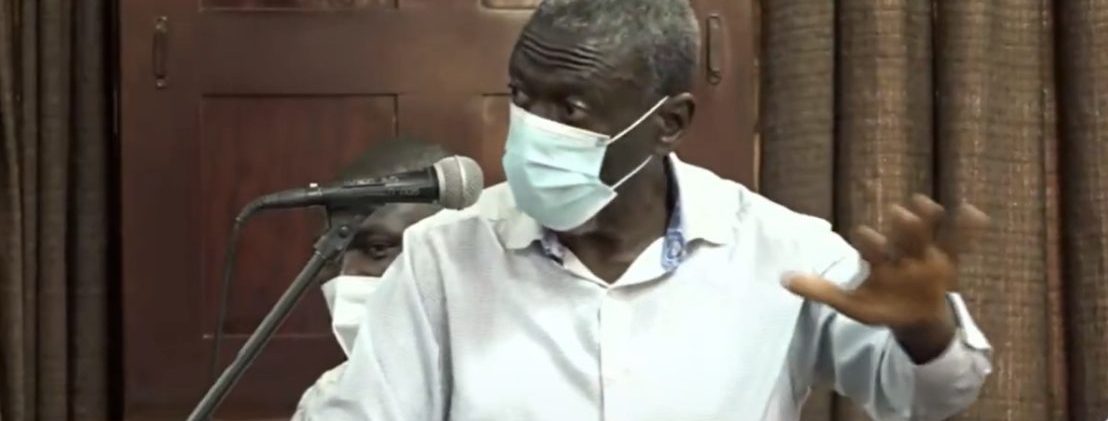
On Friday evening, jailed Ugandan opposition figure Dr. Kizza Besigye was transferred back to Luzira Prison from Mulago National Referral Hospital, hours after Uganda’s Health Minister publicly praised the medical team caring for him and described his condition as improving. His partner, Winnie Byanyima, told a very different story, one of a man still too weak to stand on his own, too frail to feed himself, and too physically compromised to speak with ease.
Two Accounts, One Evening
The gap between official messaging and on-the-ground reality could not be wider. Health Minister Dr. Chris Baryomunsi visited Besigye at Mulago Hospital on Friday morning and, by his own account, left satisfied. “He is steadily recuperating,” Baryomunsi said publicly, thanking the medical staff attending to the veteran opposition figure.
But when Byanyima left the hospital at around 4:30 that same afternoon, the man she saw bore little resemblance to the recovering patient Baryomunsi had described. She said Besigye could not walk without physical support, struggled to get words out, and was unable to eat on his own. His family had been taking shifts helping him with basic tasks, including feeding him during the admission.
Then, just after 7 p.m., prison authorities arrived and moved him. According to Byanyima, the transfer happened so abruptly that he was not even given time to finish a meal. “They did not even allow him to eat it,” she said, describing the moment he was taken back to Luzira as him being “bundled up.”
A Rehabilitation Plan That Never Got Started
What makes the timing of the transfer particularly jarring is what had reportedly been agreed just the day before. Byanyima said that doctors, Besigye’s personal physician, and a prisons official had sat down together and discussed a rehabilitation programme for him. The family understood that plan was being put in motion. Instead, he was returned to Luzira without notice and, by her account, mid-meal.
Neither Mulago National Referral Hospital nor the Uganda Prisons Service had released any detailed public medical assessment explaining his condition at the point of transfer. That silence has only added weight to the concerns being raised, because without a transparent medical report, there is no independent way for the public, or Besigye’s family, to reconcile the Health Minister’s optimistic morning assessment with the scene Byanyima described hours later.
The Pressure on Uganda’s Medical and Prison Systems
This is not just a story about one man’s health. It is a story about accountability. When a high-profile detainee is moved from hospital back to prison under circumstances his family describes as rushed and medically premature, the institutions involved owe the public a clear explanation. The Uganda Prisons Service and Mulago Hospital’s silence as of the time of the transfer is the kind of institutional opacity that erodes public trust.
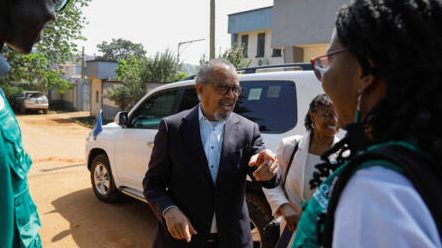
Byanyima, who serves in a senior international public health role and has spent years advocating for equitable access to healthcare globally, is not a voice that can be easily dismissed. Her proximity to the situation and her credibility mean that her account of Besigye’s condition will carry significant weight both inside Uganda and abroad.
What Should a “Steadily Recuperating” Patient Look Like?
There is a reasonable question buried in all of this: what does “steadily recuperating” actually mean? Medical progress is rarely linear, and a patient can be improving from a critical baseline while still being deeply dependent on care. But that nuance has to be communicated clearly, especially when a prisoner’s health is concerned and family members are watching the situation up close.
If Besigye was genuinely recovering but still required significant physical assistance, then the responsible course of action would have been to say so honestly, rather than allow a phrase like “steadily recuperating” to carry an implication of broader wellness that his family says does not match what they witnessed. The language matters. It shapes public perception and, in cases like this, it shapes how much scrutiny the authorities receive.
Family as the Last Line of Care
One of the more quietly devastating details in Byanyima’s account is that Besigye’s family had essentially become his care team at Mulago. They were helping him eat. They were providing the hands-on assistance that his condition required. That is not the picture of a patient who is ready to be moved back into a prison environment, where the level of personalised, family-supported care he was receiving at the hospital simply cannot be replicated.
The rehabilitation programme that had reportedly been discussed the previous day suggests that even those within the system understood he needed structured, ongoing recovery support. The fact that he was transferred before that programme could begin raises serious questions about who made the call to move him, and on what medical basis.
Transparency Is Not Optional Here
Uganda’s authorities now face a straightforward credibility test. Publishing a clear, independent medical assessment of Besigye’s condition at the time of his transfer would either confirm Baryomunsi’s account or raise uncomfortable questions about the decision to return him to Luzira so soon. Without that transparency, speculation will fill the vacuum, and it already is.
Byanyima’s protest is not simply the worry of a partner. It is a documented account of conditions that, if accurate, suggest a detainee was moved before he was medically ready. That deserves a direct and honest response from the institutions responsible for his welfare.
As this story continues to develop, the central question has to be asked plainly: if a prisoner cannot walk, speak clearly, or feed himself without help, is returning him to prison that evening the right call, and who bears responsibility for making it?