









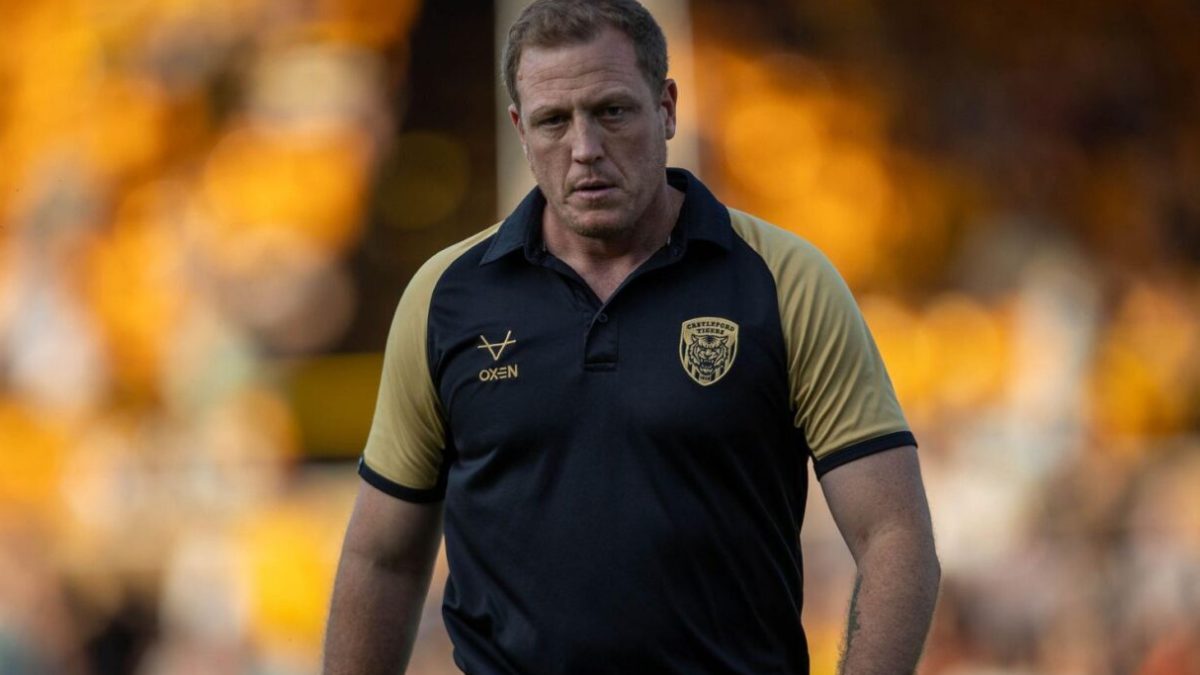
Castleford Tigers have confirmed that head coach Ryan Carr has parted ways with the club, citing personal reasons for his departure. The announcement, which came on August 21, 2026, drew a curtain on one of the shorter and more turbulent coaching stints in the Tigers’ recent history, leaving the West Yorkshire club to navigate the final stretch of the Super League season without the man they had brought in to change their fortunes.

A Tenure That Never Found Its Footing
Carr, who is 38 years old, arrived at Castleford last August with considerable promise attached to his name. His background as an assistant coach at NRL outfit St George Illawarra Dragons gave him a veneer of top-level rugby league credibility, and the club handed him a three-year deal to reflect their confidence in his vision. Twelve months later, that contract is gone, and the numbers tell a tough story: seven wins from 21 Super League matches, leaving the Tigers sitting ninth in the 14-team standings.
Seven from 21 is not the kind of return that inspires renewal talks. But the manner of this exit, the vagueness, the two-week stand-down, the carefully worded club statements, suggests there is considerably more to this story than a straightforward performance-based sacking. As reported by the BBC, the club stood Carr down two weeks before formally confirming his exit, and director of rugby Chris Chester acknowledged at the time that the club was “following a process.” That kind of language rarely accompanies a simple mutual parting of ways.
The Silence That Speaks Volumes
Owner Martin Jepson struck a tone of genuine regret in his public comments, saying he was “sorry” that Carr had left. He also acknowledged what many supporters had already noticed: that the club had been unable to give fans a clearer picture of what was unfolding behind closed doors. “We have had a difficult set of circumstances to deal with,” Jepson said, promising that the club’s decisions had always been made with its best interests at heart.
That kind of carefully calibrated language offers little comfort to a fanbase that has watched weeks of uncertainty play out in public view. Rugby league clubs are tight-knit communities. Castleford, in particular, draws fierce loyalty from a region that takes its sport seriously. When something goes wrong at the top and the club responds with institutional silence, the frustration among supporters tends to compound fast.
To Jepson’s credit, the search for a new head coach was confirmed to be starting immediately. That urgency matters. The club cannot afford to drift.
Chester Steps Up With Robinson and Netherton Alongside
In the interim, Chris Chester will continue to lead the team on the field for the remaining four matches of the season. Chester, who has prior experience steering the Tigers, will be joined by Jason Netherton and Luke Robinson in a coaching trio tasked with keeping the ship steady. It is a sensible arrangement for a club that needs stability over experimentation right now.
Chester’s first two matches in temporary charge have given the Tigers something to work with. Last week’s win at Hull FC was exactly the kind of result that steadies nerves and quiets, at least temporarily, the noise surrounding the club. Up next is a trip to St Helens on Saturday, a fixture that will test the squad’s resolve and Chester’s ability to keep momentum building.
What the St Helens Test Will Reveal
St Helens remain one of the benchmarks in Super League, and facing them away from home, in the middle of a coaching transition, is a serious challenge. How the Tigers perform there will offer the first real indication of whether the squad has been liberated by the change or unsettled by it. Some players thrive when a coaching shake-up clears the air. Others lose their bearings. The next few weeks will sort out which camp Castleford’s squad falls into.
What Comes Next for the Tigers
The immediate priority is results. Ninth place in a 14-team table is not comfortable ground, and the Tigers will want to finish the season with enough dignity to give the next head coach something to build on rather than rebuild from scratch.
The longer-term question is about the kind of appointment the club makes. Bringing in an NRL-connected coach was a statement of ambition last summer. That experiment has not delivered the desired outcome. Whether Castleford goes back to the well of overseas talent or pivots toward a proven Super League operator will say a great deal about how the club’s leadership has interpreted the past year.
Ryan Carr arrived with genuine credentials and leaves with his reputation intact enough, given that the reasons behind his exit remain unclear to the public. He deserved better clarity, as did the fans. What the Tigers owe themselves now is a recruitment process sharp enough to avoid repeating a season of uncertainty and underperformance.
With four games left and a new coaching search already underway, Castleford have a narrow window to salvage something meaningful from 2026. The question worth asking is this: does the club have the infrastructure and the leadership clarity to make the right call on the next appointment, or will they find themselves in the same position twelve months from now?