










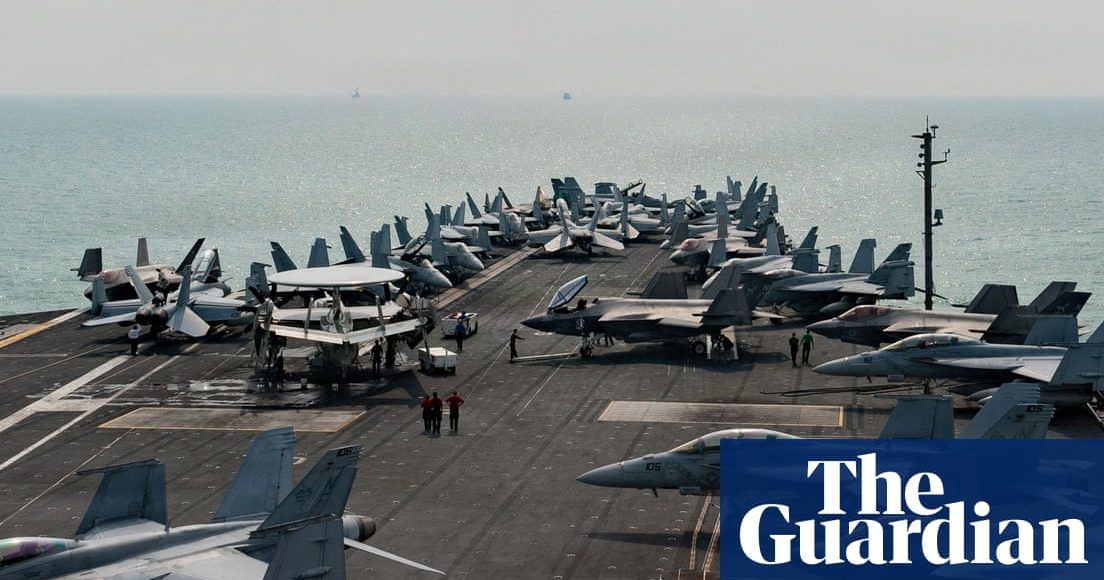
Another aircraft carrier has crossed into the Middle East, and for the families of thousands of American sailors, that arrival cannot come soon enough. The USS George Washington reached the region on Wednesday, August 19, according to a US Central Command announcement made the following day, positioning itself to relieve the USS Abraham Lincoln from what has become one of the most grueling deployments in recent Naval memory.
A Deployment That Pushed Sailors to Their Limits
The USS Abraham Lincoln’s time in the Middle East has stretched well beyond what most deployments demand, earning it the unwanted distinction of a record-setting tour. But the length alone does not tell the full story. According to accounts from sailors’ families, life aboard the Lincoln deteriorated in ways that went far beyond the usual hardships of extended time at sea.
Reports filtered back to shore of persistent plumbing problems, supply shortages, and a crew whose morale had sunk to troubling depths. These are not trivial complaints. On a warship that functions as both a military platform and a floating city, broken infrastructure and inadequate supplies do not just cause discomfort. They erode the basic sense of dignity that keeps a fighting force sharp and cohesive.
Families of those stationed aboard the Lincoln have been vocal about their concerns, and their accounts paint a picture of a ship straining under the pressure of an unusually long deployment. The Navy, for its part, has not announced a specific return date for the Lincoln, meaning sailors and their loved ones are still waiting for a firm homecoming timeline even as the Washington settles into the region.
The Washington Arrives: What We Know
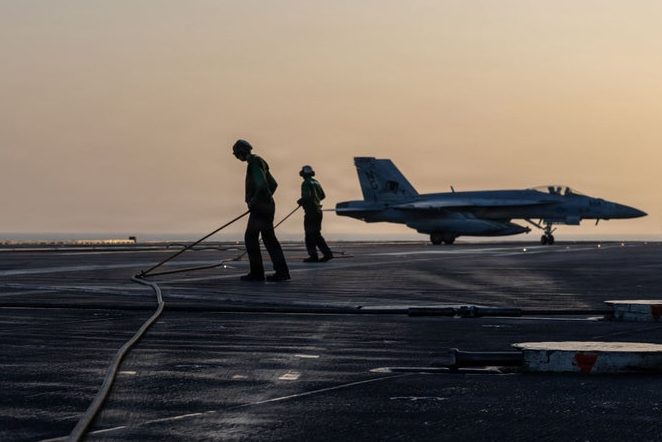
US Central Command confirmed the USS George Washington’s arrival in the Middle East and shared an image showing sailors at work on the flight deck as the carrier moved through the Arabian Sea. The visual was a deliberate signal, a reminder that American naval presence in the region remains continuous and capable regardless of the strain on any individual vessel.
The Washington’s arrival marks a transition point, though not yet an official handover. No timeline has been set for the Lincoln’s departure, which means the relief many have been hoping for is close but not yet sealed. The Guardian’s reporting on the situation captures the weight of this moment for the crews involved and the families watching from home.
Why This Matters Beyond the Headlines
Aircraft carrier deployments are never comfortable. The Navy has always asked a great deal from the men and women who serve aboard these massive vessels, and sailors sign up knowing that long stretches away from home are part of the deal. But there is a threshold between demanding and unsustainable, and the Lincoln’s deployment appears to have tested that line.
When basic systems like plumbing fail and supply chains fall short, the psychological toll compounds quickly. Crew members dealing with inadequate facilities while simultaneously managing the operational demands of a Middle East posting face a burden that goes beyond physical fatigue. Retention, readiness, and long-term trust in military leadership all take hits when sailors feel their basic needs are being neglected.
The Navy will need to reckon with those questions as the Lincoln’s deployment winds down. The arrival of the Washington solves the immediate operational problem of maintaining carrier presence in the region, but it does not automatically resolve the harder conversation about what the Lincoln’s crew experienced and why.
The Bigger Picture: Carrier Presence and Strategic Demands
The United States has maintained a consistent naval footprint in the Middle East for decades, and that commitment has only intensified during periods of regional tension. Aircraft carriers are the most visible expression of American military power projection, capable of launching air operations, deterring adversaries, and responding rapidly to crises across a vast geographic range.
That strategic value is precisely why the Lincoln was kept in theater for as long as it was. The demands of the region do not pause for maintenance schedules or crew welfare concerns. But the episode raises legitimate questions about how the Navy manages its carrier rotation in high-pressure environments, and whether the systems in place are adequate to protect both the mission and the people executing it.
The USS George Washington stepping in represents a textbook handoff in theory. Whether it unfolds smoothly in practice, and whether the Lincoln’s return home brings any formal review of what went wrong aboard that ship, remains to be seen.
Waiting for the Word
For now, the sailors aboard the USS Abraham Lincoln are still waiting. The ship that is supposed to replace them is in the region. The machinery of the handover is in motion. But until a date is confirmed and orders are issued, thousands of men and women remain at sea in conditions their own families have described as deeply troubling.
The Navy owes those sailors, and the public, a transparent account of how the Lincoln’s deployment reached this point. A record-length tour marked by infrastructure failures and low morale is not a footnote. It is a question of institutional responsibility, and it deserves a clear answer.
As the USS George Washington settles into position and the Middle East watches another carrier take its place on the horizon, the question worth asking is this: when the USS Abraham Lincoln finally returns to port, will the Navy treat what happened aboard that ship as a lesson worth learning, or simply as a chapter to close and move past?