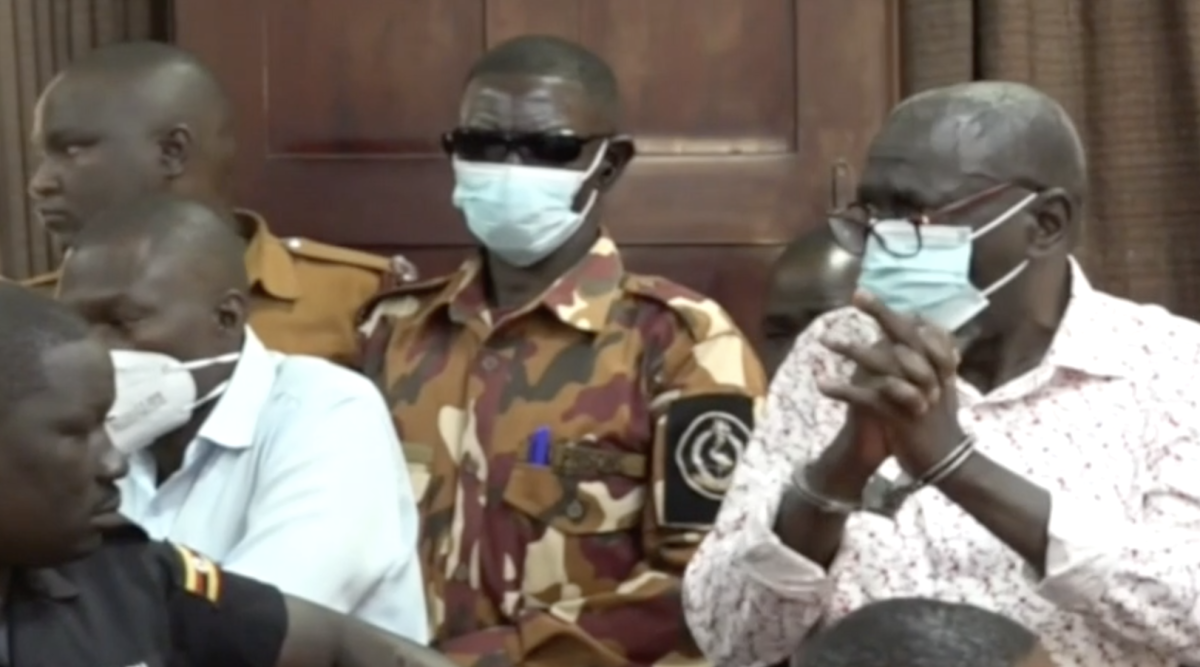
Senior leaders within the Peoples’ Front for Freedom are pushing hard for a court to authorize Dr Kiiza Besigye to receive specialist medical care outside Uganda, arguing that his current condition at Mulago National Referral Hospital has shown little meaningful improvement and continues to raise serious concern among those closest to him.
The push comes as Besigye, one of Uganda’s most prominent opposition figures, remains admitted at Mulago following his return to the country. His allies within the PFF say that despite the hospitalization, his health has not shifted in any significant direction, a situation they describe as deeply worrying and one that demands a level of medical expertise they believe is not readily available within the country’s borders.
What the PFF Is Asking the Courts to Do
The PFF leaders are not making a casual request. They want a court order, a legally binding directive that would compel the relevant authorities to allow Besigye to travel abroad for what they are calling specialized medical attention. The argument is straightforward: if the facilities available domestically have not produced visible improvement, then the patient deserves access to facilities that might.
This kind of legal route is not unusual in politically charged cases across the region. When a high-profile detainee or patient’s care becomes a point of public dispute, their supporters often turn to the judiciary as the only arena where decisions can be formalized and enforced. The PFF appears to be following precisely that playbook, betting that a court ruling carries more weight than a public appeal.
According to NTV Uganda’s reporting on the matter, the PFF’s concern centers on the fact that Besigye’s condition has remained largely unchanged since his admission to Mulago, which they say only strengthens the case for seeking care elsewhere.
The Government’s Counter: Nothing to Panic About
Health Minister Dr Chris Baryomunsi has taken a notably different position. Writing on his official X account, Baryomunsi told Ugandans directly that Besigye’s condition is not cause for alarm. The message was measured and deliberate, the kind of public communication designed to calm nerves and redirect the conversation away from urgency.
Baryomunsi’s statement carries institutional weight. As Health Minister, his word on the state of a patient receiving care within the public health system is not easy to dismiss outright. But for the PFF and Besigye’s supporters, the reassurance rings hollow without independent medical verification or visible signs of recovery.
There is a broader credibility question here. When a sitting minister offers public assurance about the health of a political opponent who is simultaneously the subject of legal proceedings, the audience on both sides of the political divide will receive that message through very different filters. Trust, in such moments, is not a given.
A Pattern That Plays Out Across Africa
The dispute over Besigye’s medical care fits into a pattern seen repeatedly across the continent, where the health and treatment of opposition figures held or monitored by the state becomes a political flashpoint. The questions that follow are almost always the same: who controls access to information about the patient’s condition, who gets to decide what care is adequate, and who bears responsibility if the situation deteriorates?
These are not abstract questions. They have real consequences for individuals whose physical wellbeing becomes entangled with political narratives. And they place enormous pressure on institutions like courts and health ministries to demonstrate that their decisions are driven by professional judgment rather than political convenience.
Mulago, as Uganda’s principal national referral hospital, carries significant capacity. But the PFF’s position implies that what Besigye needs goes beyond what any domestic facility can currently offer, a claim that, if substantiated by independent medical opinion, would be difficult for any court to ignore.
What Happens Next
The outcome now rests substantially on the court’s response to the PFF’s application. If granted, the order would represent a significant moment, both for Besigye personally and for the broader conversation about how Uganda handles the medical rights of individuals caught in politically sensitive circumstances. If denied, the PFF will almost certainly escalate through public pressure, legal appeals, or both.
Baryomunsi’s public position may also face scrutiny in court, where reassurances posted on social media carry less weight than documented medical assessments. The minister’s credibility on this point will depend heavily on whether the government is willing to allow independent medical professionals to examine and publicly speak to Besigye’s actual condition.
For now, the standoff continues. A prominent opposition figure lies in a public hospital. His allies are seeking legal intervention to get him abroad. The minister responsible for the country’s health system says there is no emergency. And somewhere between those two positions, the truth about Dr Kiiza Besigye’s health waits to be properly established.
Who should have the final say on the medical care of a politically sensitive patient: the government ministries that run the hospitals, or an independent court responding to the patient’s own camp? Share your thoughts below.