






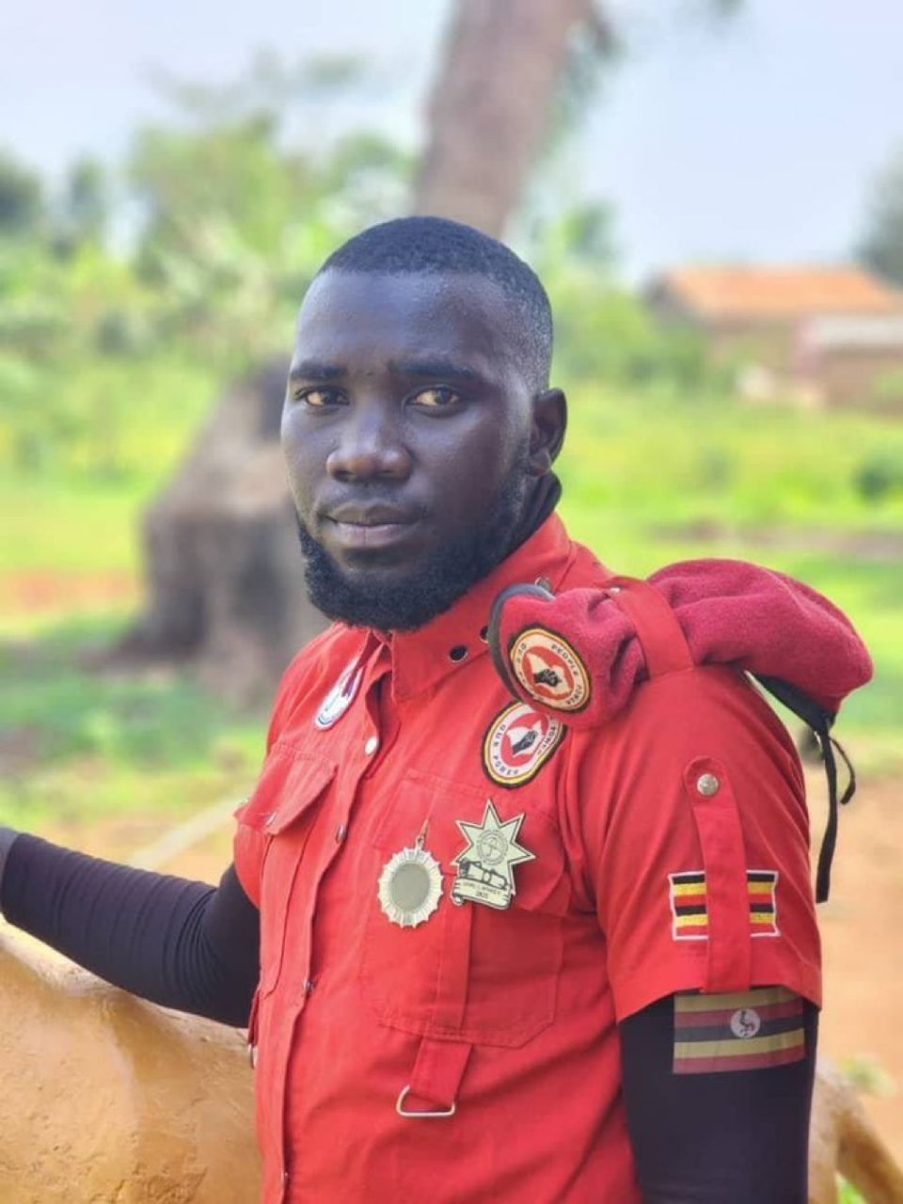
Paul Musoke, a supporter of Uganda’s opposition National Unity Platform, died on Saturday, August 30, 2026, after spending days fighting for his life in hospital following a suspected arson attack that left him with catastrophic burn injuries. His death, announced by NUP Secretary General David Lewis Rubongoya, has added another grim chapter to what has been a turbulent period for the opposition in Uganda.
A Life Lost to Violence
Musoke’s death was not sudden in the way that most tragedies are. It was slow, painful, and watched. He had been battling severe burns in hospital since the attack, which took place last week under circumstances that police have yet to formally explain to the public. That silence from law enforcement has only deepened the grief and anger within NUP’s ranks.
Rubongoya confirmed the news on Saturday, expressing the kind of sorrow that goes beyond the formal language of press statements. “He passed away a short while ago after a brave fight against the severe injuries he sustained in last week’s horrific arson attack,” he said, according to Chimpreports. The phrase “brave fight” says something important: Musoke held on. He just could not hold on long enough.
The Party Calls for Justice
Rubongoya did not stop at mourning. He made it clear that the party expects accountability. “We remain hopeful that in due course, those who masterminded the cruel act leading to this tragedy will face justice,” he said. The word “masterminded” is deliberate. It signals that NUP believes this was not a random act of violence but something planned, something targeted.
That framing matters, especially in a political climate where opposition supporters in Uganda have repeatedly raised concerns about their safety. Whether or not investigators eventually confirm that the attack was politically motivated, the perception among NUP members is already shaped. When your colleague dies in a fire that should never have happened, neutrality becomes a very hard thing to maintain.
As of the time of reporting, Uganda Police had not released any public statement detailing the circumstances of the attack or indicating how far investigations had progressed. That silence is frustrating for a party already in mourning and a public that deserves answers.
A Final Journey Home
NUP announced that Musoke’s body would be brought to the party’s headquarters on Sunday afternoon, giving supporters, colleagues, and party officials the chance to pay their respects in a communal act of grief. There is something deeply significant about that decision. Political parties are not just institutions. At their most human, they are communities, and communities bury their dead together.
From the party headquarters, Musoke’s body was to be transported to Kirinya-Bweyogerere for an overnight vigil, a tradition that allows family and friends to gather through the night, share memories, and collectively process loss in the way Ugandan culture has long understood grief: not as a private matter but as a shared one.
His burial is scheduled for Monday, August 31, at Bwerenga-Kawuku along Entebbe Road. A road that thousands travel daily will become, for at least one day, the final route for a man whose name many outside NUP circles may not have known before last week, but whose story now carries weight far beyond his community.
What This Moment Reveals
The death of Paul Musoke sits at the intersection of personal tragedy and political reality. Uganda’s opposition space has never been without risk. Supporters, activists, and officials across various movements have over the years faced intimidation, violence, and worse. Each incident that goes unresolved adds to a pattern that erodes trust, not just in institutions but in the very idea that dissent can be safe.
Musoke was not a cabinet minister. He was not a headline name. He was a supporter, the kind of person who forms the backbone of any political movement, who shows up, who believes, who puts something of himself into a cause. And now he is gone, taken by flames in circumstances still shrouded in official silence.
The question of who is responsible remains open. The question of whether justice will actually be delivered is, given the history of such cases in the region, a far harder one to answer with confidence. NUP has made its position clear. It wants prosecution. It wants accountability. Whether the state responds with the same urgency the party is demanding remains to be seen.
A Community Grieves, A Country Watches
Beyond the politics, there is a family that has lost someone. There are friends who will attend a vigil tonight in Kirinya-Bweyogerere and stand at a graveside in Bwerenga-Kawuku on Monday morning with the particular heaviness that comes from knowing a death was preventable. Arson is not an act of nature. It is a choice made by human beings, and that choice ended a life.
Uganda’s political landscape is no stranger to mourning. But familiarity with grief does not make it lighter. If anything, it makes the demand for answers more urgent, not less.
As Paul Musoke is laid to rest, the conversation his death has forced into the open deserves to stay there: how much longer will political violence, suspected or confirmed, go without consequence, and what does that cost the people who simply want to participate in their country’s future?