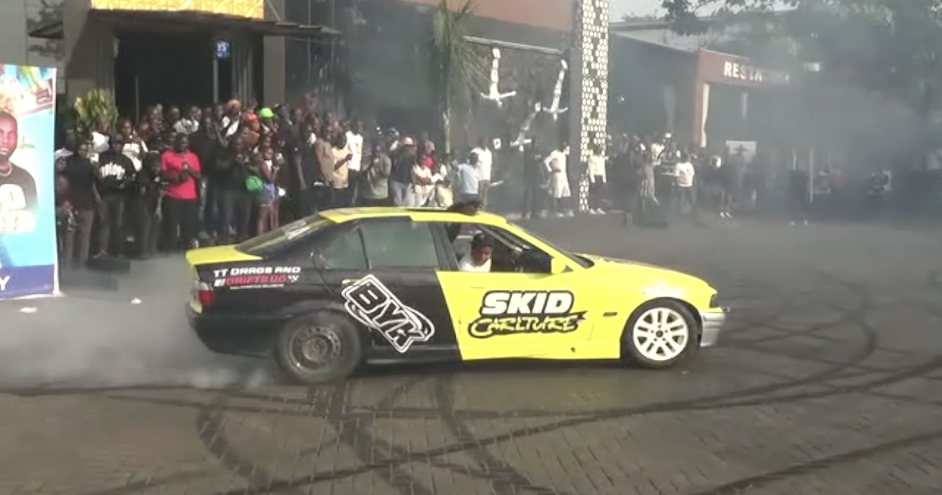
Something new is happening on the shores of Nyenga Town Council, and it has nothing to do with fishing. On August 22, 2026, the inaugural Smoke and Steel East Africa motorsport event roars to life at Banana Resort Beach, bringing together fourteen confirmed crews from Uganda and South Africa in what promises to be a landmark moment for competitive motor racing in the region.
This is not just another weekend of wheel spin and exhaust fumes. It is the first chapter of what organizers clearly intend to be a recurring and growing chapter in East African motorsport culture. The choice of Nyenga Town Council as the host location is itself a bold move, steering away from the usual urban circuits and planting a motorsport flag deep in a setting that blends natural scenery with raw competitive energy.
Scrutineering Done, Engines Ready
Before a single tyre burned rubber in anger, the serious business of scrutineering took place at the event venue on August 21. All fourteen competing crews passed through the technical inspection process, a standard but critical procedure in any organized motorsport championship. Scrutineering exists to ensure that every car on the grid meets safety and technical specifications, protecting both drivers and spectators. The fact that all fourteen crews cleared this stage signals that the field is set and the competition will be legitimate, tightly contested, and safe.
Fourteen crews might not sound like a massive grid by international rally standards, but for an inaugural event that is still building its identity and fanbase, it represents a solid foundation. Championship series almost always start small and grow. What matters most at this stage is the quality of the competition and the credibility of the organizing framework around it.
Uganda Meets South Africa: The Cross-Continental Angle
One of the most interesting dimensions of this event is the geographical spread of the competing teams. Uganda and South Africa are not neighboring countries. South Africa sits thousands of kilometres to the south, separated by multiple borders and entirely different motorsport cultures. South African motorsport has a long, well-documented history, with a domestic rally scene that has produced competitive drivers across various continental championships.
Uganda, for its part, has a passionate and growing motorsport community. Local rallying events have drawn enthusiastic crowds over the years, and the country has produced drivers who have competed at East African Championship level. Bringing South African crews into a Ugandan-hosted event creates an immediate quality benchmark. It gives Ugandan drivers a measuring stick against a different regional tradition of driving, and it gives South African crews an unfamiliar terrain to navigate.
That tension, Uganda’s home advantage against South Africa’s technical depth, is exactly the kind of storyline that makes motorsport compelling to watch.
Why Banana Resort Beach in Nyenga?
Venue choices in motorsport are never accidental. Banana Resort Beach in Nyenga Town Council offers a combination of factors that clearly appealed to the event’s organizers. A lakeside resort setting provides natural spectator areas, logistical infrastructure for hospitality, and an aesthetic backdrop that separates this event from a dusty, nondescript gravel stage in the middle of nowhere.
There is also a community dimension here. Hosting a major motorsport event in Nyenga puts the town council on the map in a way that few other events could. The economic ripple effect of out-of-town visitors, media coverage, and team entourages spending money locally is the kind of quiet benefit that rarely makes headlines but matters enormously to smaller towns.
For Uganda’s motorsport ecosystem, which has traditionally been centered around Kampala and larger urban hubs, a successful event in Nyenga could open conversations about decentralizing the sport and taking it to audiences who would never ordinarily attend a rally stage.
What an Inaugural Event Needs to Prove
First editions carry a particular kind of pressure. Every detail that goes wrong gets amplified. Every detail that goes right sets a precedent. The Smoke and Steel East Africa event needs to deliver on at least three fronts to earn a second edition.
First, the racing itself must be competitive and fair. Fourteen crews is a workable number, but the championship format needs to reward genuine skill and punish mechanical misfortune without feeling arbitrary or poorly officiated.
Second, the spectator experience at Banana Resort Beach needs to match the promise of the venue. A lakeside setting is a natural asset. Squandering it with poor crowd management, inadequate facilities, or weak event programming would be a missed opportunity.
Third, and perhaps most critically, the event needs visibility. Motorsport in Africa often suffers from a coverage deficit. Races happen, results are recorded, and then the weekend disappears without making any lasting impression on the wider public. Building media momentum around Smoke and Steel East Africa, from pre-event coverage through to post-event highlights, is what separates a one-off occasion from the beginning of something permanent.
The Bigger Picture for East African Motorsport
East Africa already has an established rally championship with a proud heritage stretching back decades. The Safari Rally in Kenya carries international prestige, holding a place on the FIA World Rally Championship calendar. Uganda’s own national rally events have grown in ambition and attendance over the years. Tanzania, Rwanda, and Ethiopia all have communities of drivers and enthusiasts pushing their domestic scenes forward.
Into this landscape steps Smoke and Steel East Africa, a new name with a new brand identity and an apparent ambition to create cross-border competition at a level below the top-tier international events but above purely local club racing. That middle tier is exactly where regional motorsport culture gets built. It is where drivers develop, sponsors see value, and fans develop loyalty to specific names and teams.
If the Nyenga event delivers, it could carve out a niche that benefits the entire regional motorsport community, giving drivers a new competitive platform and giving fans another reason to get excited about motor racing in this part of the world.
The Road Ahead
As the fourteen crews prepare for competition at Banana Resort Beach, the mood around Nyenga is one of anticipation. This is Uganda hosting an international motorsport contest on home soil, and there is genuine pride attached to that. Whether the event becomes an annual fixture, grows its grid, and attracts sponsors willing to back its ambitions remains to be seen. But the wheels are literally in motion, and that is always where great stories begin.
Will the Smoke and Steel East Africa event become the grassroots platform that East African motorsport has been quietly waiting for, or will the pressure of a debut weekend prove too steep a climb? Watch this space, and better yet, share your thoughts below, are you backing a Ugandan crew, or do you think the South African contingent has the edge?