










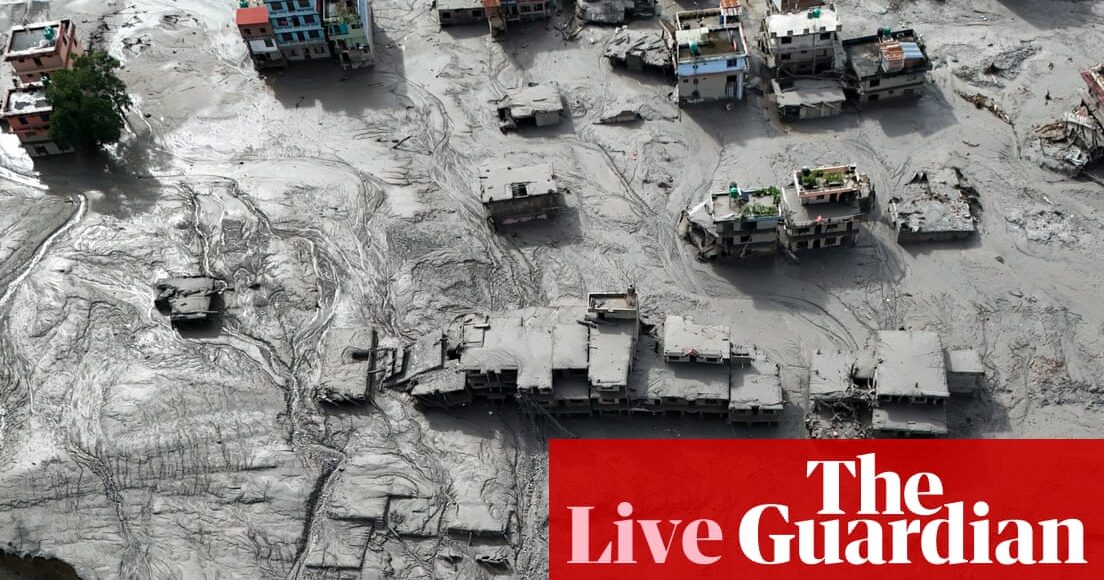
The death toll from the catastrophic flash floods that have torn through Nepal is closing in on 400, with authorities bracing for what could become the second act of a disaster that shows no sign of relenting. Nearly 1,400 people remain missing, the majority of them tourists who were in the region when the floods struck, and rescue teams are working in brutal conditions against steep mountain terrain and damaged infrastructure.
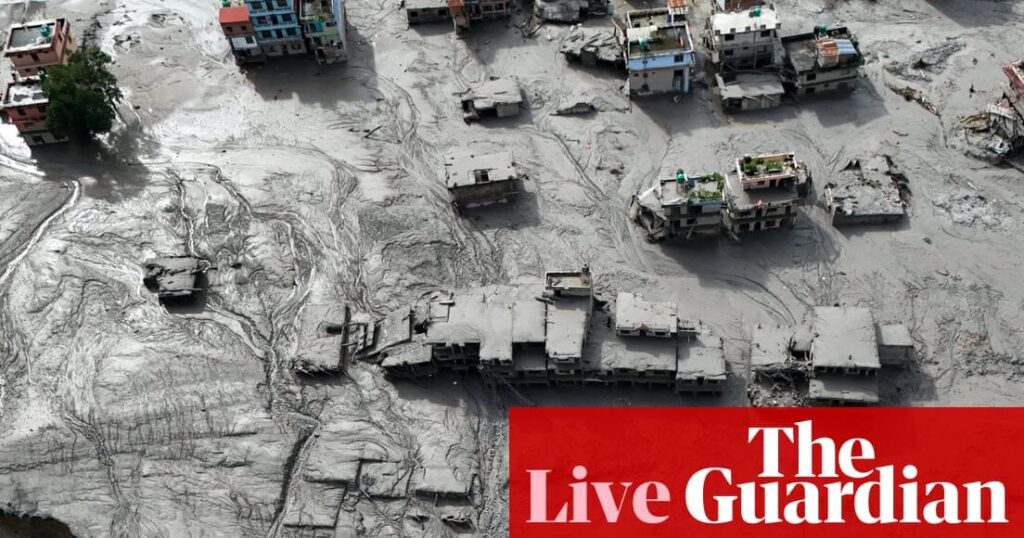
As if the initial devastation were not enough, officials are now sounding urgent alarms about a lake that has been swelling rapidly at the disaster site. The fear is stark and unambiguous: if that lake breaches, communities downstream that have barely begun to process the first wave of destruction could face another, potentially more violent surge of water and debris.
A Disaster Unfolding in Real Time
Flash floods in Nepal are not a new story. The country sits at the collision point of some of the world’s most extreme geography, where monsoon rains funnel through narrow valleys and the Himalayas act as both a barrier and an accelerant for weather systems. But the scale of what has happened this week has stunned even experienced observers of Himalayan hydrology.
The floods have already claimed the lives of hundreds of people, and the human cost continues to mount as rescue teams reach villages that were cut off in the initial chaos. Roads have been washed away, bridges have collapsed, and communication lines in some areas remain severed. The logistical challenge of reaching survivors is enormous, and time is the cruelest variable in that equation.
The crisis has been tracked closely by international media as the full scope of the tragedy emerges, with eyewitness accounts filtering in from both the Nepali side and across the border into Tibet, painting a picture of a catastrophe that spared no one in its path.
Fear and Chaos at the Tibet Border
The flooding did not stop at Nepal’s borders. Eyewitness accounts emerging from the Tibetan side of the frontier have added a harrowing dimension to the story. One woman, identified by the surname Fang, described a terrifying encounter near Gyirong town, where she and her travel companions were heading toward Nepal on the morning the floods struck.
Her group encountered the floodwaters roughly four kilometres from Gyirong port, by which point trees and electricity poles had already been felled by the force of the water. She told local media that retreating was not an option the group felt they could safely take, so they reversed their vehicle slowly as the water bore down on them. “I was really scared. My whole body was trembling,” she said. It is the kind of account that cuts through the abstraction of statistics and puts a human face on what these numbers actually mean.
The proximity of the disaster to a major border crossing raises additional complications around coordinating international rescue and relief efforts, and the flow of missing persons information across two countries with different administrative systems.
The Lake That Could Change Everything
Perhaps the most urgent concern right now is not what has already happened but what might still be coming. A lake at the disaster site is rising at a rate that has alarmed local authorities and hydrology experts watching the situation. Glacial lake outburst floods, known in the field as GLOFs, are a well-documented hazard across the Himalayan region, and the conditions described here fit the profile with uncomfortable precision.
These events occur when a natural dam, often made of ice or loose glacial debris, fails under the pressure of accumulated water. When it goes, it goes fast. The water releases in a surge that can travel at extraordinary speed down mountain valleys, obliterating everything in its path before communities have any real chance to evacuate. Nepal has experienced GLOFs before, but the timing here, on top of an already catastrophic flood event, would stretch the country’s emergency response capacity to its absolute limit.
Authorities have not yet confirmed a breach, but the warning itself carries enormous weight. Downstream communities are being urged to remain on high alert, and the window for preventive action is narrow.
The Human Toll and What Comes Next
With nearly 1,400 people still unaccounted for, and a significant proportion of those believed to be tourists rather than local residents, the international dimension of this crisis is impossible to ignore. Families in multiple countries are waiting for news about people who were trekking or travelling in one of the world’s most spectacular and, it turns out, most dangerous landscapes.
Nepal’s tourism industry, a vital lifeline for the country’s economy, will feel the aftershocks of this disaster long after the floodwaters recede. The Himalayas draw hundreds of thousands of visitors every year, and the psychological impact of an event of this magnitude on travel decisions is real and lasting. That is not to minimise the human tragedy at the centre of this story, but it is part of the full picture of what a disaster like this costs a country that depends heavily on its natural environment to sustain livelihoods.
For now, the focus is on saving lives and preventing further loss. Rescue teams are pushing into difficult terrain. Authorities are watching that lake. And families, both in Nepal and around the world, are waiting for answers that may take days, or longer, to arrive.
A Region on the Climate Frontline
It would be a disservice to cover this disaster without acknowledging the broader context in which it sits. Nepal and the wider Himalayan region are experiencing the effects of climate change at a rate that outpaces much of the rest of the world. Glaciers are retreating, glacial lakes are forming and expanding, and the patterns of the monsoon season are becoming less predictable. The conditions that enable disasters of this scale are not random accidents of nature. They are, in significant part, the product of a warming planet whose consequences are felt most violently by those who contributed least to the problem.
The people of Nepal are living on a climate frontline, and the events of this week are a brutal reminder of that reality. Whether the global community responds to this disaster, and to the structural vulnerabilities that made it so lethal, will say a great deal about international priorities in the years ahead.
As the situation develops and the threat from the rising lake remains active, one question hangs over everything: how many more disasters like this will it take before the systems, both natural and political, that could prevent them are treated with the urgency they demand?