







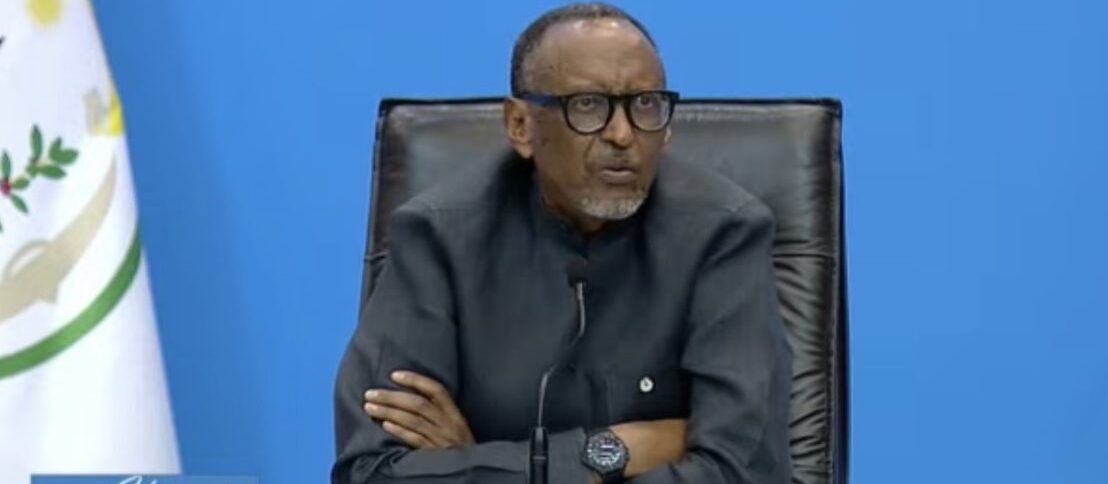
In a characteristically blunt address from Kigali on Monday, Rwandan President Paul Kagame drew what may be his clearest red line yet on the festering conflict in eastern Democratic Republic of Congo: Rwanda will not step back until the Democratic Forces for the Liberation of Rwanda, known as the FDLR, are neutralised. Full stop.
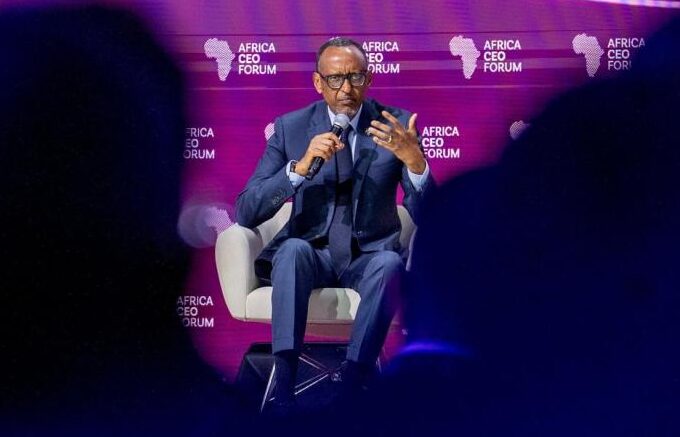
The statement, delivered at a press conference in the Rwandan capital, puts renewed pressure on an international community that has grown increasingly vocal in calling for Rwanda to disengage from a conflict that has claimed hundreds of thousands of lives and displaced millions more across eastern Congo’s battered provinces.
A Threat Three Decades in the Making
To understand why Kagame is this uncompromising, you have to rewind to 1994. After the Rwandan genocide against the Tutsi, a significant number of Hutu extremists, including individuals directly implicated in the mass killings, fled across the border into what was then Zaire, now the DRC. From that sanctuary in the dense forests of eastern Congo, they reorganised and eventually formed the FDLR, a militia whose founding membership included perpetrators of one of the worst atrocities of the 20th century.
For over thirty years, Kigali has consistently described the group’s presence along its western border as an existential security concern, not a geopolitical talking point. Kagame reiterated that framing with unusual directness this week, saying, as reported by Chimpreports, “Rwanda’s problem has always been the FDLR in Congo. I can repeat it 100 times.”
He did not stop there. “If this problem of the FDLR is not resolved, Rwanda will always remain involved. There are no two ways about it.”
Accusations Against Kinshasa
Kagame went further than simply restating Rwanda’s long-held position. He levelled a pointed accusation at the Congolese government, alleging that Kinshasa has been arming and formally integrating FDLR fighters into its own military structures. It is a charge the Congolese government has disputed previously, but one that Kigali has raised with growing frequency as the conflict in the east has intensified.
The allegation cuts to the heart of what makes this conflict so diplomatically tangled. If true, it would mean that a neighbouring government is not merely tolerating a militia that Rwanda views as a direct threat, but actively partnering with it. That scenario would make any neat diplomatic solution almost impossible to negotiate in good faith.
A Challenge to the International Community
Perhaps the sharpest moment of Kagame’s press conference came when he turned his attention to the foreign governments pressing Rwanda to disengage. His message was essentially this: if you want Rwanda out, solve the problem that brought Rwanda in.
“If anybody keeps saying ‘Rwanda, Rwanda, Rwanda’ and doesn’t want Rwanda to have anything to say in this, why don’t you remove this problem and see whether Rwanda was using it as an excuse?” he said. It was a rhetorical challenge that is difficult to dismiss without engaging seriously with the FDLR question that much of the international debate tends to sidestep.
The Sanctions Row
Kagame also took direct aim at international sanctions that have targeted Rwanda and individuals accused of backing the AFC/M23 rebel movement in eastern Congo. His argument was pointed: the international community, he said, is penalising those fighting the FDLR while largely leaving the militia itself and its alleged supporters untouched.
“Instead of sanctioning the FDLR, or those who collaborate with them or support them, they sanction those who fight them,” Kagame said. “I do not understand this logic.”
It is a logic that his critics would contest vigorously, arguing that Rwanda’s support for M23 has fuelled devastating violence across North Kivu and beyond, regardless of the FDLR justification. Human rights organisations have documented serious abuses attributed to forces aligned with or supported by Kigali, complicating any attempt to frame Rwanda’s role in purely defensive terms.
What This Means for the Region
The broader picture in central Africa remains grim. Ceasefire agreements have been signed, broken, and signed again. Peace talks have started in various formats, with various mediators, and stalled with frustrating regularity. The humanitarian toll continues to mount, with millions of Congolese living in conditions that the United Nations has described as among the worst on the continent.
Kagame’s statement signals that Rwanda has no intention of accepting a settlement framework that does not include concrete, verifiable action on the FDLR. That position may be principled from Kigali’s perspective, but it also gives Rwanda considerable leverage to remain militarily engaged in a neighbouring country’s sovereign territory for an indefinite period, which is precisely what his critics find so alarming.
The question of what “eliminating the FDLR threat” actually looks like in practice is one nobody has yet answered clearly. A complete military dismantlement? A negotiated disarmament and repatriation process? Political guarantees from Kinshasa? Until those terms are defined and agreed upon by all parties, Kagame’s red line functions less as a peace condition and more as an open-ended mandate for continued involvement.
The Bigger Question
The conflict in eastern Congo is one of the most complex, long-running, and under-reported crises in the world. It involves a web of armed groups, regional powers with competing interests, vast mineral wealth, and populations caught between forces they did not choose. Rwanda’s role in that web is neither simple nor one-dimensional, but Kagame’s statement this week makes one thing clear: Kigali will not be pressured out of the equation by international condemnation alone.
As ceasefire talks continue to flicker between progress and collapse, the FDLR sits at the centre of Rwanda’s calculus, and with it, a question that the international community has struggled to answer for three decades: what does a genuine, lasting resolution to the FDLR threat actually look like, and who bears responsibility for getting there?
That is the question that diplomats, regional bodies, and world powers need to answer honestly if there is any real prospect of peace in eastern Congo. What do you think: should the FDLR’s future be a central condition in any Congo peace framework, or is Rwanda using a real grievance as cover for something larger?