










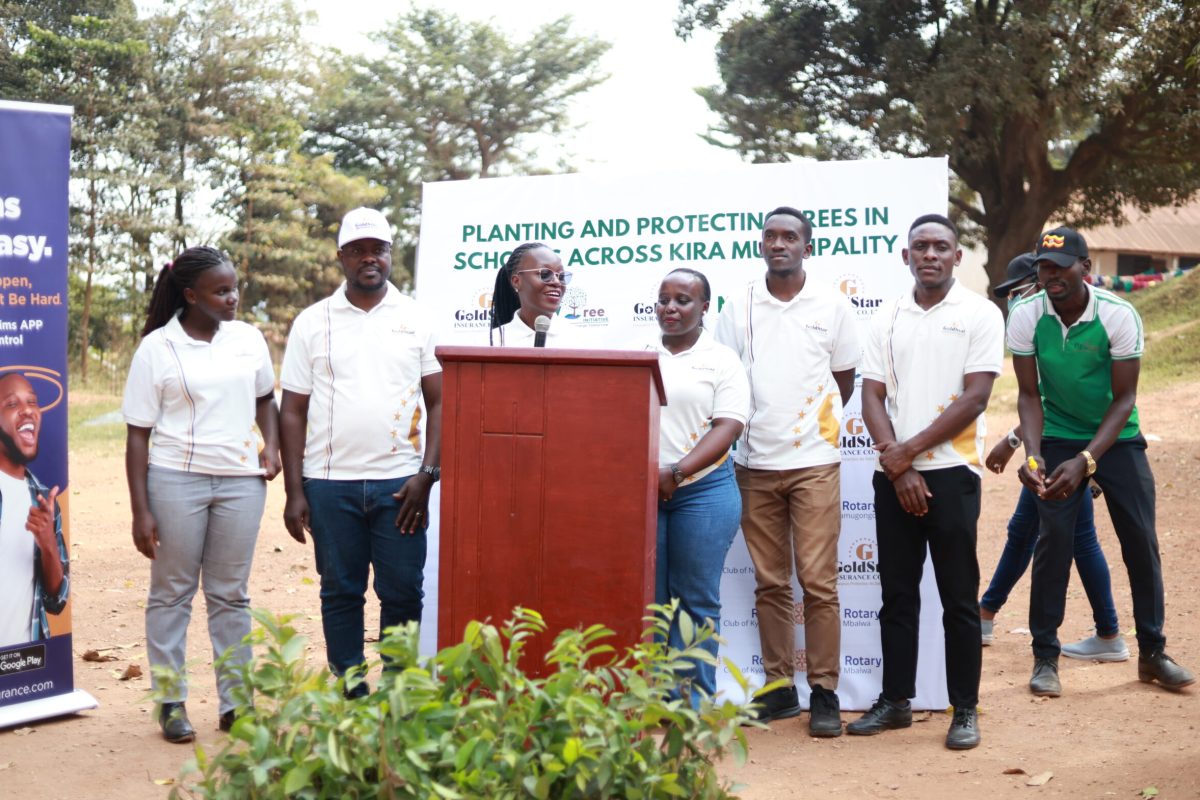
On the grounds of Kira Primary School in Kira Municipality, Wakiso District, something unusual happened recently. Instead of a boardroom toast or a black-tie dinner, GoldStar Insurance Company Limited marked its 30th anniversary by putting its staff to work alongside schoolchildren, planting trees in the afternoon heat. One hundred and fifty of them, to be precise.
The gesture was deliberate and, frankly, hard to ignore. In a business climate where anniversary campaigns tend to run on press releases and branded merchandise, GoldStar went the other direction entirely, choosing soil over ceremony.
The Initiative Behind the Milestone
The tree planting drive forms the centrepiece of GoldStar’s anniversary campaign, carried under the theme “30 Years. One Promise.” That promise, at least in this instance, appears to be an environmental one. The company partnered with My Tree Initiative Uganda and five Rotary Clubs across the region, namely Namugongo, Bukerere, Bweyogerere Central, Kyambogo, and Kira, to pull off what turned into a genuinely community-rooted event.
The variety of trees planted tells its own story. On the fruit side, pupils and staff pressed avocado, mango, guava, and jackfruit seedlings into the ground. For shade and ecological balance, indigenous species including Mugavu, Musambya, Ensaali, and Entasesa were added to the mix. It is a blend that serves both the practical needs of a school community and the longer ecological picture of preserving native tree species that have been losing ground to development across Uganda for years.
391 Pupils Trained, Not Just Witnesses
What separates a genuine conservation effort from a photo opportunity is follow-through. GoldStar appears to have thought about this. More than 391 pupils at Kira Primary School did not simply watch adults plant trees around them. They received hands-on training in tree care, covering watering schedules, maintenance routines, and the basic ecology of why these trees matter.
The school’s Environmental Club has been specifically tasked with monitoring the trees going forward. That is a smart structural choice. School environmental clubs are often the most consistent caretakers of green spaces on campuses, because unlike staff rotations or corporate partnerships that eventually wind down, pupil-led clubs carry institutional memory through the school’s own culture.
Why This Model Works
Uganda loses a significant portion of its forest cover every year, driven by charcoal production, agricultural expansion, and urban sprawl. The area around Wakiso District, sitting on the fringes of Kampala’s rapid expansion, has felt this pressure acutely. Planting indigenous species like Mugavu and Ensaali in that context is not symbolic. It is ecologically relevant.
The involvement of five Rotary Clubs also adds a layer of community credibility that solo corporate initiatives often lack. Rotary’s structure is built on local relationships, and by bringing in clubs from Namugongo to Kyambogo, the initiative wove itself into a web of community accountability rather than simply arriving, planting, and leaving.
Corporate Anniversaries Reimagined
There is a broader conversation worth having here about what corporate milestones should look like. For most of the 20th century, the company anniversary was an inward-looking affair: a celebration of survival, profit, and growth. The 21st century has gradually shifted expectations, with stakeholders, clients, and communities increasingly asking what a company has contributed beyond its own balance sheet.
GoldStar’s approach offers one answer to that question. Thirty years of writing insurance policies, managing risk, and building a client base, redirected for an afternoon into 150 trees that will still be standing long after the anniversary banners come down. The mango and jackfruit trees in particular carry a practical sweetness. In a few years, the children of Kira Primary School will be eating fruit from trees they planted themselves. That is a different kind of return on investment.
The Rotary Partnership Factor
The five Rotary Clubs involved each bring their own networks and local knowledge. Rotary Namugongo, Bukerere, Bweyogerere Central, Kyambogo, and Kira collectively represent a corridor of communities stretching from the eastern suburbs of Kampala toward Wakiso. Their participation signals that this was not a distant corporate hand reaching into a school, but a coordinated effort with roots in the same geography as the school itself.
My Tree Initiative Uganda, the conservation partner in this effort, adds technical weight. Tree planting without proper species selection, soil preparation, and maintenance guidance has a notoriously poor survival rate. The organisation’s involvement suggests the 150 trees were chosen and planted with survival in mind, not just optics.
What Comes Next
The real test of any tree planting initiative is the five-year mark. That is roughly when saplings either establish themselves or fail, depending on the care they received in their early years. With the Environmental Club in charge of ongoing maintenance and 391 trained pupils who understand the basics of tree care, Kira Primary School has a reasonable infrastructure for success.
For GoldStar, the anniversary campaign still has the rest of its run to complete. What shape that takes beyond this single initiative remains to be seen. But starting the decade’s celebration with something rooted in the literal ground is a statement of intent that goes beyond the usual corporate playbook.
Thirty years is a long time in any industry. Insurance, with its intrinsic link to protecting what people value most, carries a particular responsibility to walk that talk in the wider world. Planting a tree that will outlive any single policy, shade children who have not yet been born, and quietly rebuild a small piece of Uganda’s canopy is, in its own way, the most honest form of risk management there is.
So here is the question worth sitting with: if every company celebrating a major milestone chose one environmental act of lasting consequence over one evening of self-congratulation, what would Uganda’s landscapes look like a generation from now?