










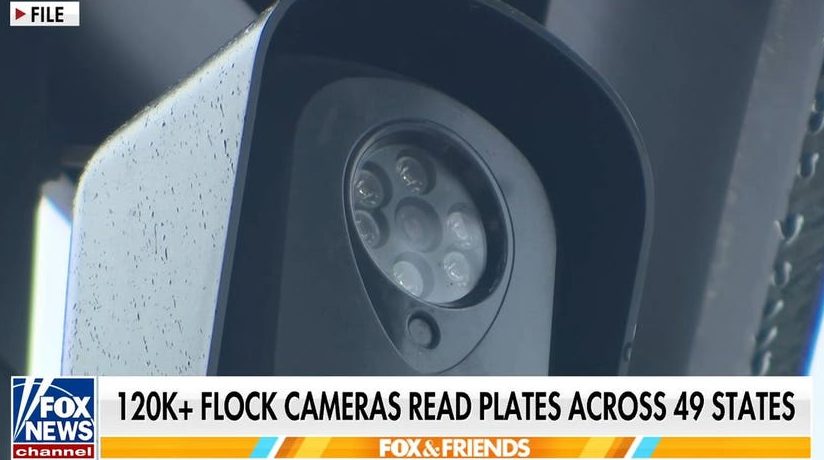
The surveillance company Flock has spent years selling American cities on a vision of smarter, safer policing. Thousands of cameras, licence plate readers, and drones deployed across the country, all feeding data into a network that can track a vehicle across an entire city in real time. It found stolen cars. It helped locate missing people. Law enforcement loved it. Then came the abuse, and now the reckoning.
A Founder Forced to Admit the Obvious
Flock founder and chief executive Garrett Langley sat down with the BBC and, in a moment of rare corporate candour, conceded that his company moved too slowly to stop law enforcement officers from weaponising its technology against private citizens. Asked directly whether it took Flock too long to protect its vast network of devices from police misuse, Langley’s answer was blunt: “Yeah… yes.”
That two-word admission carries a lot of weight. According to the BBC’s reporting, officers across the United States used Flock’s infrastructure to track current and former romantic partners, stalk complete strangers, and in one particularly alarming case, monitor a woman specifically because she had had an abortion. These were not edge cases or honest mistakes. They were deliberate, sustained misuses of powerful surveillance tools by the very people entrusted to uphold the law.
The Scale of the Abuse
The breadth of documented misconduct is troubling. Police officers have been fired and others have resigned across the country over how they used Flock’s systems. In Indiana, a man discovered through a public records request that police had set a Flock alert on his vehicle, even though he was not suspected of any crime. Think about that for a moment: a citizen, entirely innocent, quietly flagged for monitoring with no legal justification and no notification until he went digging himself.
The platform’s architecture, designed for speed and convenience, turned out to be ideal for abuse. Searches that might have required paperwork or supervisory sign-off in other systems could apparently be run quietly, leaving little immediate trace. That design gap gave bad actors inside police departments a door that stayed open far too long.
What Flock Is Doing Now
The company is now rolling out a package of safeguards that, by any measure, should have been standard from the start. Data retention periods for most records will be cut from 30 days to seven days, reducing the window in which historical location data can be pulled and potentially misused. The platform will also automatically flag abnormal searches and unusual usage patterns, creating an internal audit trail that makes rogue behaviour harder to hide.
These are sensible reforms. The problem, of course, is that they are arriving years into a scandal rather than at the beginning of a product launch. When a system reaches tens of thousands of cameras before its creator asks whether adequate guardrails are in place, the sequence of priorities becomes very hard to defend.
Cities Are Cutting Ties, But Not All of Them
Public reaction has been sharp. At least 50 cities have cut ties with Flock this year alone, reflecting genuine political and community pressure to pull back from a technology that has been shown to harm the very residents it was supposed to protect. City councils, civil liberties advocates, and ordinary people have all pushed back, and some municipalities have listened.
Yet Langley offered a counterpoint that is commercially significant, even if it is not entirely reassuring. He told the BBC that 16 cities which had previously switched off Flock services have returned to the company within the last three months. More broadly, Flock is reportedly running at a ratio of roughly seven new customers for every one it loses. Whatever the reputational damage, the business itself is still growing.
The Commercial Paradox of Controversy
That growth figure sits uncomfortably alongside the abuse stories. It suggests that for many local governments, the utility of Flock’s technology, finding stolen vehicles, tracing missing persons, continues to outweigh concerns about misuse. Whether that calculus changes as more incidents surface remains to be seen. What it does confirm is that Flock is not facing an existential threat, at least not yet.
For Langley, the challenge now is transforming a company that built fast and audited slow into one that can credibly claim it takes civil liberties seriously. The new safeguards are a start. But trust, once broken with the communities these cameras watch over every day, is not rebuilt through a press statement and a shorter data retention window.
The Bigger Picture: Who Watches the Watchers?
Flock’s predicament sits inside a much larger, unresolved debate about the role of private surveillance companies in public law enforcement. When a private firm supplies the infrastructure, the hardware, the data pipelines, and increasingly the analytical tools that police use to track citizens, questions of accountability become genuinely complex. Who is responsible when an officer abuses the system? The officer, the department, the city that signed the contract, or the company that designed the product and set, or failed to set, the rules governing its use?
Langley’s admission that Flock acted too slowly does not settle that question. If anything, it opens it wider. Private technology companies operating in the public safety space carry an obligation that goes beyond contract performance. The people being watched did not choose to be watched. They deserve protections built in from day one, not retrofitted after the headlines get bad enough.
The cameras are still out there, tens of thousands of them, reading plates and logging movement across American cities every single day. The question worth sitting with is this: now that we know how badly this kind of technology can be abused, are seven-day data limits and automated flagging actually enough, or are we still just trusting the watchers to watch themselves?