







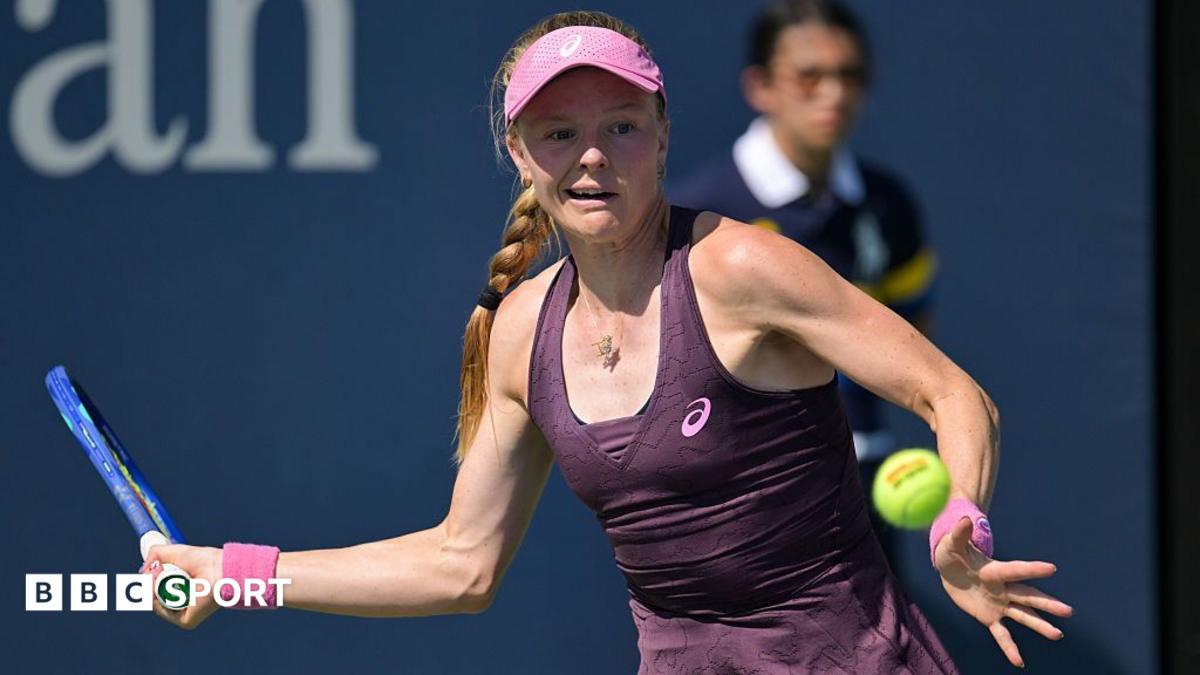
New York’s Arthur Ashe Stadium has a way of exposing everything, and on a sweltering early September afternoon in Flushing Meadows, it did exactly that to Britain’s last two women in the 2026 US Open singles draw. Harriet Dart and Francesca Jones both exited in the second round on Friday, ending what had been a surprisingly deep and genuinely encouraging run of British involvement at this year’s tournament.
Heat, Seeds, and a Nation’s Hopes
Dart’s afternoon was, by her own admission, not one she would look back on fondly. The world number 131 was beaten 6-2, 6-2 by Czech 25th seed Marie Bouzkova, with temperatures in New York hovering around 30 degrees Celsius. After the match, Dart told reporters she had felt “under the weather” throughout, which goes some way to explaining the scoreline but does little to ease the disappointment. You don’t get second chances at Grand Slams, regardless of how you’re feeling on the day.
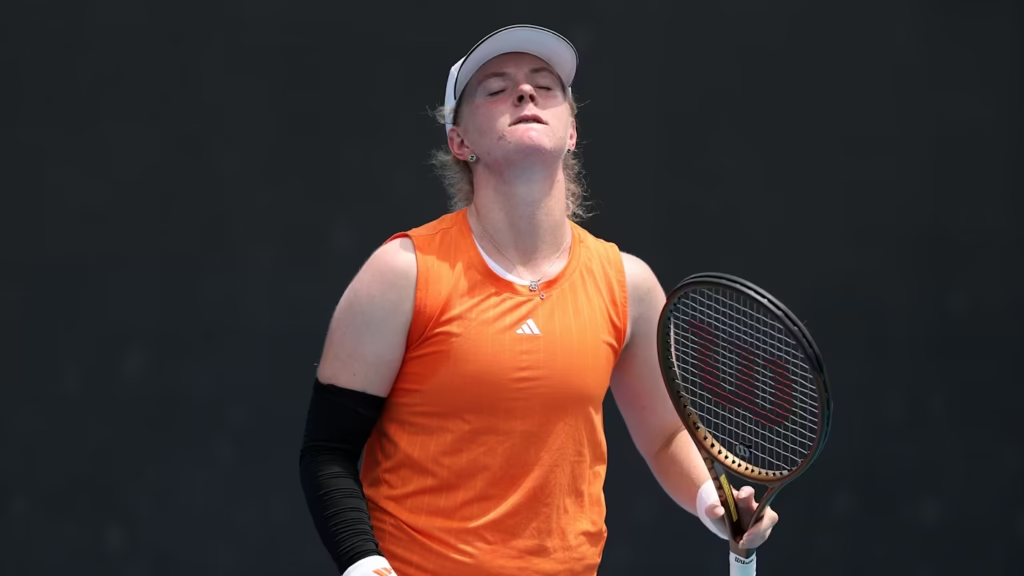
Jones, ranked outside the top 200 and facing 14th seed Iva Jovic, a rising American talent who has been generating serious buzz on the WTA circuit, gave a significantly better account of herself. She extended the match to one hour and 54 minutes before going down 6-4, 6-4. For context, Jones entered that match ranked roughly 90 places below her opponent. The fact that she made Jovic work that hard is a genuine point of pride, even if the result column reads the same as Dart’s.
A Record Nine, But None Make It to Week Two
Here is the number that matters most in terms of the bigger picture: nine British players competed in the main draws at this year’s US Open, the largest contingent the country has sent to Flushing Meadows since 1981. Four of those nine came through qualifying to earn their spots, which speaks to real depth rather than simply a few headline acts carrying the flag.
Five of the nine reached the second round, which felt, for a moment at least, like the beginning of something. It wasn’t. Every single one of them lost in that second round, and every single one lost to a seeded player. That is the brutal mathematics of Grand Slam tennis. The full breakdown of Britain’s exits at the US Open lays out just how consistent that pattern was across the board.
Jacob Fearnley’s Silver Lining
If one player can walk away from New York with his chin up, it is Jacob Fearnley. The lucky loser, who had no business even being in the main draw until late withdrawals opened the door, pushed 27th seed Tomas Martin Etcheverry to four sets before bowing out. In a group of British players who largely struggled to win individual sets against seeded opponents, Fearnley winning a set at all stands out. He was the only British player to manage it across all five second-round losses.
The Week That Was: A Full Picture
Wednesday brought its own rough news when Katie Boulter, arguably the most high-profile of Britain’s female contingent heading into the tournament, was dismantled 6-something in just 58 minutes by Wimbledon runner-up Karolina Muchova. At that speed, the match barely had time to breathe. Qualifier Toby Samuel also went down to 18th seed Jiri Lehecka, adding another name to what became a long and dispiriting list.
The men’s draw told a similarly early story for several players. Cameron Norrie, Arthur Fery, Harry Wendelken, and Jan Choinski all exited in the first round, meaning they never even had the chance to face the seeded wall that their compatriots hit in the second.
What This Actually Means for British Tennis
Context is everything here. The fact that nine British players qualified for the main draw of a Grand Slam is not a small thing. It is the kind of statistic that, twenty years ago, would have sounded like wishful thinking. British tennis spent the better part of three decades producing one Andy Murray and very little else at the top level. The pipeline looks genuinely healthier now.
But pipeline health and results are two different conversations. Making a second round and losing is not the same as making a third round and losing. The gap between ranked players and seeded Grand Slam contenders remains significant, and that gap does not close through participation alone. What it does require is exactly the kind of match experience that players like Fearnley, Jones, and Samuel are now accumulating, even in defeat.
Jones, in particular, deserves credit. Holding a top-15 player to a 6-4, 6-4 scoreline over nearly two hours is not a failure. It is a data point. It tells a coach, a federation, and the player herself something real about where the ceiling might be. For Dart, meanwhile, the challenge is getting healthy and getting back on tour with some momentum before the hard-court season winds down.
The Road Ahead
The 2026 US Open is over for Britain, but the tennis calendar never truly pauses. The indoor season looms, and for several of these players, the work of converting second-round exits into third-round pushes starts the moment the flights home are booked. The talent is clearly there. The competition, right now, is simply one level above where most of these players are operating.
That is not a reason for despair. It is a reason to train harder, compete smarter, and show up again. Nine players in a Grand Slam draw in 2026 would have been unthinkable in 2006. The question now is what 2027 looks like, and whether this crop of British players can take the lessons from Flushing Meadows and turn participation into genuine deep runs.
So here is something worth sitting with: if British tennis can send nine players to a Grand Slam and still feel like it underperformed, is that a sign of rising standards or rising expectations? And which one of those nine is most likely to be the name we are talking about in the quarterfinals twelve months from now?