



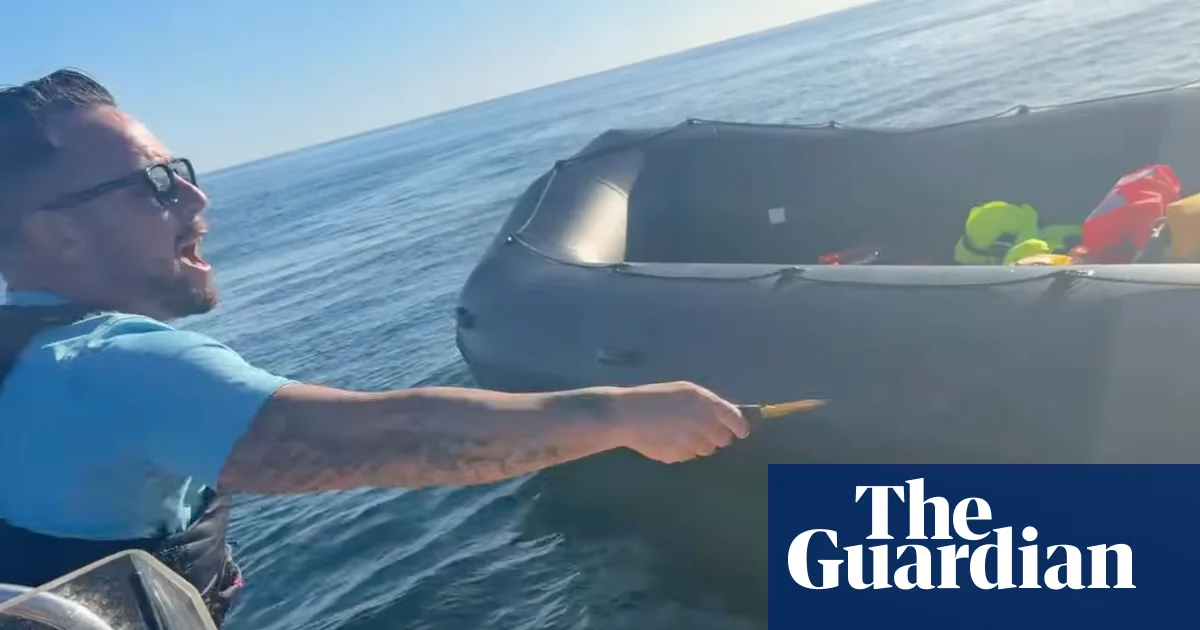
On September 22, 2026, a far-right activist identified as Daniel Thomas was filmed using a blade to slash an inflatable dinghy in the English Channel while a rescue worker was still onboard the vessel. The footage, which circulated rapidly online, drew swift condemnation from humanitarian organisations and cast a harsh spotlight on the increasingly dangerous tactics being deployed by organised anti-immigration groups operating in British waters.
What Happened in the Channel
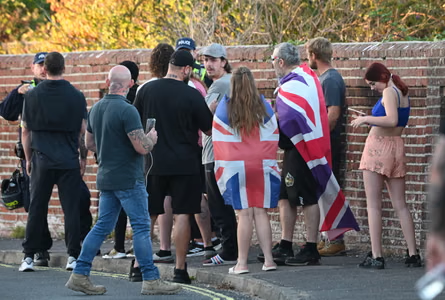
Thomas had called on his followers to converge on Gosport in Hampshire with the stated goal of disrupting the planned arrival of asylum seekers. Hundreds of people responded, gathering in the early evening at the Hampshire coastal town. What followed was not a successful blockade but a logistical pivot by British authorities: Border Force vessels carrying the asylum seekers changed course and docked at Dover instead, leaving the Gosport crowd with nothing to confront.
That redirection, however, did not stop Thomas. According to reporting by The Guardian, footage emerged of Thomas taking a blade to an inflatable dinghy in the Channel, a vessel that had a rescue worker onboard at the time. The act transformed what had been a large but relatively contained shore-based demonstration into something considerably more alarming.
Charities Sound the Alarm
Charitable organisations working in the Channel were quick to respond. Several groups condemned the footage, describing the act as reckless and life-threatening. Slashing an inflatable vessel in open water is not a symbolic gesture, it is an action that can sink a craft, endanger crew, and in the worst-case scenario, kill people. Rescue workers operating in the Channel already face unpredictable conditions: tidal currents, cold water temperatures, and the sheer volume of crossings mean that any additional threat dramatically raises the risk of fatalities.
The presence of a rescue worker onboard at the moment Thomas used the blade made the act particularly serious. Anti-immigration sentiment is one thing in a political debate or even on a protest placard. It is quite another when it translates into direct physical interference with a safety operation at sea.
The Anatomy of an Organised Protest Movement
What makes this incident more than just the actions of a lone provocateur is the scale of the coordination behind it. Hundreds of people did not arrive in Gosport by accident. They were mobilised, directed to a specific location, and given a specific objective: block the arrival of asylum seekers. The fact that Border Force adapted its plans and rerouted to Dover suggests that authorities were monitoring the situation and made a calculated decision to avoid a direct confrontation between protesters and arriving migrants.
That kind of operational flexibility from Border Force is, in one sense, reassuring. But it also underlines a new reality: far-right groups are now organised enough, and vocal enough on social media, that their announced intentions can influence how official agencies move people around the country. That is a significant shift in the power dynamic, and not one that should be allowed to bed in without serious scrutiny.
A Pattern of Escalation
This incident does not exist in isolation. Anti-immigration protest in Britain has been building in intensity over recent years, with demonstrations at hotels housing asylum seekers, confrontations at ports, and increasingly aggressive rhetoric circulating in online spaces. Thomas’s action in the Channel represents another step up in that trajectory. When protest moves from the street to the water, and from raised voices to raised blades, the potential for tragedy becomes very real.
Rescue workers in the Channel are not immigration officials. They are people whose job it is to stop human beings from drowning. Targeting their vessels, regardless of who those vessels may be assisting, crosses a line that most reasonable people across the political spectrum would recognise as indefensible.
Legal and Political Implications
The footage raises immediate questions about criminal liability. Damaging an inflatable vessel in open water while a person is onboard could carry serious charges, potentially including endangerment. Whether prosecutors will pursue the matter with the seriousness it warrants remains to be seen, but advocacy groups are already calling for robust legal action. Allowing such behaviour to pass with minimal consequence would send a deeply troubling signal about what is permissible in British waters.
Politically, the incident puts pressure on lawmakers to address not just immigration policy but the organised networks that have turned their grievances into physical intervention. There is a meaningful difference between citizens exercising a right to protest and activists coordinating to obstruct official operations and endanger lives. The law must be clear on that distinction, and enforcement must reflect it.
What This Moment Reveals
Strip away the politics, strip away the immigration debate, and what you are left with is a rescue worker at sea whose safety was compromised by a man with a blade. That is the core of this story. The Channel is already one of the world’s most dangerous crossings for small boats. Adding organised interference to that picture is not activism, it is a threat to human life, full stop.
Britain has a long tradition of coastal rescue, of people who go out in difficult conditions to bring others back safely. That tradition deserves protection. So does every person in those waters, regardless of where they came from or why they are there.
As this story continues to develop and the legal fallout unfolds, one question demands an honest answer from the public, from politicians, and from those who enable and amplify figures like Daniel Thomas: at what point does organised protest become something that society simply can no longer afford to tolerate?