










Australia’s royal commission into antisemitism and social cohesion has completed its public hearings, marking a significant moment in the country’s reckoning with hatred, identity, and what it means to live alongside one another. Commissioner Virginia Bell closed the final session on Wednesday, August 26, 2026, but not before making a quietly powerful decision: she will hold back her final report by four days, choosing not to let it overshadow the upcoming commemorations of the Bondi terror attack.
A Deliberate Pause Before the Final Word
The four-day delay might seem like a small bureaucratic detail on paper. In reality, it says something significant about how Bell has conducted this entire inquiry. The commissioner’s reasoning was direct: releasing a major government report in the same news cycle as a solemn national anniversary would risk turning both events into background noise for each other. Neither deserves that fate.
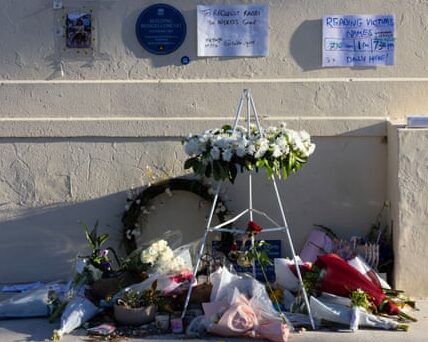
The Bondi attack remains a raw wound in the Australian national memory. Any serious policy document touching on social cohesion, religious vilification, and community safety landing on top of those commemorations would, at minimum, muddy the emotional waters. Bell clearly weighed that tension and came down on the side of decency over speed.
According to reporting from The Guardian, Bell also used Wednesday’s session to push back against calls to extend the commission’s work further, noting the importance of delivering timely recommendations rather than letting the inquiry drift on indefinitely.
Why the Push to Extend Was Always Going to Face Resistance
Royal commissions carry enormous weight. They cost money, consume the attention of witnesses, legal teams, and government officials, and they create expectations. Every day a commission continues is a day its final word gets pushed further into an uncertain political future. Bell’s resistance to extending the hearings reflects a practical truth about how these processes work: at some point, you have to close the evidence and write the findings.
Those who pushed for more time likely had genuine concerns. Antisemitism is not a problem that wraps itself neatly into a hearing schedule. The spectrum of issues the commission would have encountered, from online hate speech and institutional bias to the broader fraying of social trust, is wide and often deeply personal for those who gave testimony. The desire to keep talking is understandable.
But a commission that never concludes delivers nothing actionable. Bell’s insistence on moving toward a final report is itself a form of respect for the people who testified. It says: we heard you, and now we are going to do something with what you told us.
What the Commission Has Been Dealing With
Australia, like much of the Western world, has seen a measurable rise in antisemitic incidents in recent years. Jewish community leaders have raised alarms about harassment, vandalism, threats, and a broader climate of hostility that has seeped into schools, universities, and public spaces. The royal commission was a formal acknowledgment that this is not a fringe problem to be managed quietly.
Social cohesion, the other pillar of the commission’s mandate, is a phrase that can sound vague until you look at what its absence actually produces. Communities fractured along ethnic and religious lines, distrust between institutions and the people they serve, and the kind of ambient fear that changes how people move through the world. These are the stakes the commission was set up to address.
The Bondi attack sits uncomfortably close to all of this. An act of violence in a public space, in a location as iconic and symbolically open as Bondi Beach, forced Australians to confront the fragility of the spaces they thought were safe. The connection between that grief and the commission’s work on communal safety and belonging is not incidental.
What Comes After the Report
The real test of any royal commission is never the hearings themselves. It is what governments do with the final document once it lands. Australia has a complicated history with commission recommendations: some are acted on swiftly, others sit in departmental filing systems long enough to gather political dust.
Bell’s emphasis on timeliness is a signal that she understands this dynamic. Recommendations delivered quickly, with the political momentum of a finished inquiry behind them, stand a better chance of actually changing policy. Recommendations that trickle out months after the news cycle has moved on face a steeper climb.
Jewish community organisations, civil society groups, and legal advocates who engaged with the commission process will now be watching closely. They invested considerable time and emotional energy in the hearings. The four-day delay to honour the Bondi anniversary will likely read to most of them as a sign that Bell has approached this work with the seriousness it demands.
The Broader Moment This Report Will Enter
When the report does arrive, it will land in an Australia still processing significant social stress. Debates about free speech, religious vilification laws, campus culture, and the boundaries of political protest have all intensified over the past few years. Bell’s findings and recommendations will not exist in a vacuum. They will be read against all of that context, dissected by advocates on multiple sides, and used as ammunition in arguments that were already well underway before the commission ever opened.
That is, in many ways, as it should be. A royal commission report that provokes serious debate has done part of its job. The question is whether it can also drive real, structural change rather than simply adding another layer to an already crowded conversation.
Australia has an opportunity here to model something useful: a formal, evidence-based response to hatred that does not collapse into political point-scoring. Whether that opportunity gets seized will depend on leaders across government, civil society, and community institutions choosing to treat the final report as a starting point rather than a finish line.
So as the commemorations for the Bondi attack approach and Commissioner Bell prepares to submit her findings, the question worth sitting with is this: when the report finally lands, will Australia’s leaders have the courage to act on what it says, or will it become another well-intentioned document that change moves around rather than through?