


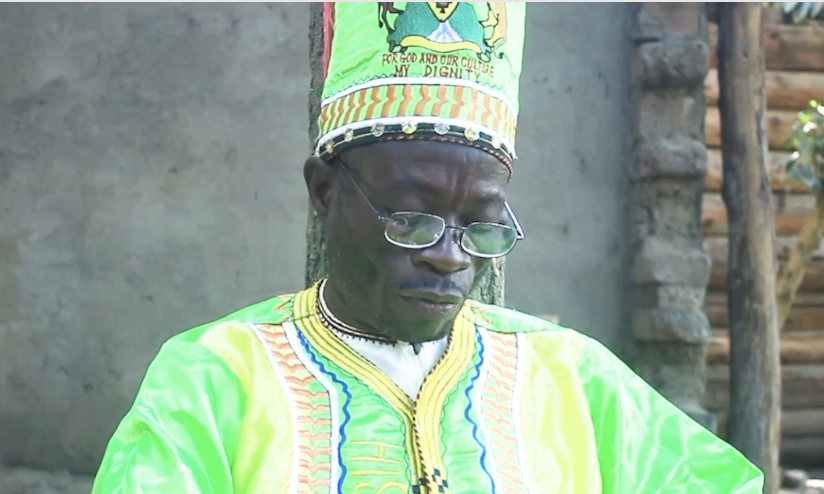
When the Omukama of Tooro passed away, the grief that spread across western Uganda was not contained by any single kingdom’s boundaries. In a dignified show of solidarity, the Obusinga bwa Rwenzururu formally extended its condolences to the people of Tooro, with Prime Minister Benson Kule Barita-zale standing before mourners to deliver a eulogy on behalf of the Rwenzururu kingdom. The message was simple but weighty: a neighbouring cultural institution had lost its monarch, and that loss belonged to everyone.
A Gesture That Carries More Than Words
Formal condolences between kingdoms might sound like diplomatic ritual, but in the context of Uganda’s cultural landscape, they carry real historical and emotional weight. The Obusinga bwa Rwenzururu and the Tooro Kingdom both occupy the western region of the country, a stretch of land defined by dramatic mountain ranges, lush valleys, and communities whose identities are deeply woven into their royal institutions. When one throne goes quiet, those who share the same sky feel it.
Prime Minister Benson Kule Barita-zale’s decision to personally deliver the eulogy on behalf of the Obusinga signals how seriously the Rwenzururu leadership treated this moment. This was not a written statement handed to a junior official. It was a presence, a human voice standing in solidarity at a time of collective grief.
The Weight of Royal Loss in Uganda’s Cultural Landscape
Uganda’s cultural kingdoms occupy a unique space in the country’s social fabric. They are not political entities in the constitutional sense, yet their influence over community identity, tradition, and moral authority is profound. The Omukama, as the title given to the king of Tooro, represents centuries of history and a living connection to the kingdom’s ancestors. His passing creates a void that no election or appointment can immediately fill in the hearts of his people.
Across Uganda, cultural institutions have long maintained relationships that are both ceremonial and genuinely fraternal. Funerals and mourning periods for kings have historically served as moments when those relationships become visible, when delegations travel, eulogies are shared, and the broader community of kingdoms affirms that cultural heritage is a collective responsibility. NTV Uganda reported on the Rwenzururu’s condolences as part of the wider wave of mourning that has followed the Omukama’s death.
Who Are the Obusinga bwa Rwenzururu?
The Obusinga bwa Rwenzururu is the cultural institution of the Rwenzururu kingdom, rooted in the Rwenzori mountain region of western Uganda. The kingdom has a distinct cultural identity tied to the Bakonjo and Bamba peoples, and its establishment as a recognised cultural institution marked a significant moment in the preservation of their heritage. The institution has, over the years, worked to maintain peace and cultural cohesion in a region with a complex history, making its voice in moments like this one particularly meaningful.
Cultural Unity Beyond Political Lines
What makes this condolence message resonate beyond the immediate moment of grief is what it represents about inter-kingdom relations in Uganda. At a time when many conversations about traditional institutions focus on land disputes, resource conflicts, or their relationship with central government, a moment of quiet, dignified mourning offers a different narrative. Two kingdoms, side by side in the west of Uganda, pausing to acknowledge the humanity at the centre of royal tradition.
It is also worth noting the role that prime ministers of cultural kingdoms play in such moments. These are not heads of government in the national sense, but they carry tremendous responsibility as the chief administrators and public voices of their respective institutions. Barita-zale stepping up to deliver the eulogy was an act that placed the Rwenzururu’s grief on record, formally and publicly.
Mourning as a Bridge Between Peoples
There is something ancient about the act of one community crossing over to mourn with another. Long before borders were drawn on maps, communities in the Great Lakes region of Africa understood that grief shared was grief eased. That tradition has not disappeared. It has simply found new forms, from formal eulogies delivered by kingdom prime ministers to coverage on national television that allows millions of Ugandans to bear witness.
The Tooro Kingdom, like any institution built over generations, is larger than any single individual who has led it. But a king is also a symbol, a living embodiment of the kingdom’s values and continuity. His departure leaves a silence that can only be filled, slowly, by the community he leaves behind and the neighbours who stand with them.
What Comes Next for the Tooro Kingdom
The passing of the Omukama of Tooro will inevitably trigger a period of transition, reflection, and eventually, renewal. Uganda’s cultural kingdoms have each navigated such transitions in their own ways, guided by tradition and the expectations of their communities. The process is rarely quick, and it is rarely without complexity. But history suggests these institutions are resilient, shaped by centuries of surviving change.
For now, though, the priority is mourning. And the Obusinga bwa Rwenzururu’s formal condolences are a reminder that in moments of loss, solidarity speaks louder than ceremony.
As Uganda’s cultural kingdoms continue to define their place in a modern nation, one question lingers: how can these institutions preserve the depth of their traditions while building the kind of inter-kingdom solidarity that moments like this one so powerfully reveal? Share your thoughts in the comments below.