


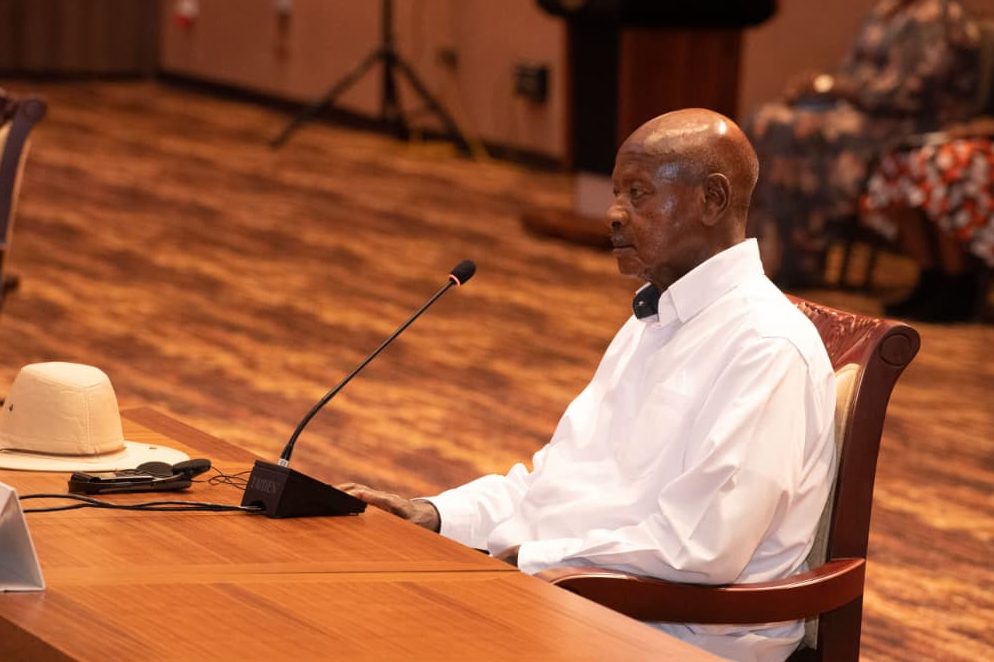




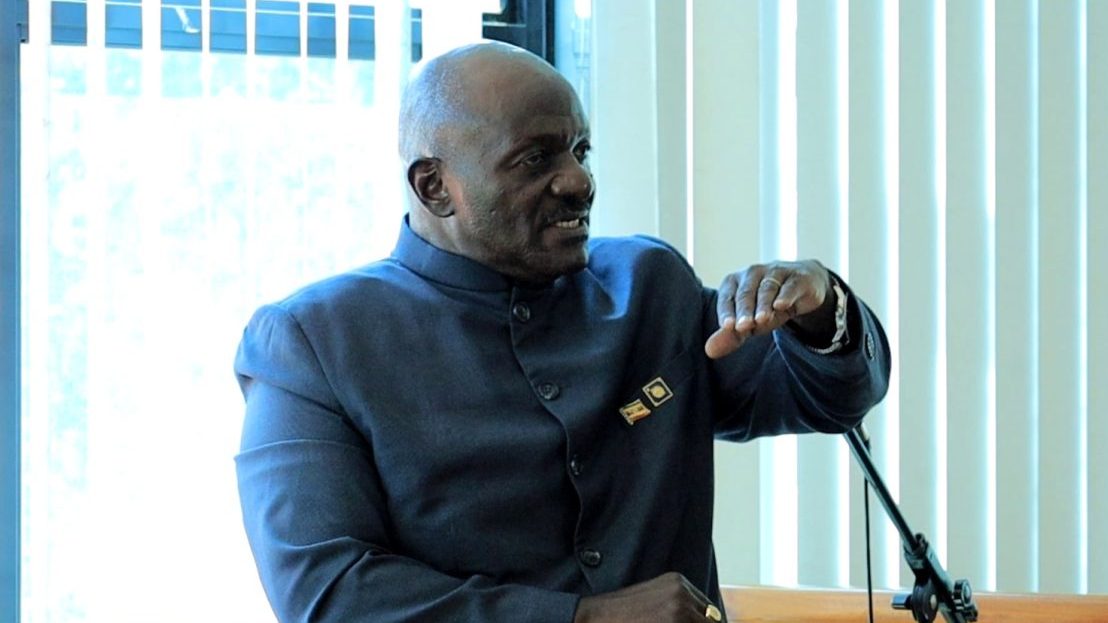
On a Monday morning in a Kampala courtroom, Uganda’s Public Service Minister Gen. Edward Katumba Wamala did something that no military rank or cabinet title could shield him from: he stood before four judges and relived the worst morning of his life. His testimony before the International Crimes Division of the High Court pulled back every layer of the June 2021 assassination attempt, placing the full, raw weight of that day squarely in front of the court.
The Morning Everything Changed
It was June 1, 2021. Katumba had left his home in Najjera, Wakiso District, at roughly 8:30 in the morning. The purpose of the trip was a sorrowful but ordinary one: he was heading to Najjanankumbi to make burial arrangements for his late mother-in-law. There was nothing in the rhythm of that morning to signal catastrophe. His convoy paused briefly at a roadside newspaper stand, a small, routine stop that thousands of Ugandans make every day. Then they turned onto Kisota Road.
Less than ten minutes later, the world collapsed around him.
Katumba told the court he heard the first sounds but did not immediately register them as gunshots. “I thought maybe a boda boda had crushed into a car,” he testified, describing the initial confusion of a mind that cannot yet accept what is happening. Then the reality broke through. The shots were coming from behind and from the right side of the vehicle, and they were coming fast.
“She Fell on My Lap”
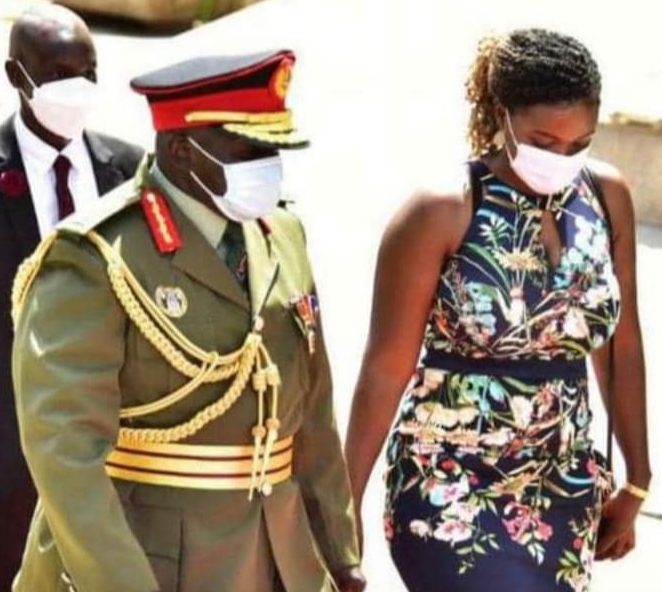
The seating arrangement inside the vehicle would become one of the most haunting details of his testimony. Katumba sat in the rear left seat alongside his bodyguard. His driver, Sgt. Haruna Kayondo, was at the wheel. His daughter, Dr. Brenda Nantongo Wamala, occupied the seat directly behind the driver, just across from her father.
She was the first one hit.
According to Katumba’s testimony in court, the moment the bullets found his daughter, she cried out a single word: “Jesus.” Then she slumped sideways, falling directly onto his lap. A father trained for decades to read battlefields, to command troops, to project composure under fire, sat helpless as his child died in his arms in the back seat of a moving car.
The vehicle did not stop immediately. It lurched forward for a short distance before Sgt. Kayondo, himself fatally shot, lost control and the car came to rest against a perimeter wall. The driver did not survive either. Two people inside that convoy were killed. Katumba was wounded but lived.
A Trial Five Years in the Making
The attack on Kisota Road sent shockwaves through Uganda. A sitting minister and decorated military general had been targeted in a broad-daylight ambush. Security forces launched an extensive investigation, and the case eventually landed before the International Crimes Division of the High Court, a specialized bench designed to handle offences of particular gravity.
That Katumba is now testifying before a panel of four judges, more than five years after the attack, speaks to how methodically Ugandan prosecutors have built their case. High-profile criminal proceedings rarely move at speed, and this one is no exception. But the weight of the evidence being placed before the court grows heavier with each witness.
Katumba’s account is particularly significant because he was both a victim and a direct eyewitness. He did not hear about the attack secondhand. He was inside the vehicle. He heard the shots. He held his daughter as she died. His testimony does not rely on inference or forensics. It is lived memory, and it carries the kind of authority that no expert witness can replicate.
The Human Cost Behind the Headlines
It is easy, in coverage of political violence, to focus on the geopolitical dimensions: who ordered the attack, what the motive was, which groups might be responsible. Those questions matter enormously, and the court will ultimately have to answer them. But Katumba’s testimony offers a different kind of reckoning.
Dr. Brenda Nantongo Wamala was not a combatant. She was not a political figure. She was a daughter accompanying her father on a morning errand, seated in a car, going about the business of a family dealing with loss. The bullet that found her first was not making a political point to her. It simply ended her life before she could say anything more than a single prayer.
The fact that her father, a man who has spent a career navigating conflict and command, broke that experience down into such precise, intimate detail in a courtroom says everything about what grief does to even the most hardened of men. He remembered the newspaper stand. He remembered the time. He remembered exactly where everyone was sitting. Trauma, it turns out, does not blur memory. It freezes it.
What the Court Must Now Determine
With testimony from the minister himself now on the record, the International Crimes Division faces the task of connecting the horror of Kisota Road to the individuals charged in the case. The prosecution will need to establish not just what happened, which Katumba has now described with devastating clarity, but who planned it, who gave the orders, and who pulled the triggers.
Uganda has seen politically motivated violence tried in its courts before, with mixed results. The weight of expectation on this case is considerable. A serving cabinet minister was nearly killed. His daughter and driver were not so fortunate. The country deserves a thorough and transparent conclusion.
As the proceedings continue, the image that lingers from Monday’s session is not one of legal strategy or courtroom procedure. It is a father in the back seat of a car, his wounded daughter across his lap, her last word still ringing in the silence of a vehicle that has just crashed against a wall. That image belongs to the court record now. It will not be easily set aside.
As this trial moves toward its next phase, one question sits at the centre of it all: will justice, when it finally arrives, mean anything close to enough for the families who lost everything on that road?