









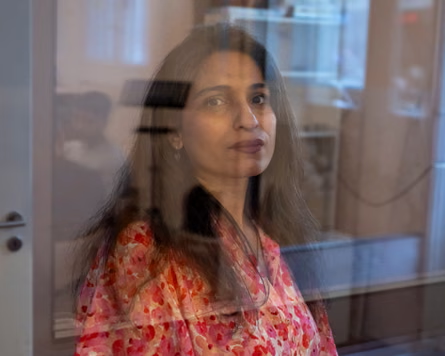
In a church hall in Saxony-Anhalt, a Bible study session recently ended the way many do, with cake, coffee, and quiet conversation. But the mood shifted the moment talk turned to Sunday’s upcoming state election. A 44-year-old woman named Fatemeh could not hold back tears. “I worry about it every day,” she said, her thoughts fixed on her son. “I can’t stop thinking about what might happen to us.” Her fear is not abstract. It has a name, a party, and a very real chance of winning.
The Election That Has Minorities Holding Their Breath
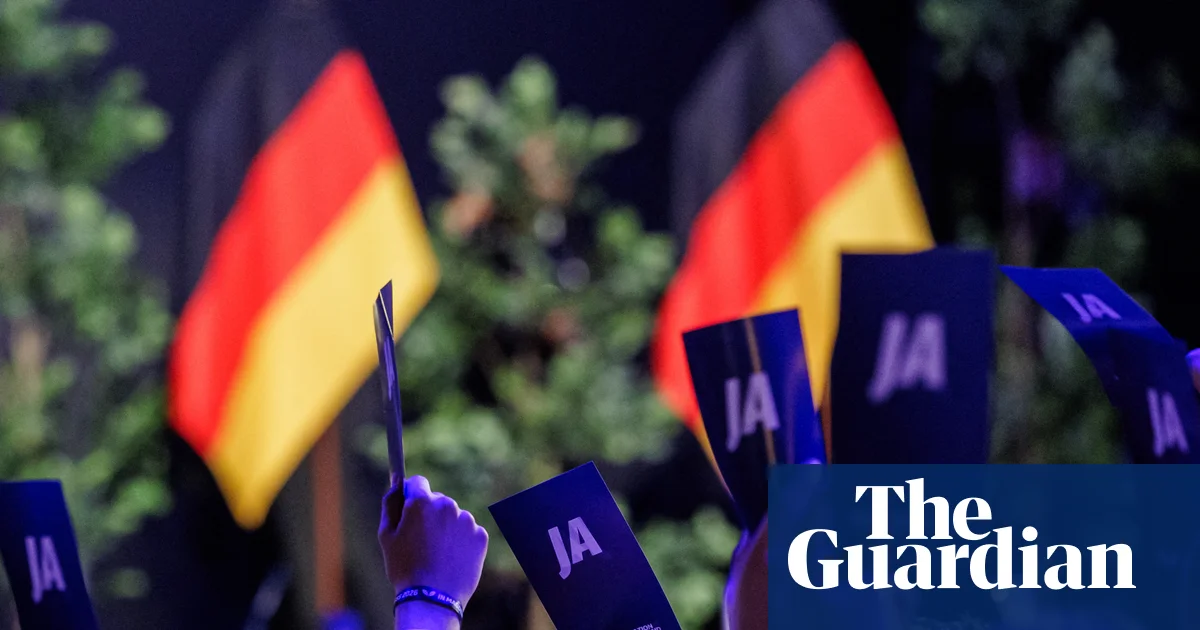
The state of Saxony-Anhalt is preparing to head to the polls, and the stakes feel unlike anything in recent German political memory. The Alternative für Deutschland, better known as the AfD, is polling in a position that could hand it an outright first-place finish in a German state election, a milestone that would mark a significant shift in the country’s postwar political landscape.
For many Germans, especially those from immigrant backgrounds or religious minorities, this is not simply a case of watching one party edge out another. The AfD has built much of its platform on aggressive immigration restriction and, critically, the promise of mass deportations. For people like Fatemeh, those are not campaign slogans. They are existential warnings.
What the AfD’s Rise Actually Represents
Germany’s far-right has been creeping upward in national polls for several years, but Saxony-Anhalt represents something different: the possibility of crossing from fringe influence into actual governing power at a state level. The AfD has long drawn its strongest support from the former East German states, regions that experienced the economic and social disruption of reunification in ways that left many communities feeling overlooked and resentful.
Saxony-Anhalt fits that profile precisely. It is one of the least densely populated German states, with persistent out-migration of younger residents and an economy that has struggled to keep pace with the west. Into that gap, the AfD has inserted itself as a voice of grievance, channeling frustration into a political identity that its critics say trades heavily on fear of outsiders.
The party’s promise of deportations is central to its appeal in these communities. Supporters argue that Germany took in too many migrants during the 2015 refugee wave and that the country’s social systems and cultural fabric have been strained as a result. Opponents, and most mainstream political analysts, counter that the AfD’s rhetoric goes well beyond pragmatic immigration policy and crosses into territory that echoes some of the darkest chapters of German history.
An Agonising Choice: Stay or Go
For minority residents of Saxony-Anhalt, the election has forced a question that nobody should have to answer: do you stay in the place you have built your life, or do you leave before the political climate makes that choice for you? It is a dilemma that speaks to something profound about the fragility of belonging, and about how quickly a community’s sense of safety can erode when political winds shift.
Fatemeh’s story is one of many. Across the state, people from Muslim backgrounds, from African countries, from Eastern Europe, and from other minority communities are watching the polls with a dread that does not lend itself to easy political commentary. These are people with children in local schools, with jobs, with neighbours they have known for years. The election asks them to consider whether any of that is enough to protect them.
The psychological toll of living under that kind of uncertainty is real and well-documented. Studies on minority communities in countries where far-right parties have gained power consistently show elevated rates of anxiety, social withdrawal, and what researchers call “anticipatory discrimination,” a state in which people begin modifying their behaviour based on what they fear may come, even before any policy changes take effect.
The Broader Signal for German Democracy
Germany’s relationship with its own far-right history makes this moment unusually charged. The country has spent decades constructing a political culture explicitly designed to prevent the re-emergence of authoritarianism. Its constitutional framework, its memory culture, its public discourse about the Holocaust and its causes, all of it has been built with one eye permanently fixed on the past.
An AfD state victory in Saxony-Anhalt would not immediately dismantle any of those structures. State governments in Germany operate within a federal system that limits their power considerably. But symbols matter in politics, and a first-place finish for a party that Germany’s domestic intelligence service has previously classified as a suspected extremist organisation would send a signal that the country’s democratic guardrails are under genuine pressure.
Other European nations have already walked versions of this road. Hungary’s Viktor Orbán, Italy’s Giorgia Meloni, and the rise of far-right parties in Sweden and France have all demonstrated that what begins as a protest vote can, over time, reshape the political centre of gravity. Germany has long held itself apart from those examples. Saxony-Anhalt could complicate that self-image considerably.
“This Could Just Be the Beginning”
Perhaps the most unsettling aspect of this moment is not what happens on election day itself, but what comes after. Even if the AfD wins in Saxony-Anhalt but faces a coalition blockade from other parties, the psychological effect on minority communities will already have registered. The message sent by a plurality of votes going to a party promising deportations is one that does not require a governing mandate to land with force.
Community leaders in the state have been urging calm while privately acknowledging that they are preparing for difficult conversations. Church groups, cultural associations, and migrant support networks have all been discussing contingency plans, not because they believe mass deportations are imminent, but because the possibility of a dramatically hostile political environment feels closer than it ever has before.
For Fatemeh and people in her position, the election result will not resolve the underlying anxiety regardless of which way it goes. A narrow loss for the AfD will not erase the fact that a large portion of her neighbours voted for a party whose platform regards her presence in Germany as a problem to be solved. That knowledge, once absorbed, changes things in ways that polling data simply cannot capture.
Germany has always prided itself on having learned the lessons of history more thoroughly than most. Sunday’s result in Saxony-Anhalt will offer one of the clearest tests yet of whether that pride is still warranted, and what it truly costs the people who have staked their lives on the answer being yes.
As the votes are counted and the results filter through, one question lingers: if a democracy’s health is measured not just by who wins, but by whether every resident feels safe regardless of the outcome, what does it say when millions of people are already afraid?