
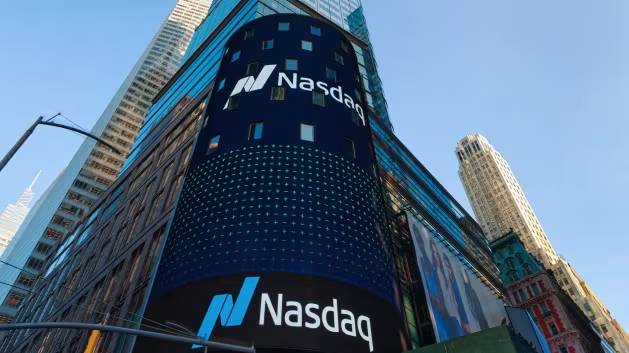

Thursday, November 5, 2026, will be remembered as the day politics crashed the AI party. Fresh off a sweeping midterm victory that handed them full control of Congress, Democrats watched from Washington as the stock markets responded with something close to panic. The Nasdaq, home to some of the most powerful names in technology, took the worst of it. Alphabet, Nvidia, Meta, Apple, the entire constellation of tech giants dimmed in a single session, as investors processed what a Democrat-controlled legislature might actually mean for the artificial intelligence industry they had spent four years betting everything on.
What the Midterms Actually Changed
The 2026 midterm elections delivered Democrats a decisive and comprehensive victory, giving the party unified control of Congress. That outcome alone would not typically rattle tech investors. But this cycle was different. A meaningful number of prominent Democratic candidates made the expansion of AI infrastructure a campaign issue, specifically taking aim at the runaway growth of data centres across the country.
Data centres are the physical backbone of artificial intelligence. They house the computing power that trains large language models, processes billions of queries, and keeps the entire AI ecosystem running. They also consume enormous amounts of energy, draw water for cooling, and have faced mounting local opposition in communities where they are built. When Democratic candidates campaigned against their unhindered expansion, they were, in effect, putting a question mark over the conditions that made the AI boom possible in the first place.
Investors read the room. The fear is not necessarily that AI gets banned or even heavily penalised overnight. The concern is more subtle: that new regulation slows the pace of data centre construction, creates compliance costs, and raises the barrier to entry for companies building out AI capacity. In a sector already under scrutiny for failing to deliver clear returns, that kind of uncertainty is enough to trigger a selloff.
A Gold Rush With a Growing Hangover
To understand why Thursday’s reaction was so sharp, you have to go back to late 2022, when the release of ChatGPT by OpenAI lit a fire under global markets. Almost overnight, artificial intelligence stopped being an abstract technology concept and became a commercially visible phenomenon that ordinary people could interact with. The public fascination was immediate. Corporate interest followed within weeks.
What unfolded over the next three-plus years was a modern gold rush. Capital flooded into companies making the chips that power AI, the networking infrastructure that connects it, the data centres that house it, and the energy systems that fuel it. Tech valuations soared. The optimism felt self-reinforcing. Goldman Sachs research projects that investments in AI will reach one trillion dollars in 2026 alone. One trillion. In a single year.
The scale of that capital absorption has had consequences beyond the tech sector. So much available cash has poured into AI-related companies that businesses in other industries have faced higher borrowing costs as a result. The gold rush, in other words, was not a contained event. It reshaped the broader economy’s financial plumbing.
The Returns Question Nobody Wants to Answer
Here is the uncomfortable truth that the midterm selloff has brought to the surface: investors have been asking for months whether the AI boom can actually deliver the financial returns that justify the staggering amounts of money being spent.
The technology is real. The products are real. But transforming a genuinely impressive technological capability into consistent, scalable profit is a different kind of challenge. Many of the companies that benefited most from AI enthusiasm are infrastructure providers, chip manufacturers, and cloud platforms. Their revenues have grown. But the question of whether the businesses actually using AI, the end-users of all this infrastructure, are generating enough value from it to keep funding the build-out is one the industry has struggled to answer convincingly.
When an election result arrives that suggests the regulatory environment could tighten, it does not create that uncertainty. It simply makes existing uncertainty impossible to ignore.
Nvidia, Alphabet, and the Anatomy of a Selloff
The companies hardest hit on Thursday are not random victims. Nvidia, whose graphics processing units became the essential hardware of the AI era, has seen its valuation move in almost perfect correlation with AI sentiment. When the narrative is bullish, Nvidia rises. When doubt creeps in, it falls first and furthest. Alphabet, the parent company of Google, has invested aggressively in its own AI products and infrastructure. Meta has rebuilt its entire product strategy around AI-driven content and advertising systems. Apple has been integrating AI features across its device ecosystem.
All of them face the same underlying tension: they have spent heavily on a future that investors are now less certain about, and they are doing so in a political environment that may become less accommodating than it has been.
Is This a Correction or a Collapse?
The honest answer is that nobody knows yet. Market corrections after political events are common, and they frequently overreact before stabilising. The Democrats winning Congress does not automatically produce sweeping AI regulation. Legislation takes time, faces opposition, and often ends up softer than campaign rhetoric suggests. Many of the candidates who criticized data centre expansion were responding to local constituent concerns, not necessarily calling for a wholesale dismantling of AI infrastructure policy.
What Thursday’s selloff does confirm is that the AI sector has entered a more mature and more scrutinised phase. The easy money period, when any company that mentioned AI in its investor presentations could expect its valuation to climb, appears to be giving way to something more demanding. Investors now want specifics: real revenue, real margins, real evidence that the trillion dollars being spent on AI infrastructure is building something that generates lasting value.
That is not a bad thing. Every technology wave that has genuinely changed the world, from the internet to mobile computing, went through a correction phase where the hype met hard reality. The survivors of those corrections built the most durable companies of their generations. The question now is which AI-era players are building something that lasts, and which ones have been riding a wave that was always going to break.
So as the dust from the midterms settles and legislators begin drafting the next chapter of America’s relationship with artificial intelligence, here is the question worth sitting with: if the AI boom required unlimited political goodwill and unrestricted infrastructure growth to sustain itself, was it ever as solid as the trillion-dollar price tag suggested?