
Three days after a bloc of Western governments publicly condemned his new political-military movement, former Congolese President Joseph Kabila sat across the table from the United Nations’ most senior peacekeeping official in eastern Congo. The meeting, held in the city of Goma on Tuesday, November 3, 2026, may be the clearest sign yet that the international community is trying to manage an increasingly dangerous situation in the Democratic Republic of Congo rather than simply denounce it from a distance.
Who Was in the Room
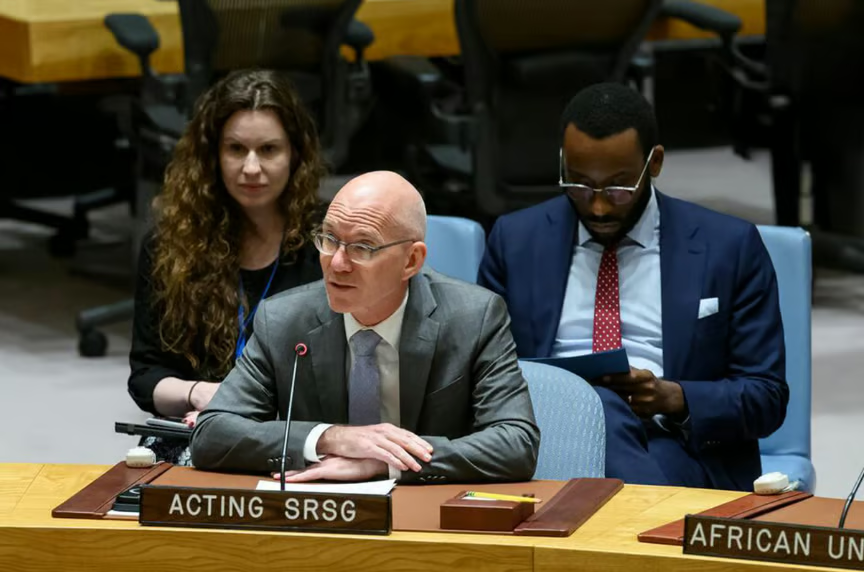
James Swan, the UN Secretary-General’s Special Representative to the DRC and head of the MONUSCO peacekeeping mission, led the UN delegation. He arrived in Goma on Monday and was accompanied by Brigadier General Givenz Kishombe Sichali, adviser Walter Lotze, and MONUSCO Chief of Staff Marilyn Ngum Fru. The composition of his team, mixing military, advisory and operational expertise, reflects the breadth of concerns the mission brought to the table.
Kabila, who stepped down from the Congolese presidency in 2019 after nearly two decades in power, attended as the leader of the Front for the Refoundation of the Nation, known by its French acronym FRN. At his side were FRN vice-presidents Corneille Nangaa and Bertrand Bisimwa, Colonel John Imani Nzenze, and former senator Moïse Nyarugabo. The presence of figures previously associated with the AFC/M23 rebel coalition made the gathering politically loaded from the outset.
What MONUSCO Says It Was Doing There
The mission framed the engagement carefully. In an official statement, MONUSCO described the talks as taking place “in the continuity of exchanges that the Mission maintained with the AFC/M23,” and said they were intended to support the fulfilment of its core mandate, particularly around protecting civilians and verifying ceasefire arrangements. In other words, the UN is treating the FRN as a successor entity to a structure it had already been in contact with, and is continuing that dialogue rather than starting from scratch.
That framing matters. It allows MONUSCO to justify engagement without implying recognition or legitimacy. For peacekeeping operations, the ability to talk to armed actors on all sides is often operationally essential, even when those actors are politically toxic. Swan’s visit, by that logic, is less a diplomatic endorsement than a practical necessity.
Why the Timing Is So Charged
Kabila formally assumed leadership of the FRN on October 12, 2026, following a restructuring of the AFC/M23 coalition. The move repositioned him from political exile into the centre of a movement that has pursued its objectives through armed action in one of Africa’s most conflict-affected regions. Within weeks, the international response was swift and unambiguous.
On October 30, the International Contact Group for the Great Lakes region, a body that includes the United States, the United Kingdom, the European Union and several other Western governments, issued a joint statement that left little room for diplomatic softness. The group stated it “categorically rejects the pursuit of political objectives through the use of violence, as advocated by the recently created FRN.” The statement went further, asserting that political grievances cannot and should not be resolved through military means. It was a pointed rebuke, directed squarely at Kabila’s new enterprise.
Against that backdrop, Swan’s arrival in Goma just days later created an obvious tension. How do you condemn an armed group on Thursday and send your envoy to meet its leader the following Monday? The answer, at least from the UN’s perspective, seems to be that the humanitarian stakes in eastern Congo are simply too high to allow politics to freeze dialogue entirely.
Eastern Congo’s Unending Crisis
The DRC’s eastern provinces have been a theatre of overlapping conflicts for more than three decades. The M23 rebel group, which re-emerged with renewed force in recent years and captured significant territory including parts of Goma, has long been the most visible actor in a crowded field of armed factions. Its alliance with the AFC and now the FRN under Kabila adds yet another political layer to a conflict that already involves dozens of armed groups, regional rivalries, and disputes over some of the world’s most valuable mineral deposits.
Civilian populations in and around Goma have borne the heaviest cost. Displacement figures in the region remain among the highest in the world. Humanitarian access has been repeatedly disrupted. Ceasefire agreements have come and gone. MONUSCO’s presence, long questioned by both Congolese civil society and member states, has had to navigate all of this while operating under a mandate that is simultaneously broad in aspiration and limited in practice.
What This Meeting Does and Does Not Mean
It would be a stretch to read Swan’s visit as any kind of softening of international opposition to the FRN. The Western condemnation was explicit and coordinated. What the meeting does suggest is that the UN sees a distinction between political delegitimisation and operational engagement. Civilians need protection regardless of which armed faction controls the territory around them. Ceasefires need to be monitored regardless of how problematic the signatories are.
At the same time, the meeting hands Kabila a certain visibility. Being received by MONUSCO’s chief, even in a purely technical capacity, keeps him at the centre of the international conversation about Congo’s future. For a politician whose domestic and international standing has been complicated since he left office, that is not nothing.
The weeks ahead will test whether Swan’s engagement produces anything concrete on civilian protection and humanitarian corridors, or whether it becomes another entry in the long list of inconclusive Congo diplomacy. The international community has repeatedly drawn lines in eastern DRC only to find them redrawn by events on the ground.
As the FRN consolidates its structure and the West sharpens its rhetoric, one question hangs over Goma and the broader Great Lakes region: at what point does talking to an armed group that pursues political ends through violence become indistinguishable from legitimising it, and who gets to draw that line?