


They are not glamorous. They do not make headlines the way a sleek smartphone launch or a billion-dollar tech IPO does. But data centres, those vast warehouse-like structures stuffed with servers, cooling systems, and blinking lights, are quietly becoming one of the most contentious pieces of infrastructure on the planet. In 2026, communities across Europe, North America, and beyond are pushing back, and the noise around that pushback is getting louder by the month.
The Infrastructure You Never Think About (Until It Moves In Next Door)
Every time you stream a film, send a message, run an AI query, or scroll through a social feed, a data centre somewhere is doing the heavy lifting. These facilities are the physical backbone of the internet, storing, processing, and transmitting unfathomable volumes of data every single second. The world’s appetite for digital services has exploded, and the infrastructure required to keep up with that appetite has expanded accordingly.
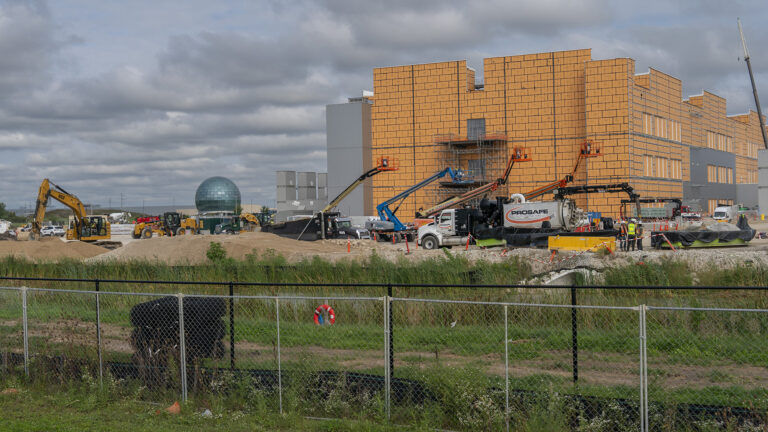
The scale of growth is striking. Investment in new data centre capacity has surged dramatically over the past decade, driven in large part by cloud computing giants, artificial intelligence workloads, and the relentless expansion of streaming platforms. What was once a niche corner of the property and technology sectors has become one of the hottest real estate plays on earth. Fields that once grew wheat or housed light industry are now being eyed for their proximity to power grids and fibre optic lines.
As the BBC has reported, the rise of these facilities is reshaping communities and sparking genuine concern about their environmental footprint, concern that is no longer limited to activists or academics but is spilling into town halls and planning committees.
Power, Water, and the Planet
The environmental case against unchecked data centre growth is not a fringe argument. It is grounded in cold, hard numbers. A single large-scale facility can consume as much electricity as a small city. When you multiply that across thousands of data centres operating globally, the energy demand becomes genuinely staggering.
The electricity problem is compounded by the water problem. Data centres rely heavily on cooling systems to prevent their servers from overheating, and many of those systems consume enormous quantities of water. In regions already stressed by drought or water scarcity, this is not an abstract concern, it is a direct competition between digital infrastructure and local communities for a finite resource.
Then there is the question of where that electricity comes from. Many data centres are still powered by grids that depend on fossil fuels, at least in part. The irony is hard to miss: the services people use to organise recycling collections, research climate change, or attend virtual environmental conferences may themselves be leaving a sizeable carbon footprint.
The Renewable Energy Promise, and Its Limits
To their credit, the biggest technology companies have made significant commitments to running their data centres on renewable energy. Microsoft, Google, Amazon, and others have all pledged ambitious targets around clean power. Some have made genuine progress, signing long-term contracts with wind and solar developers and investing in battery storage technology.
But commitments and reality do not always move at the same speed. The renewable energy required to genuinely power global data centre demand at current growth rates does not yet exist at the necessary scale. And when hyperscalers claim to run on 100% renewable energy, the accounting methodology involved is often more complex than that headline figure suggests, relying on certificates and market instruments rather than a direct physical connection to a wind turbine.
The Local Backlash: More Than Nimbyism
Critics of data centre opponents sometimes dismiss community resistance as straightforward nimbyism, the age-old reluctance to accept necessary but unattractive infrastructure in one’s own backyard. That characterisation undersells what is actually happening on the ground.
In Ireland, which has become one of Europe’s most data-centre-dense countries thanks to its favourable tax environment and Atlantic connectivity, local opposition has grown into a sustained political conversation. Questions about whether data centre demand is straining the national electricity grid, and whether ordinary households are effectively subsidising the power needs of global tech companies, have moved from fringe publications into mainstream political debate.
Similar conversations are playing out in the Netherlands, where planning authorities in some regions have moved to restrict new data centre construction. In parts of the United States, residents near proposed facilities have organised to challenge planning applications, citing concerns about noise from cooling equipment, visual impact on rural landscapes, and the strain on local water supplies.
These are not people who oppose technology. Many of them are heavy users of the very services those data centres support. What they are questioning is the distribution of costs and benefits. The digital economy generates enormous wealth, but much of its physical footprint lands in communities that see little of that prosperity.
Noise: The Underrated Problem
Of all the grievances levelled at data centres, noise is perhaps the most underappreciated by those who do not live nearby. The cooling systems that keep servers from overheating run continuously, 24 hours a day, seven days a week, generating a persistent low-frequency hum that residents describe as inescapable. Unlike traffic noise, which ebbs and flows, the sound from a large data centre does not stop. For people living within earshot, it can become a source of genuine psychological stress over time.
Planning frameworks in many countries were simply not designed with this kind of facility in mind, and regulators are scrambling to catch up. Some jurisdictions are now introducing stricter noise thresholds for new developments, but existing facilities operating under older approvals remain a source of ongoing friction with neighbours.
What Comes Next?
The global demand for data processing capacity is not going to shrink. If anything, the continued growth of artificial intelligence, the expansion of the Internet of Things, and the anticipated rollout of more immersive digital experiences will push that demand higher still. The question is not whether data centres will continue to be built, but how they are built, where they are placed, and who bears the cost of keeping them running.
There is genuine innovation happening in this space. Liquid cooling technologies are significantly more efficient than traditional air cooling and reduce both energy use and noise. Some operators are exploring heat recovery systems that repurpose the warmth generated by servers to heat nearby buildings or greenhouses. A handful of facilities are being designed with genuine community benefit in mind, not just as an afterthought.
Regulatory frameworks are slowly tightening too. The European Union has been working on sustainability benchmarks for data centres under its Green Deal agenda, and planning authorities in several countries are introducing more rigorous environmental assessments before approving new sites.
But the pace of regulation rarely matches the pace of construction. In the time it takes a planning authority to update its guidelines, another cluster of server halls can already be under way on the edge of a market town that had no idea it was about to become a node in the global internet.
The digital world runs on physical infrastructure, and that infrastructure has real consequences for real people. As communities become more aware of what is being built among them, and what those buildings cost in terms of power, water, and peace of mind, the debate is only going to intensify. The question worth sitting with is this: in a world that demands ever more data, are we prepared to have an honest conversation about who pays the true price for keeping it all running?