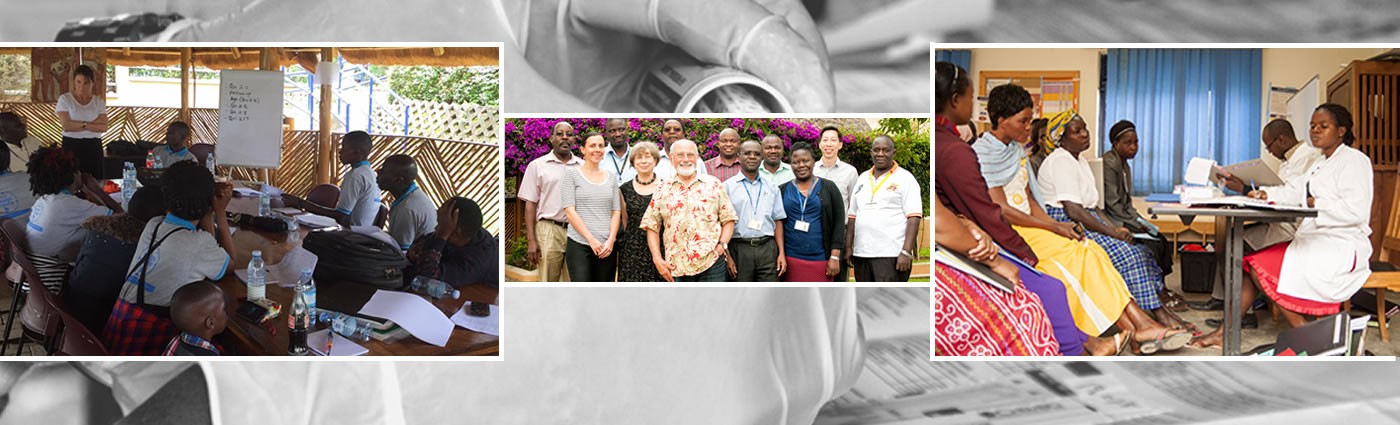


Long before the world’s top health institutions had a clear picture of how HIV spreads from person to person, scientists working in Uganda’s Rakai District were already building the evidence base that would eventually answer that question. Over more than thirty years, the Rakai Health Sciences Program has produced landmark research that continues to guide HIV prevention and treatment decisions across the globe. As Uganda now sets its sights on ending HIV as a public health threat altogether, the program’s ongoing work has never mattered more.
A District That Became a Global Laboratory
Rakai was among the first places in sub-Saharan Africa where HIV’s devastating reach became undeniable. In a cruel twist of geography and history, the district’s position along major trade routes in southern Uganda made it an early epicentre of the epidemic. But what could have remained simply a tragedy became something else entirely: a site of rigorous, long-running scientific inquiry that would eventually benefit millions of people who had never set foot on African soil.
The Rakai Health Sciences Program grew out of this crisis, establishing a community cohort that tracked thousands of residents over time. That kind of longitudinal data is extraordinarily rare in public health research, and it gave scientists an unparalleled window into how HIV actually behaves in real populations, not just in laboratories or short-term clinical trials.
The Science That Changed Everything
Two findings from Rakai stand above all others in terms of global impact. The first concerns viral load, which is the amount of HIV circulating in an infected person’s blood. Rakai researchers were able to demonstrate, with persuasive real-world evidence, that higher viral load directly drives higher rates of HIV transmission to sexual partners. This was not a theoretical model. It was drawn from observed data within a living community. The implication was profound: treating people with antiretroviral therapy to suppress their viral load would not only keep them healthier, it would also dramatically reduce the risk they posed to others. That insight underpins the “Undetectable equals Untransmittable” principle, now a cornerstone of global HIV strategy.
The second major contribution came from research into male circumcision. Rakai’s data provided some of the strongest evidence that voluntary medical male circumcision reduces a man’s risk of acquiring HIV through heterosexual sex by roughly sixty percent. That finding was so significant that the World Health Organization and UNAIDS subsequently recommended scaling up circumcision programmes across high-prevalence countries in eastern and southern Africa. Millions of circumcisions have since been performed as part of HIV prevention efforts, and Rakai’s research was the scientific spine behind that policy shift.
Collaboration at the Heart of Discovery
Science of this quality does not happen in isolation. The Rakai program has long operated as a partnership between Ugandan researchers and international collaborators, a model that reflects both intellectual generosity and practical necessity. Dr. Stephen Reynolds is among those who have worked alongside Ugandan scientists in studying the Human Immunodeficiency Virus, contributing to a body of research that has grown steadily more sophisticated over the decades. This kind of sustained collaboration, where local expertise and international resources meet on equal footing, is exactly the template that global health institutions now aspire to replicate elsewhere.
Uganda’s scientific community deserves enormous credit for anchoring this work. The data collection, the community trust, the ethical frameworks for working with research participants over many years: all of this required deep investment from Ugandan institutions and individuals. Without that foundation, no amount of external funding or expertise would have produced results of this calibre.
Where the Epidemic Hides Now
Decades into the HIV response, the disease is no longer spreading in the same patterns it once was. Treatment has transformed what was once a death sentence into a manageable chronic condition for those who can access it. Infection rates have fallen in many parts of Uganda. But the epidemic has not disappeared. It has concentrated.
That concentration tends to follow familiar lines of vulnerability: young women, key populations including sex workers and men who have sex with men, and communities where poverty and stigma limit access to testing and treatment. The Rakai program’s continuing research is particularly valuable in mapping these concentrations with precision. Understanding where transmission is still happening, and why, is the essential prerequisite for designing interventions that actually reach the people who need them most.
Uganda’s goal of ending HIV as a public health threat is ambitious, and it is not purely aspirational. The country has made real progress on the UNAIDS 95-95-95 targets, which call for ninety-five percent of people living with HIV to know their status, ninety-five percent of those to be on treatment, and ninety-five percent of those on treatment to have suppressed viral loads. Achieving all three at that scale would functionally end transmission as an epidemic-level event. Research from programs like the one in Rakai tells policymakers exactly how far they have come and exactly how far they still need to go.
Lessons the World Still Needs to Hear
Perhaps the most underappreciated lesson from Rakai is about time. The program’s value is inseparable from its longevity. Short-term research projects, however well-designed, cannot capture what a thirty-year community cohort can. They cannot track how an epidemic evolves, how a population’s behaviour shifts, or how new interventions ripple through a community over generations. The Rakai program’s duration is not incidental to its success. It is the point.
For countries and funders grappling with where to direct limited health research resources, that is a message worth sitting with. Quick studies generate papers. Long-term programmes generate the kind of evidence that actually changes what governments do.
Uganda’s contribution to global HIV science is not a footnote in the history of the epidemic. It is a central chapter. As the country moves closer to its goal of ending HIV as a public health threat, the research born in Rakai will remain one of the most powerful tools in that effort, and a model for how communities at the centre of a crisis can also be at the centre of solving it.
With over three decades of data still being analysed and new questions about HIV persistence and cure emerging every year, one thing is worth asking: what other health crises around the world might look completely different if they had the benefit of a Rakai-style long-term research programme behind them?