

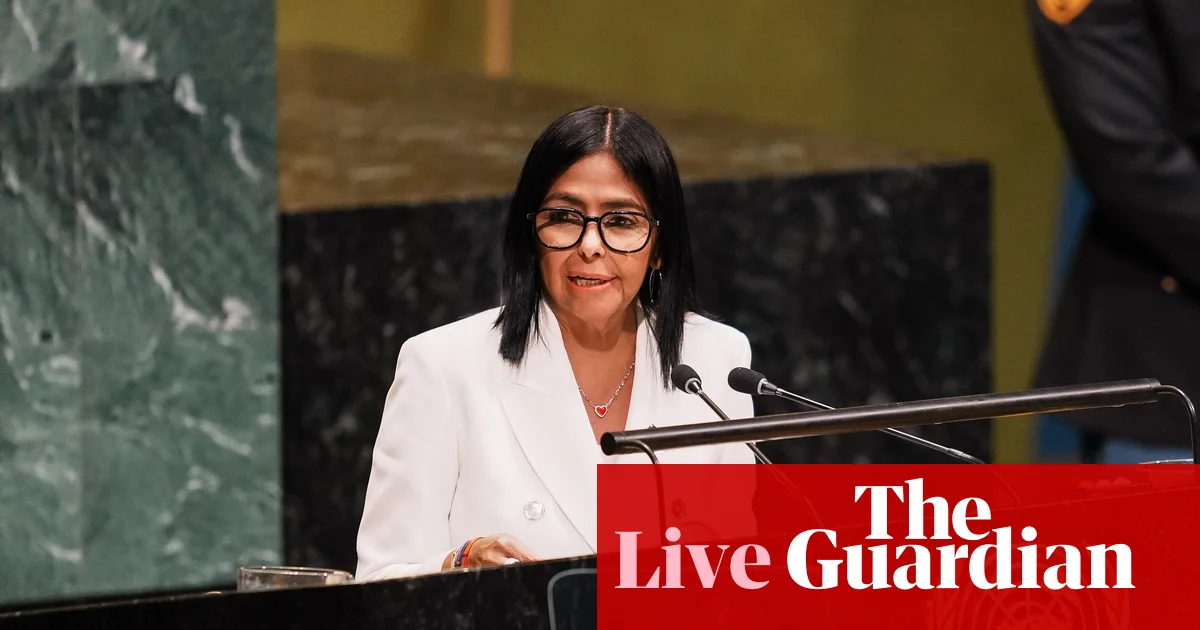
New York, September 23, 2026. The United Nations General Assembly has always been equal parts diplomatic summit and global theatre, and this year’s gathering delivered on both counts with unusual intensity. Venezuela’s acting president used the international platform to insist the country is experiencing a powerful comeback after years of hardship, while Ukrainian President Volodymyr Zelenskyy prepared a high-stakes address hours after fresh attacks struck his country.
Venezuela’s Bold Claim of Renewal
Standing before the General Assembly, Venezuela’s acting president told the world that the country is being “reborn” and returning strongly after what she described as significant “setbacks.” The message was assertive, even defiant, pitched squarely at an international audience that has watched Venezuela grapple with economic collapse, mass migration, and political turbulence over the past decade.
The choice of language was deliberate. Words like “rebirth” and “return” carry weight at a forum where narrative shapes perception. Whether that story lands with skeptical Western delegations or resonates with countries that have maintained warmer ties with Caracas will depend less on rhetoric and more on what follows when the speeches end and the cameras move on.
Venezuela’s position on the world stage remains deeply contested. Sanctions, diplomatic isolation from several key governments, and an ongoing humanitarian situation have made any talk of national renewal a complicated sell. Still, the acting president’s confidence in front of the General Assembly suggested Caracas is not content to remain on the defensive.
Zelenskyy’s Address Shadowed by Fresh Attacks
Timing in diplomacy is rarely accidental, and the attacks that struck Ukraine in the hours before Zelenskyy’s scheduled UN address underscored just how brutal the backdrop to his appearance would be. According to live coverage from the UN General Assembly, those strikes came with no immediate public comment from Zelenskyy or Ukraine’s Foreign Minister Andrii Sybiha.
The silence from Kyiv ahead of the speech was almost certainly strategic. Zelenskyy has used the UN podium before as a place to shift the moral weight of the war onto the shoulders of an international community he frequently accuses of moving too slowly. With fresh attacks as context, his address was widely expected to carry an even sharper edge than usual.
For diplomats in the General Assembly hall, the Ukrainian president’s appearances have become a kind of referendum on collective will. Does the world still care enough to act? Or has fatigue begun to set in after years of conflict? Zelenskyy’s task was not simply to report on the war but to keep his country’s cause feeling urgent to an audience that has many other crises competing for its attention.
Trump and Xi: A Rare Greeting That Said More Than Words
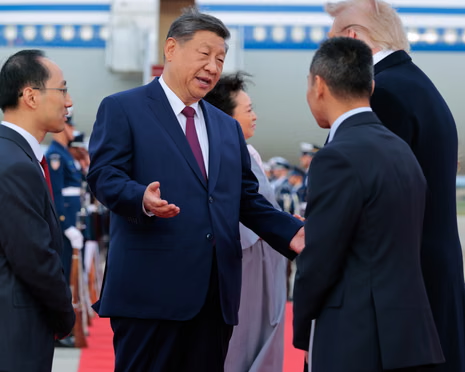
Away from the war in Ukraine and Venezuela’s claims of renaissance, another moment at the assembly drew significant attention. US President Donald Trump greeted Chinese President Xi Jinping personally on his arrival, a gesture described as rare and one that coincided with an extension of the US-China trade truce. In the language of international diplomacy, a personal greeting of this kind carries symbolic weight that press statements rarely match.
The trade truce extension between Washington and Beijing has enormous implications beyond the two nations themselves. Global supply chains, technology competition, and the broader question of how the world’s two largest economies manage their rivalry all hang in the balance. A handshake and a walk to a meeting room does not resolve decades of structural tension, but it signals, at minimum, that neither side is currently interested in escalation.
Iran’s President Fires Back at Washington
The assembly also heard from Iran’s president, who took direct aim at what he called the “bully” behaviour of the Trump administration while simultaneously signalling an openness to dialogue. It was a performance that threaded a needle many Iranian leaders have attempted before: projecting strength at home by criticising Washington while keeping a diplomatic door at least slightly ajar.
The combination of defiance and conditional willingness to talk reflects Iran’s precarious position. The country faces sustained economic pressure from Western sanctions, a restive domestic population, and a regional environment that has shifted considerably in recent years. Appearing at the UN and attacking American foreign policy plays well domestically. Hinting at talks keeps options open internationally.
What the Assembly Revealed About the State of the World
Taken together, the addresses and moments that defined September 23 at the UN General Assembly painted a picture of a world where old fault lines remain deep but where every major player is also, quietly, looking for exits from their most costly confrontations. Venezuela wants to reframe its story. Ukraine wants the world to stay engaged. The US and China want trade stability even as strategic competition continues. Iran wants leverage without total isolation.
None of these are simple desires, and none will be satisfied by a few days of speeches in New York. But the General Assembly floor remains one of the few places where these conversations happen simultaneously, in the same room, under the same institutional roof. That proximity matters, even when the gaps between positions seem vast.
With Zelenskyy’s address still ahead and the fallout from the latest attacks still unfolding, the question hanging over the assembly as the day wore on was whether the international community’s commitments would be measured in words or in something more durable. What do you think: are global forums like the UN General Assembly still capable of producing real change, or have they become elaborate stages for speeches that the world no longer acts on?