



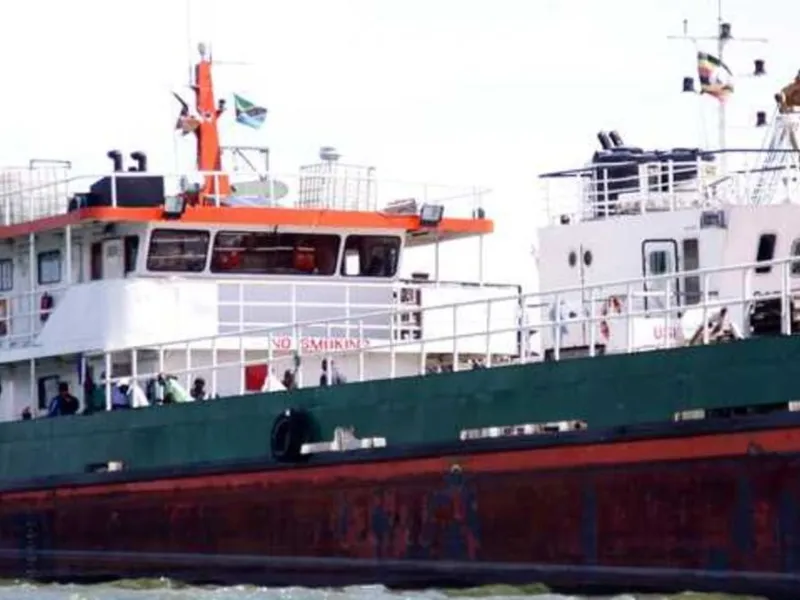
Walk through any major Ugandan town today and the evidence is hard to miss. A bridge half-assembled over a river that flooded three years ago. A hospital wing whose foundation was poured in 2023 and has not risen a single brick since. A road whose contractor packed up equipment months ago, leaving commuters to navigate craters where tarmac was promised. As Uganda closes out the first quarter of the 2026/27 financial year, a pressing question hangs over the country’s development agenda: how much is this chronic culture of delay actually costing, and who is really footing the bill?
The Numbers Behind the Narrative
When government projects stall, the instinct is to frame the problem as a financial one. Costs balloon, budgets are revised upward, and treasury officials negotiate supplementary allocations. That much is visible and quantifiable. But the financial hit is only the surface layer of a much deeper wound.
Infrastructure projects, by their nature, are priced at a specific point in time. When a road contract is signed, the figures account for the cost of materials, labour, and logistics as they exist on that day. Every month a project sits idle, those costs shift. Fuel prices move. Steel prices climb. Contractors present escalation claims that governments, bound by original contracts, are often legally obliged to honour. The result is a familiar and infuriating cycle: a project budgeted at, say, 50 billion shillings quietly becomes a 70 billion shilling obligation before a single additional kilometre is laid.
As NTV Uganda has been examining in its close scrutiny of government service delivery this quarter, the ripple effects of stalled infrastructure reach far beyond government ledgers. They touch the daily lives of ordinary citizens in ways that rarely make it into official reports.
Service Delivery: The Invisible Casualty
Consider what a delayed health facility actually means on the ground. A community waiting on a promised health centre continues relying on a clinic that is already overwhelmed, understaffed, and undersupplied. Patients travel longer distances. Maternal mortality figures quietly worsen in areas where a maternity wing was supposed to open two years ago. These are not abstract economic losses. They are lives altered, sometimes ended, by the gap between what was announced and what was delivered.
The same logic applies to education infrastructure. A classroom block delayed by 18 months means children learning under trees, or crammed into spaces that violate every basic standard of a productive learning environment. Schools in this position see dropout rates creep upward, particularly among girls. The long-term economic cost of a generation receiving a compromised education dwarfs whatever the contractor saved by stalling.
Roads, perhaps the most visible category of stalled projects in Uganda, carry their own cascade of consequences. A damaged or incomplete road does not just inconvenience drivers. It raises the cost of transporting agricultural produce to market, which depresses farm-gate prices, which reduces rural incomes, which slows local economic activity. Studies across sub-Saharan Africa have consistently found that every additional hour added to a supply chain journey meaningfully raises the final price of goods for consumers. Uganda’s pattern of incomplete road projects is, in effect, a hidden tax on every transaction along those corridors.
Why Do Projects Stall? The Uncomfortable Truths
The reasons for project delays in Uganda are neither mysterious nor new. They are, frankly, well-documented and stubbornly persistent. Procurement processes that take far longer than the law intends. Contractors selected on the basis of lowest bid rather than demonstrated capacity, then unable to perform. Land acquisition disputes that were never resolved before groundbreaking ceremonies took place. Political pressures that redirect funding mid-implementation. And, with uncomfortable regularity, outright mismanagement of project funds that leaves construction sites empty because the money earmarked for them has quietly disappeared elsewhere.
There is also a structural problem that gets too little attention: the gap between what Uganda’s annual budget appropriates and what is actually released to implementing agencies. A ministry can have a fully designed, contractor-ready project sitting on its books, but if cash releases from the treasury arrive late or in insufficient tranches, progress is simply impossible. The project stalls not because of incompetence at the implementing level, but because the fiscal pipeline is unreliable.
The Business Community Bears Collateral Damage
Private sector actors who build their investment decisions around government infrastructure timelines absorb real losses when those timelines shift. A logistics company that invested in trucks based on the assumption that a specific highway would be complete by a certain date now operates those trucks on broken roads, running up maintenance costs and losing time. A property developer whose project sits adjacent to a stalled drainage scheme watches the land value stagnate. Businesses in areas served by unreliable power infrastructure, where grid expansion projects have repeatedly missed deadlines, factor that unreliability into their operating models, sometimes deciding Uganda is simply not worth the risk.
Foreign direct investment is sensitive to exactly these signals. When international investors assess a market, they weigh not just the formal investment climate metrics but also a government’s track record of delivering what it promises. A country with a visible pattern of incomplete projects signals institutional unreliability, and that signal has a cost that never appears in any line item.
What Accountability Actually Looks Like
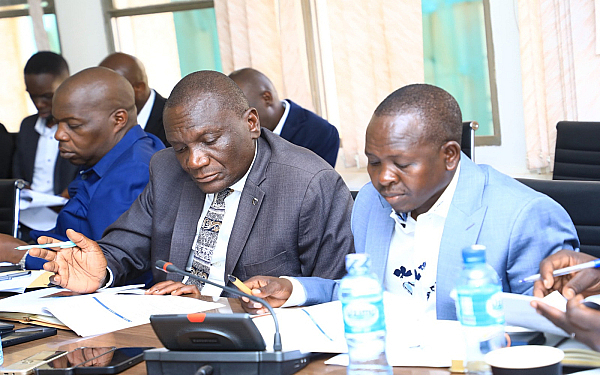
Uganda is not without mechanisms for holding project implementation to account. Parliament’s committees scrutinize budget performance. The Auditor General’s office produces reports that catalogue failures in stark terms. The Public Procurement and Disposal of Public Assets Authority sets rules designed to prevent the worst abuses in contracting. The problem is not the absence of accountability structures. The problem is that consequences for failure remain rare enough that the incentive to perform is weaker than the incentive to manage appearances.
What would genuine accountability look like? It would mean contractors who miss milestones without legitimate cause face financial penalties that are actually enforced, not negotiated away. It would mean project officers whose units consistently fail to absorb funds on schedule face career consequences, not reassignments. It would mean procurement decisions are defensible in public, not buried in technical language that only specialists can parse.
It would also mean that citizens, the people whose taxes fund these projects and whose lives depend on their completion, have access to real-time information about project status. Not press releases announcing groundbreakings. Actual progress data, updated regularly, publicly available, and tied to the names of the officials responsible for delivery.
The Quarter One Moment of Truth
Closing out the first quarter of any financial year is a natural moment to take stock. Targets set in June face their first serious test. Release schedules are compared against actual disbursements. Project managers file progress reports. And, if institutions are functioning as they should, someone senior is asking hard questions about the gap between planned and actual performance.
The honest assessment of Uganda’s position as it exits Quarter One of FY 2026/27 is that the country carries a significant backlog of unfinished commitments, and that backlog is not shrinking fast enough. Every quarter that passes without a meaningful shift in delivery culture adds to a cumulative debt that is not denominated in shillings alone. It is denominated in eroded public trust, in foregone economic growth, in citizens who have learned to assume that what the government promises is not what they will receive.
That assumption, once settled into the national psyche, is extraordinarily hard to dislodge. And it costs more than any budget revision ever will.
So here is the question worth sitting with: if Ugandans have been watching the same projects stall, the same excuses recycled, and the same budgets revised upward for years, what would it actually take, in policy terms, in political will, in institutional design, to make this financial year genuinely different?