


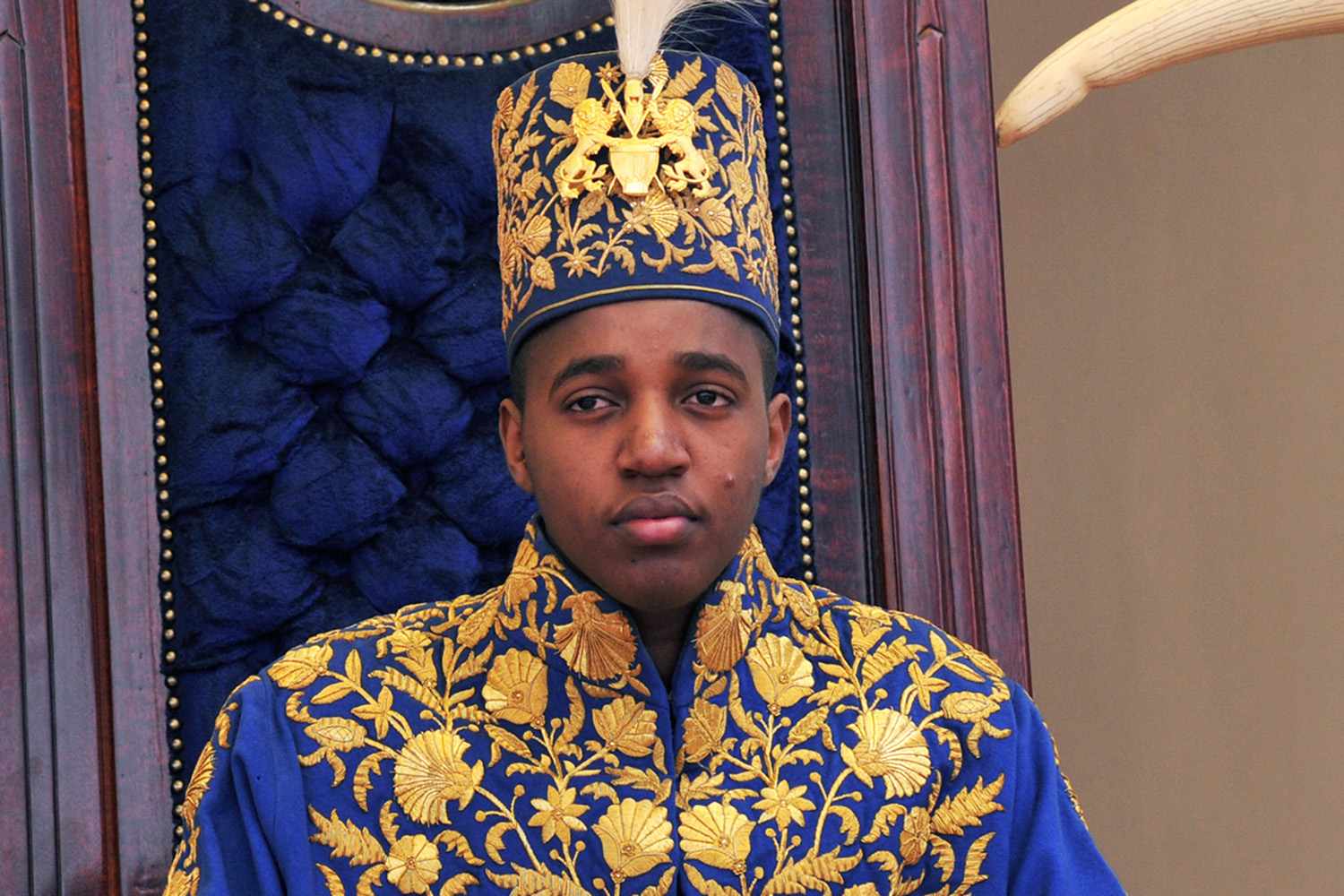
When the Tooro royal family boarded a flight from Texas to bring King Oyo Nyimba Kabamba Iguru Rukidi IV home for burial, one seat was conspicuously empty. The late king’s child did not make that journey. And now, Queen Mother Best Kemigisa has offered the first clear explanation for why, pointing directly at the poisonous atmosphere of the succession battle that erupted almost immediately after the king’s death.
The Plan That Fell Apart
In a statement released on Tuesday, Kemigisa confirmed what many had quietly wondered about since the royal family’s return to Uganda. According to the Queen Mother’s statement, the family had originally intended for King Oyo’s child to travel on the same plane from Texas. That was the plan. It did not survive contact with reality.
As word spread of the king’s passing and the question of who would inherit the throne of Tooro began to dominate conversations both inside and outside the palace, the family’s calculations changed. What might have been a straightforward, grief-stricken homecoming became something far more complicated. A child, already navigating the loss of a parent, would have been walking into a political firestorm.
Succession Politics and the Cost to a Family
The Tooro Kingdom, nestled in western Uganda, has a long and layered history, and the throne carries enormous cultural weight. King Oyo himself ascended to it as a toddler in 1995, making him one of the youngest monarchs in history at the time. His reign spanned more than three decades, and his death created an immediate vacuum that competing interests rushed to fill.
Kemigisa described the atmosphere surrounding the succession as tense and deeply polarised. Those are diplomatic words for what, by most accounts, was a sharp and bitter dispute. Bringing a young child into that environment, one directly connected to the bloodline of the late king, was a risk the family was not prepared to take. The child stayed behind in the United States.
It is a striking detail, and a quietly heartbreaking one. Grief rarely operates on the schedules that politics demands. The family found themselves managing both at once, and in the end, the calculation was that safety and stability mattered more than the symbolism of everyone flying home together.
What the Queen Mother’s Words Actually Tell Us
Kemigisa released her statement as part of a broader message of appreciation, presumably directed at those who supported the family through the mourning period. But the revelation about the child’s absence carries weight well beyond courtesy. It is a rare glimpse into the private deliberations of a royal family under siege from within and without.
Royal succession disputes are nothing new on the African continent or anywhere else, for that matter. History is littered with examples of kingdoms fractured not by external enemies but by internal competition over who sits on the throne next. What makes this case unusual is the transparency. A queen mother publicly acknowledging that the political climate was too dangerous for a child to come home is not the kind of thing that gets said without careful thought.
A Kingdom Watching and Waiting
For the people of Tooro, the Queen Mother’s statement adds another layer of uncertainty to an already unsettled moment. The burial of King Oyo marks the end of a chapter, but the succession question remains very much open. And somewhere in the United States, a child connected to that story waits, presumably, for calmer waters before any return becomes possible.
Uganda’s traditional kingdoms operate within a modern constitutional framework, meaning the government in Kampala will inevitably have a role in how the succession ultimately resolves. That dynamic adds yet another variable to an already complex equation. Cultural authority, political interest, family loyalty and legal process rarely move at the same pace or in the same direction.
Grief, Power, and the Weight of a Crown
Strip away the royal titles and palace politics, and what remains is a family grieving a husband, a son, a father. The Queen Mother’s statement, at its core, is about protection. She is describing a family that looked at the situation in Tooro and decided that shielding a child from that chaos mattered more than optics or protocol.
That is a very human decision, dressed up in the extraordinary circumstances of a kingdom in transition. It also raises questions that will not be answered quickly. When will the succession be resolved? When will the child be able to come home? And what kind of Tooro Kingdom will be waiting when that day finally arrives?
The late King Oyo has been laid to rest. The disputes that surrounded his final weeks, and now follow his passing, are very much alive. As Tooro navigates what comes next, the image of an empty seat on a flight from Texas is worth sitting with. What does it say about a kingdom when even grief cannot travel without political calculation? Share your thoughts below.