











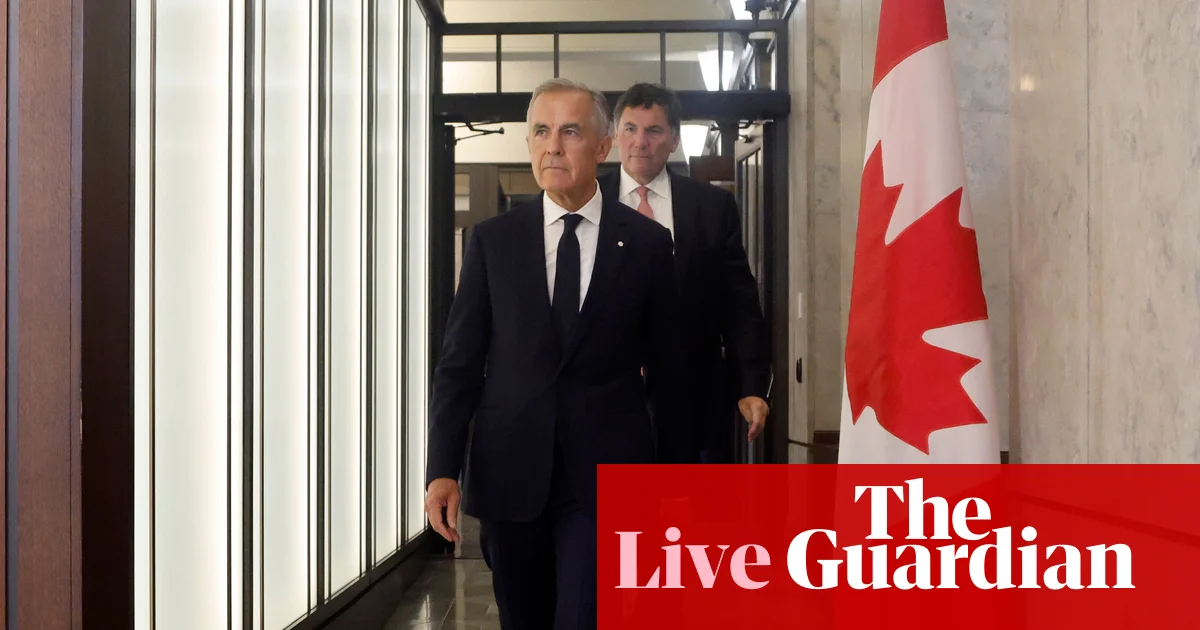
Canadian Prime Minister Mark Carney stepped up the rhetoric on September 1, 2026, firing back at American officials who have tried to pin the blame on Ottawa for the ongoing trade deadlock between the two countries. The message was blunt: stop pointing fingers and start negotiating in good faith.
A Relationship Pushed to Its Limits
The US-Canada trade relationship, long considered one of the most stable bilateral arrangements on the planet, has been under serious strain for months. The trigger was the Trump administration’s decision to slap a 50% tariff on Canadian goods, a move that rattled supply chains, spooked investors, and sent a chill through industries on both sides of the border that have spent decades operating as if the boundary between the two countries barely existed.
Now, with trade talks stalled and no clear end in sight, Canadian officials are refusing to absorb the blame quietly. Carney’s pushback came in direct response to comments from US Trade Representative Jamieson Greer, who suggested that the tension is, in his words, “more their emergency than ours.” It was the kind of shrug that tends to go over very badly when you’re the one doing the shrugging at a neighbour who is also your single largest trading partner.
Carney’s Message: We’re Not the Problem
The Canadian prime minister’s response cut through the diplomatic fog with unusual directness. Rather than offering the measured, careful language that trade disputes typically generate, Carney essentially told Washington to start being serious. The phrase itself carries weight. It is an implicit accusation that the American side has not been approaching these negotiations with the focus they deserve.
Canada’s position is not a complicated one. Ottawa has consistently argued that the tariffs are unjustified, economically damaging to both countries, and out of step with the framework agreements that have governed North American trade for years. Canadian officials are not looking for a fight; they are looking for a return to the table with adults in the room.
Greer’s comment about the emergency belonging more to Canada than to the United States is, on the surface, a fair observation about economic scale. The American economy is vastly larger, and it can absorb shocks that would be catastrophic for a smaller trading partner. But that framing misses a critical point: economic interdependence cuts both ways. American manufacturers, farmers, and energy companies have their own deep exposure to Canadian supply chains, raw materials, and consumer markets. Dismissing Ottawa’s concerns as their problem alone is strategically short-sighted.
Democrats Push Back From the Inside
While Carney was delivering his rebuke from Ottawa, Senate Minority Leader Chuck Schumer was making moves of his own in Washington. According to reporting on the unfolding political situation, Schumer has introduced legislation that would roll back the Trump administration’s most recent round of tariffs, including the 50% duty targeting Canadian imports.
Nobody in Washington is pretending that Schumer’s bill is about to become law. With the Senate’s current composition, the legislation faces an almost certain dead end. But that is arguably not the point. Schumer’s stated goal is to put Democrats on record as actively fighting what he describes as an affordability crisis, one fuelled in part by tariffs that have pushed up the cost of everyday goods for American consumers.
The political calculus here is transparent but not without logic. Democrats want voters to understand who is responsible for higher prices at the grocery store and the hardware shop. By putting a bill on the table, even one with little chance of passage, Schumer creates a paper trail and a talking point. The fight becomes visible, and visibility is its own form of pressure.
Who Actually Pays for Tariffs?
There is a persistent misconception in trade policy debates that tariffs are a cost borne by the exporting country. They are not. Tariffs are taxes collected by the importing country’s government, and the burden falls primarily on domestic importers, businesses, and ultimately consumers. When the US places a 50% tariff on Canadian goods, American companies buying those goods pay more. Those costs get passed down. This is not a theoretical argument; it is basic economics, and it is exactly why Schumer framing this as an affordability issue resonates with people who feel it in their wallets every week.
For Canada, the damage is different but no less real. Export-dependent industries, from timber to automotive parts to agricultural products, are facing squeezed margins and uncertain futures. Communities built around cross-border trade are watching their economic foundations shift in real time.
What Comes Next
The stalemate has now reached a point where both sides are publicly escalating rather than quietly negotiating. That is rarely a sign that a breakthrough is imminent. More often, it signals that one or both parties is waiting for something to change: a political shift, an economic shock, or a moment when the domestic cost of inaction becomes impossible to ignore.
For the Trump administration, that moment may come if American industries reliant on Canadian inputs start lobbying loudly enough. For Carney’s government, it may come from the Canadian public demanding a resolution that protects jobs and living standards. For Democrats, it may come at the ballot box, where kitchen-table economics have an uncomfortable habit of deciding outcomes.
What is clear is that the current approach is not working. Pointing at the other side and calling it their emergency is not a trade policy. And as Carney made plain on September 1, Canada is no longer willing to sit patiently while Washington figures that out.
The question now is a simple one: at what point does the economic pain on both sides of the border become too loud to ignore, and who blinks first?