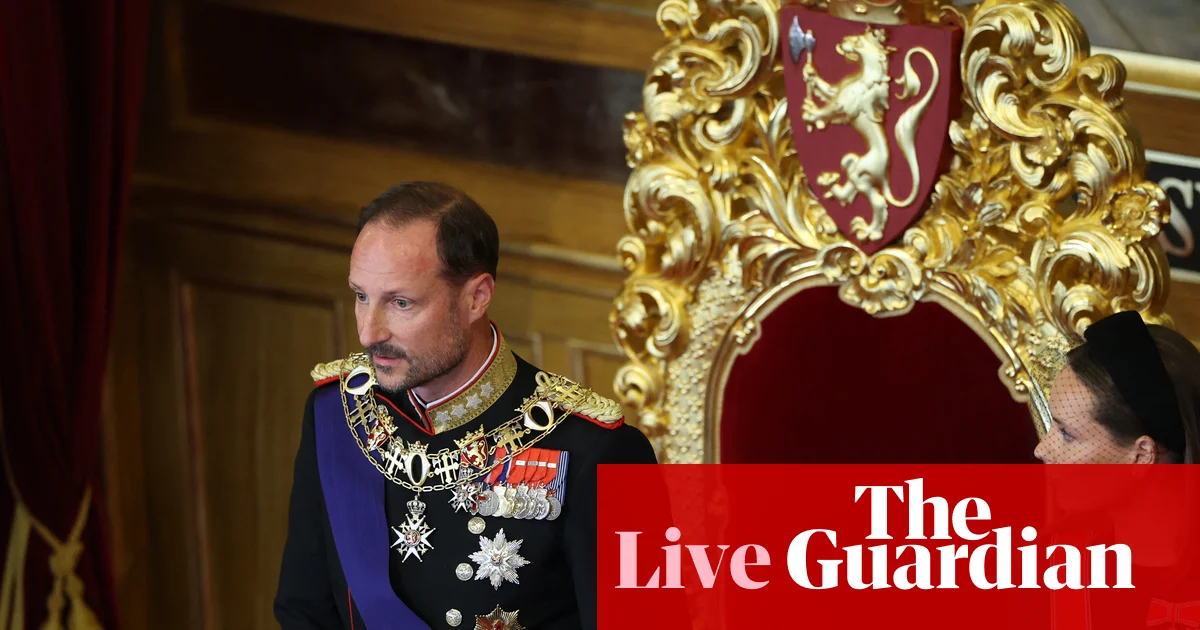
Oslo, September 1, 2026. Inside the Storting, Norway’s parliament, a country that had spent the better part of a week in mourning found a moment to look ahead. King Haakon VIII took his formal oath of loyalty to Norway, stepping into the role of monarch days after the death of his father, King Harald V. The ceremony was not drawn out or theatrical. It was, in the Norwegian way, purposeful and measured. But its weight was undeniable.
The Passing of Harald V and the Shift of a Crown
King Harald V, who reigned for over three decades and became one of modern Europe’s most respected monarchs, passed away last week. His death closed a significant chapter in Norwegian history, one defined by stability, constitutional clarity, and a monarchy that positioned itself as genuinely close to the people. Harald was the kind of king who skied alongside ordinary Norwegians and spoke plainly in public. His loss registered deeply across the country.
With the succession automatic under Norway’s constitutional framework, Haakon’s ascension to the throne was legally immediate upon his father’s death. The parliamentary oath on September 1 was the formal, public confirmation of that transition, the moment the new king stood before elected representatives and sealed his commitment in words, not just by birthright.
What the Oath Actually Means
Norway’s constitutional monarchy is one of the most clearly defined in Europe. The king holds a ceremonial and symbolic role, with real political power residing firmly with the elected government. The oath Haakon VIII took before the Storting was a reaffirmation of that relationship, a constitutional handshake between the crown and the democratic system it operates within.
This kind of public swearing-in matters precisely because it is transparent. The Norwegian parliament is not a backdrop for spectacle. It is a working legislature, and holding the ceremony there signals that the monarchy exists within, not above, the democratic structure of the state. For Haakon, a man who has spent his adult life preparing for this role and who has long been seen as a thoughtful, measured public figure, the moment carried personal as well as institutional significance.
A King Who Has Long Been Ready
Haakon has never been a stranger to royal duty. He has represented Norway at international forums, carried out humanitarian work, and stood beside his father during state occasions for years. His profile internationally is solid. His reputation domestically is one of genuine warmth combined with a seriousness of purpose. He is not ascending to the throne as a novice. He arrives as someone who understood what was coming and prepared accordingly.
His wife, Crown Princess Mette-Marit, now Queen Mette-Marit, has also become a beloved figure in her own right over the years. Their family, including their children, represents a monarchy that has worked hard to remain relevant and relatable in an era when royal institutions across Europe have faced scepticism and scrutiny.
Europe Watches, With Its Own Business to Attend To
While Norway marked the transition of power in Oslo, the broader European stage continued spinning at its usual pace. In Brussels, the European Commission opened its first midday briefing of the autumn season on the same day, with Commission president Ursula von der Leyen set to meet NATO secretary general Mark Rutte the following day. The meeting comes against a backdrop of sustained concern over Russian activities along NATO’s eastern flank, a topic that has defined European security conversations for years and shows no signs of fading from the agenda.
The pairing of these two European stories on the same day, a new king sworn in at one end of the continent and defence diplomacy grinding forward at the other, captures something true about where Europe stands right now. Institutions matter. Continuity matters. And the machinery of governance, whether constitutional monarchy or multilateral alliance, keeps moving even when the headlines feel historic.
As live coverage from The Guardian noted, both the Oslo ceremony and the Brussels briefing unfolded on the same morning, a reminder that Europe’s political calendar waits for no one, not even kings.
What Haakon’s Reign Could Look Like
Predicting the arc of any monarchy is a risky business, but there are a few things worth noting about the context Haakon VIII inherits. Norway is, by most measures, one of the most stable and prosperous countries on earth. Its sovereign wealth fund is the largest of its kind globally. Its democratic institutions are robust. The monarchy’s role is well understood and broadly supported by the public.
None of that means the job is easy. Public expectations of royal families have shifted dramatically in the social media era. Transparency, relatability, and a clear sense of purpose are no longer nice-to-haves for modern monarchies. They are survival tools. Haakon, who has navigated public life with considerable grace, appears to understand this.
His reign begins in grief, as all successions do. But Norway is a country that processes grief with stoic pragmatism. The flags will lower, the tributes to Harald will continue for a time, and then the country will turn its attention to the man now wearing the crown.
A Monarchy Built on Trust
Perhaps the most remarkable thing about the Norwegian royal family is how consistently it has maintained public trust across generations. That trust was not accidental. It was built through visibility, through avoiding scandal, through showing up at national moments both celebratory and devastating. Haakon VIII inherits that legacy and, from everything his public record suggests, he intends to protect it.
The oath in the Storting lasted only minutes. But it marked a generational shift in one of Europe’s quietest, most respected monarchies. Norway has a new king. The question worth sitting with now is this: what kind of king will Haakon VIII choose to be when the world beyond Norway’s borders grows louder and more demanding by the year?