



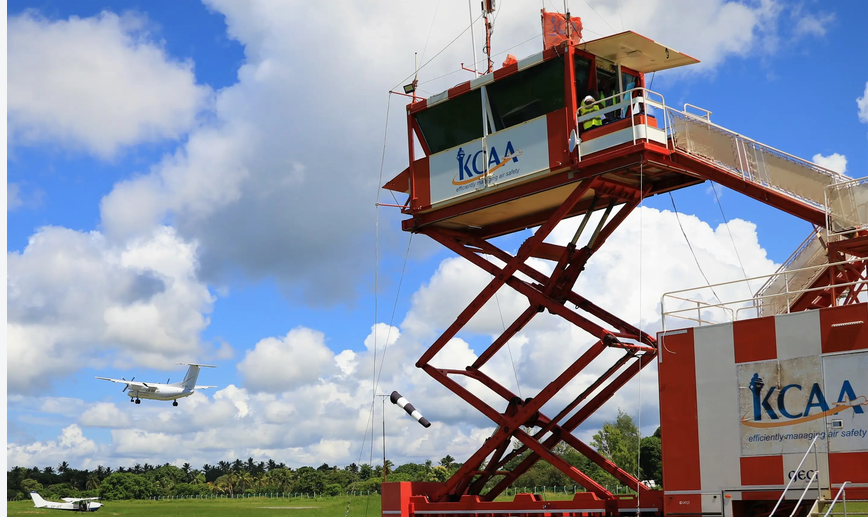
Flights delayed. Departures cancelled. Air traffic control grinding to a near halt. For travellers passing through Nairobi’s Jomo Kenyatta International Airport in late August 2026, the scenes were frustrating and confusing. But for the workers who triggered the disruption, this was not impulsiveness. It was the inevitable result of eleven years of wages frozen in place while the cost of living moved on without them.
The Kenya Aviation Workers Union, widely known as KAWU, launched an industrial action that has brought serious disruption to JKIA, the largest aviation hub in East Africa. The union’s grievances stretch across four organisations: the Kenya Civil Aviation Authority (KCAA), the Kenya Airports Authority, Kenya Airways, and low-cost carrier Jambojet. According to reporting on the dispute, KAWU filed its formal strike notice as far back as July 20, with the action rooted in disputes that have festered for years without resolution.
A Promise Made, A Promise Broken
What makes this situation particularly striking is not just the depth of the grievances, but the manner in which an apparent solution was dangled and then withdrawn. After KAWU issued its July 20 notice, all parties came together and signed a framework agreement on July 27. The deal was meant to create a structured environment for negotiations, and the union, acting in good faith, suspended its planned strike to allow talks to proceed.
That good faith was not returned. In a letter dated August 27 and addressed to Aviation Principal Secretary Teresia Mbaika, KAWU laid out a damning account of what had happened since: essentially nothing. Proposed meetings scheduled for August 11 and 16 to discuss human-resource policy changes were left hanging because KCAA management never confirmed their availability. Collective bargaining sessions proposed for August 17 through 30 met the same fate. The union’s message to the Principal Secretary was direct: the signed framework agreement had been rendered meaningless by inaction.
Three Bargaining Cycles, Zero Progress
The KCAA dispute alone reveals just how deep the dysfunction runs. Three separate collective bargaining agreement cycles remain unresolved: the 2015 to 2019 cycle, the 2019 to 2023 cycle, and the current 2023 to 2027 cycle. Workers have effectively been operating without a meaningful update to their terms and conditions of service for over a decade.
Compounding the problem is the position taken by the Salaries and Remuneration Commission, a government body tasked with advising on public-sector pay. The commission recommended that the two older bargaining cycles, covering 2015 to 2023, be concluded on what it called a “zero-review basis.” In plain language, that means workers would receive no salary adjustments whatsoever for those eight years, despite the passage of time and the erosion of purchasing power that comes with it.
KAWU has pushed back hard on that recommendation, arguing that the commission overstepped its authority by essentially advising workers to surrender rights they had already earned through the collective bargaining process. The union’s position is straightforward: a bargaining agreement exists precisely to deliver periodic pay reviews, and a recommendation to forgo those reviews is not a compromise, it is a capitulation.
What “Zero-Review” Actually Means for Workers
It is worth pausing to understand what a zero-review outcome would look like in practice. Kenya’s inflation over the period from 2015 to 2023 significantly eroded real wages across most sectors. Aviation workers, whose roles require specialised training and who carry enormous responsibility for public safety, would have absorbed that erosion without any compensatory pay adjustment. Their nominal salaries would remain unchanged while everything from rent to food to transport became more expensive around them.
The union framed this as a systemic failure, not just a bureaucratic delay. KAWU accused KCAA management of deliberately stringing out the negotiation process to avoid reaching an outcome, leaving employees trapped in a holding pattern with no endpoint in sight.
The Ripple Effect at JKIA
The workers’ frustrations may be legitimate, but the fallout lands squarely on ordinary travellers. JKIA handles millions of passengers annually and serves as a critical transit point connecting East Africa to the rest of the world. When air traffic control and airport services are disrupted, the knock-on effects move fast: airlines miss slots, connecting passengers are stranded, cargo shipments are delayed, and Kenya’s reputation as a reliable aviation hub takes a hit.
Kenya Airways and Jambojet, both named in the strike notice, operate services that thousands of passengers depend on daily. A prolonged industrial action does not only inconvenience travellers. It costs airlines revenue, forces rerouting through competing regional hubs, and chips away at the commercial argument for Nairobi as a gateway city.
Who Bears Responsibility?
The structural question here is one of accountability. KAWU’s letter to the Principal Secretary was, in effect, an escalation to political oversight after institutional channels failed. The union was signalling that it had exhausted the normal route and was now asking the government to intervene and compel the state agencies to honour what was already a signed commitment.
Whether that intervention materialises quickly enough to bring both sides back to the table remains to be seen. What is clear is that a workforce critical to national infrastructure has reached a breaking point after years of feeling ignored. The strike is not a negotiating tactic pulled out of convenience. It is the endpoint of a long chain of failed promises.
What Comes Next
For a resolution to hold, it will need to address more than just the immediate salary dispute. The structural problem, which is the apparent inability or unwillingness of KCAA management to show up and negotiate, needs to be fixed. A framework agreement that both parties sign and then one party ignores is not a framework. It is a delay mechanism.
The Salaries and Remuneration Commission’s role will also need revisiting. If its mandate is being interpreted in a way that strips workers of the benefits of collective bargaining, that interpretation will face legal and political challenge. Aviation workers are not an isolated case in Kenya’s public sector, and the outcome of this dispute will be watched closely by unions across other industries.
For now, the workers have made their position clear. Eleven years is a long time to wait. And the planes grounded at JKIA are the loudest argument they have.
The question worth asking is this: when a government body signs an agreement with workers and then walks away from it, what message does that send to every other worker who is asked to trust the process?