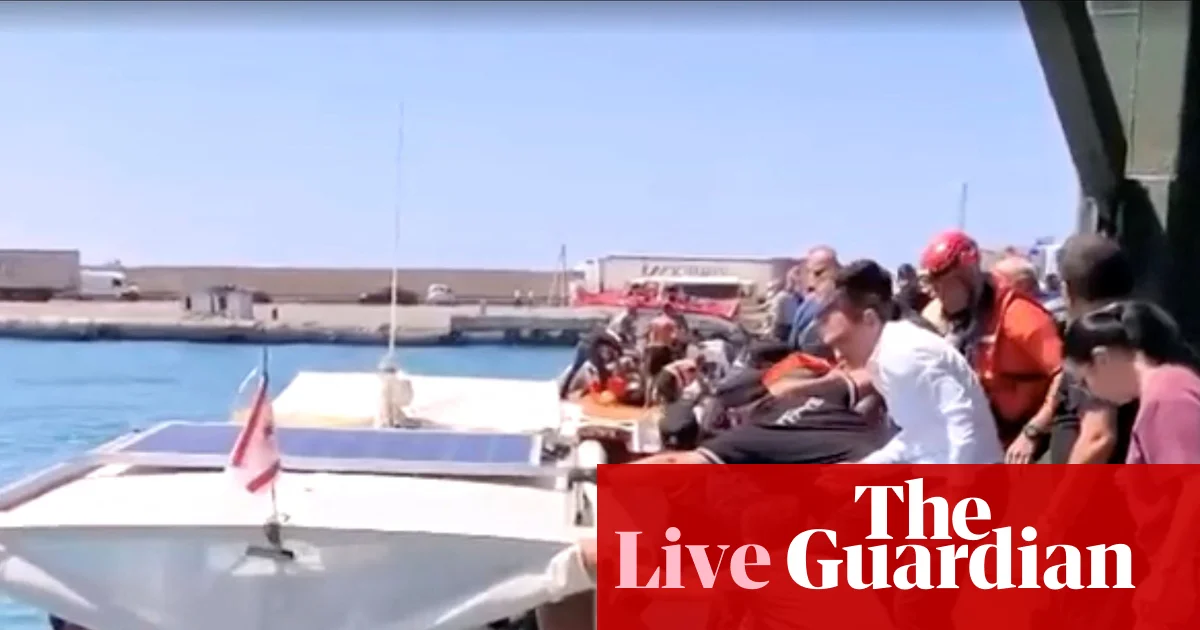
Seven people are dead and 237 have been rescued after a passenger ferry carrying close to 270 people capsized off the coast of northern Cyprus on August 30, 2026, in what is shaping up to be one of the deadliest maritime accidents the eastern Mediterranean has seen in years. The scale of the disaster triggered an urgent multi-agency rescue operation, with crews racing against time to pull survivors from the water before conditions could worsen.
What We Know So Far
The vessel, which had approximately 267 people aboard, went down in waters off northern Cyprus under circumstances that are still being investigated. Search and rescue teams mobilized rapidly, and the sheer number of survivors recovered, 237 in total, speaks to the speed and coordination of the emergency response. Still, the loss of seven lives has cast a long shadow over what could have been a far more catastrophic outcome.
Ünal Üstel, the prime minister of the self-declared Turkish Republic of Northern Cyprus, posted an update on X confirming the casualty figures. According to live reporting from The Guardian, Üstel described the incident as a “tragic shipwreck” and confirmed that authorities were still working to account for all those who had been on board.
A Region No Stranger to Maritime Risk
The eastern Mediterranean has long been a busy corridor for passenger and cargo vessels. Northern Cyprus, a territory recognized only by Turkey, sits at a strategically complex crossroads of sea routes. Ferry travel between the Turkish mainland and northern Cyprus is common, particularly during summer months when tourism traffic picks up significantly.
That context makes the timing of this disaster particularly painful. Late August is peak season in the region, and ferries often operate at or near capacity. When vessels are loaded with passengers, families, and luggage, the margin for error narrows considerably, and the consequences of mechanical failure or adverse conditions can be swift and brutal.
The Human Cost Behind the Numbers
Two hundred and thirty-seven people rescued sounds like a victory, and in many ways it is. But those seven who did not make it home represent lives cut short, families shattered, and communities left to grieve. Maritime disasters of this kind rarely produce clean, comfortable narratives. For every survivor who walked away soaked and shaken but alive, someone else did not.
Images circulating from the scene, sent through news agencies, show rescue operations in progress, with boats crowded with survivors and emergency personnel working in difficult conditions. The visuals carry the particular weight that only real, unscripted tragedy can produce.
Questions That Now Demand Answers
Investigations into the cause of the capsizing will inevitably follow. Authorities will want to examine the vessel’s safety certification, whether passenger capacity was properly observed, the weather and sea conditions at the time, and the speed and effectiveness of the distress response. These are not bureaucratic box-ticking exercises. They are the kinds of inquiries that, if handled seriously, can prevent the next disaster.
Maritime safety in the region has occasionally attracted scrutiny, particularly regarding older vessels pressed into service on busy routes. Whether that is a factor in this specific incident remains to be determined, but it is a question investigators will almost certainly examine.
Rescue Operations and What Came After
The rescue operation itself drew resources from multiple teams and represents a significant logistical effort under pressure. Pulling 237 survivors from the sea is no small achievement, and the professionalism of the crews involved almost certainly saved many lives that could otherwise have been added to the death toll. Once the immediate crisis passed, survivors were brought ashore and assessed for injuries, with medical teams on standby to manage what was clearly a major incident.
Officials have not yet provided detailed breakdowns of the nationalities of those on board, the precise cause of the capsizing, or the timeline of events leading up to the vessel going under. Those details are expected to emerge as the investigation unfolds in the coming days.
A Moment That Demands Reflection
Disasters like this one serve as brutal reminders that the sea does not negotiate. No matter how routine a crossing may feel, the risk never fully disappears. For the families of those who boarded that ferry on what was, in all likelihood, an ordinary Sunday, August 30, 2026 will be a date that never leaves them.
The international community will be watching how authorities in northern Cyprus and Turkey handle both the investigation and the support extended to survivors and victims’ families. The political complexity of the region, where northern Cyprus occupies a unique and contested diplomatic status, adds another layer to the accountability question.
As more details emerge and rescue teams continue their work, one question lingers: what will it take for maritime authorities across the eastern Mediterranean to treat passenger safety not as a compliance formality, but as the non-negotiable standard it must be? Share your thoughts below.