


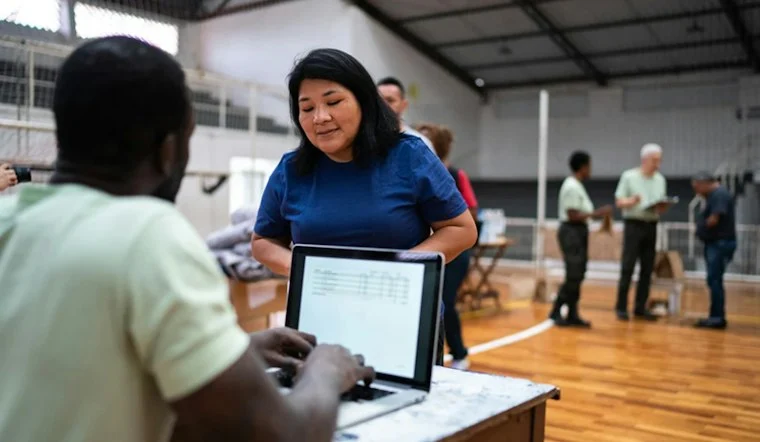


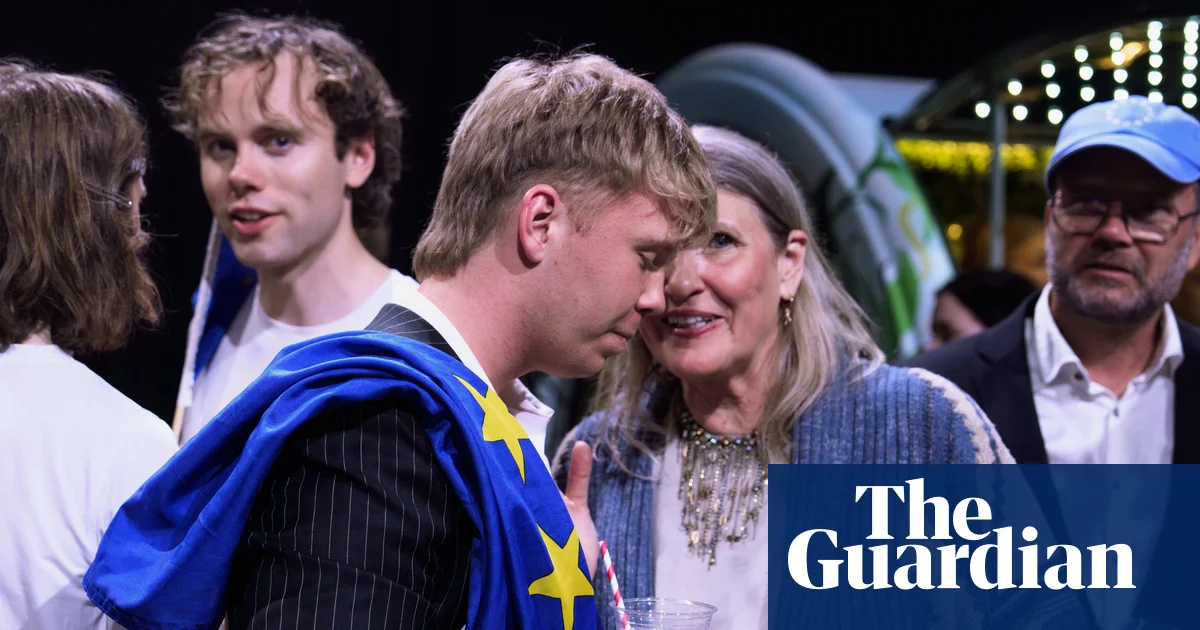
Iceland, a nation of roughly 380,000 people perched at the edge of the North Atlantic, has apparently chosen to stay out of the European Union’s orbit, at least for now. According to reporting on the referendum result, the No camp held 52.5% of counted votes against 47.5% for the Yes side on Sunday, August 30, 2026, with only a handful of ballots remaining in one of the country’s six voting districts, a district already trending toward rejection. Public broadcaster RÚV tracked the count in real time, and the numbers told a story that many in Brussels were dreading.
A Narrow But Clear Result
The margin, just five percentage points, is not a landslide. But it is a verdict. In referendum politics, 52.5% carries weight, especially when the outstanding votes come from a district already leaning the same way. RÚV’s online ballot tracking showed the No camp holding its lead consistently through the count, suggesting this was not a statistical blip but a genuine expression of public sentiment.
The referendum was a government proposal: should Iceland begin formal accession talks with the EU? Not membership outright, mind you, but the opening of a negotiation process. And yet, Icelanders apparently looked at that first step and decided against taking it. That is a significant rebuke of the government’s direction, regardless of how one reads the broader geopolitics.
Why Iceland Has Always Had a Complicated Relationship With the EU
Iceland is not a stranger to this debate. The country applied for EU membership back in 2009, in the immediate aftermath of its catastrophic banking collapse, when joining a larger economic bloc felt like a lifeline. But as the economy recovered through the early 2010s, enthusiasm faded. Iceland formally withdrew its membership application in 2015, and the conversation went largely dormant for years.
What makes Iceland’s position unusual is that it is already deeply integrated with Europe through the European Economic Area, giving it access to the single market without formal membership. It also participates in the Schengen Area, meaning free movement of people is already a reality. For many Icelanders, this arrangement has historically felt like the best of both worlds, close enough to trade and travel freely, but independent enough to chart its own course on fisheries, agriculture, and sovereignty.
Fishing rights, in particular, have long been a pressure point. Iceland’s fishing industry is not merely an economic sector, it is a cultural institution, a cornerstone of national identity. EU membership would bring those waters under shared European policy, a prospect that has never sat well with large portions of the Icelandic public.
What This Means for the EU’s Expansion Ambitions
The result arrives at a moment when the European Union has been pushing hard on the question of enlargement. With ongoing processes involving Western Balkan nations, Ukraine, and Moldova, Brussels has positioned expansion as a strategic priority, a way to extend stability and democratic values across a continent still shaped by conflict and uncertainty.
Iceland’s No vote does not directly affect those processes, but it does add a symbolic sting. Here is a prosperous, democratic, Schengen-area nation with deep historical ties to Europe, and it still said no to sitting down at the table. That is the kind of result that forces introspection in EU corridors about what the bloc is offering and how it is perceived even by its closest neighbours and partners.
It also raises a broader question about the limits of European integration as a political project. The EU has long operated on the assumption that given a free vote and adequate information, most European-adjacent democracies would eventually choose closer union. Iceland’s vote, if it holds, suggests that assumption deserves scrutiny.
The Government’s Next Move
For Iceland’s government, which proposed this referendum in the first place, the result is a political setback of real consequence. Having put the question to the people and received a No, the path forward is anything but straightforward. Reigniting accession talks in the near term would mean going against a popular vote, a politically toxic move in any functioning democracy.
The result does not foreclose Iceland’s future relationship with the EU permanently. Referendums can be revisited, public opinion can shift, and circumstances change. But for now, the message from Icelanders appears to be that the status quo, inside the EEA but outside the EU, remains their preference.
A Small Nation, A Large Statement
There is something worth sitting with in this outcome. Iceland is tiny by almost any measure: population, land used for agriculture, economic output relative to European giants. And yet its democratic decisions carry an outsized resonance, precisely because the country has built a reputation for punching above its weight, whether in financial recovery after 2008, in gender equality policy, or in environmental stewardship of its extraordinary natural landscape.
When Iceland speaks, people listen, not because it commands armies or holds vast resources, but because it has consistently demonstrated that small states can make bold, independent choices and survive them. Sunday’s result is, in that sense, entirely on brand.
Whether it is the right choice for Iceland’s long-term interests is a debate that will run for years. What is not up for debate is that Icelanders, given the chance to decide, chose sovereignty over an open door. And that is a fact the rest of Europe will need to digest.
As the dust settles on this vote, the question worth asking is this: if a stable, prosperous, well-integrated nation like Iceland looks at formal EU accession and says no, what does that tell us about the story Europe is telling about itself, and who is actually listening?