






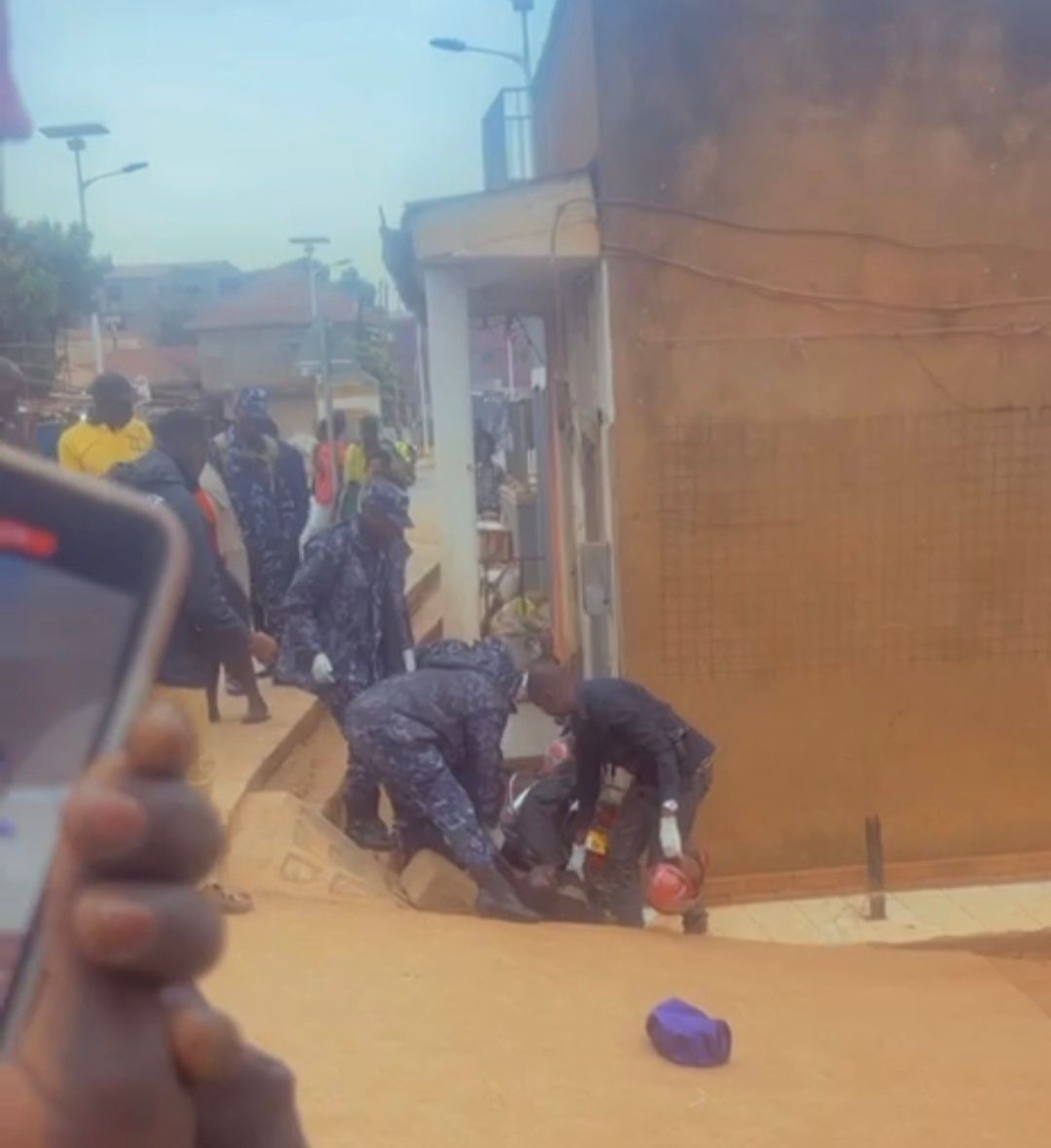
Early on Saturday morning, August 29, 2026, what was supposed to be a routine civic exercise in Ndejje Kanaaba, a neighbourhood within the Makindye-Ssabagabo area of greater Kampala, ended with a man dead on the ground and a police officer in handcuffs. Ronald Kizito Jjuuko, 38 years old, a boda boda motorcycle rider, was shot and killed at approximately 7:30 a.m. by a constable attached to Ndejje Police Station. The officer, identified as Police Constable Allan Okello, has since been arrested. What happened in those few seconds between a moving motorcycle and a pulled trigger is now the subject of a formal police investigation.
What Happened at Ndejje Kanaaba
Uganda’s National Cleaning Day exercises are a familiar feature of weekend life across the country. Authorities, local residents, and security personnel converge on public spaces to sweep, clear drainage channels, and generally tidy up communities. The exercises are meant to project unity and civic responsibility. On this particular Saturday, officers from Ndejje Police Station had been deployed to provide security around the cleaning site, and access to part of the area had been restricted to manage crowd flow and protect the ongoing activity.
According to the Uganda Police Force, preliminary information suggests that Jjuuko attempted to ride his motorcycle through the cordoned section of the area. Exactly what followed is the crux of everything. In circumstances the force says are still under active investigation, Constable Okello allegedly discharged his firearm, fatally wounding the rider. Jjuuko’s identity was confirmed through his national identity card found at the scene. He was 38 years old.
As reported by Chimpreports, police moved quickly to arrest Okello and formally open an investigation into whether the shooting was in any way justified under the law.
The Police Statement: Careful Words in a Charged Moment
The Uganda Police Force issued a formal statement acknowledging the incident with notable speed. The language was measured, but the message was pointed. “The officer has been arrested, and investigations are underway to establish the circumstances under which he discharged his firearm, resulting in the death of the rider,” the statement read.
Crucially, the force went further, reminding the public and, implicitly, its own ranks that wearing a uniform does not grant unlimited authority. “While police officers are legally mandated to maintain public order and protect life and property, any use of force must be lawful, necessary, proportionate, and strictly guided by the law, established police operational procedures, and the prevailing circumstances,” the statement said.
That is a significant thing for any police force to say about one of its own. It signals that the institution is not closing ranks around Okello. Whether the investigation delivers accountability proportional to the gravity of the act is a different matter entirely, and one that Uganda’s public will be watching closely.
The Man Behind the Motorcycle
Ronald Kizito Jjuuko was 38 years old. Beyond his name, his age, and the motorcycle he was riding that morning, little has been made public about his life. But those three details are enough to sketch the outline of someone who, like hundreds of thousands of Ugandans, depended on the boda boda trade to survive. Motorcycle taxis are the circulatory system of Kampala’s informal economy. Riders wake before dawn, navigate chaotic roads, and work long hours for modest returns. They are also, as a professional group, disproportionately exposed to violence, accidents, and friction with law enforcement.
The fact that Jjuuko may have attempted to pass through a restricted zone does not, on its own, constitute a justification for lethal force under any credible reading of policing standards. A traffic offence, a checkpoint violation, a moment of impatience or confusion: none of these carry a death sentence. The law governing use of force by police in Uganda, like international standards, requires that lethal force be an absolute last resort when life is in imminent danger. Investigators must now determine whether any such threat existed on that Saturday morning.
National Cleaning Day Overshadowed
There is a particular irony in the setting. National Cleaning Day is a programme built on the idea of community, of people working together for shared spaces and shared dignity. It is a concept that relies on public goodwill and participation. Having it associated, even indirectly, with the fatal shooting of a civilian by a security officer is the kind of reputational damage that takes years to undo.
The cleaning exercise at Ndejje Kanaaba was not the problem. Communities across Uganda carry out similar activities without incident every single week. The problem, if investigators confirm what the preliminary facts suggest, is that a man with a gun made a decision that no checkpoint protocol could ever sanction. And now a family is grieving, a community is shaken, and a programme designed to bring people together is being remembered for the worst possible reason.
The Broader Question of Police Accountability in Uganda
Uganda has faced recurring scrutiny over how its security forces handle civilian encounters, particularly in high-density urban areas where boda boda riders and pedestrians constantly interact with officers at roadblocks, checkpoints, and during public gatherings. The speed of Okello’s arrest in this case is notable, and it suggests that the force’s leadership understood immediately that this incident required a visible response.
But arrest is the beginning of accountability, not the end. What follows in the investigation, what charge is ultimately brought, whether a prosecution proceeds, and what sentence, if any, results will tell a far more complete story about whether the system is genuinely designed to hold its own officers responsible. Families of victims in similar past incidents across the region know well that early arrests do not always translate into justice.
The Katwe Police Division, which has jurisdiction over Ndejje Police Station where Okello was based, is now at the centre of an investigation that has national implications. How it proceeds will say something meaningful about the state of policing reform in Uganda in 2026.
What Comes Next
Constable Allan Okello remains in custody as investigators work to reconstruct the precise sequence of events that led to him firing his weapon. The key questions are straightforward but not easy to answer: Was there an immediate threat to anyone’s life? Was a warning issued before the shot was fired? Were established procedures followed? Did the restricted zone even legally justify the use of any force, let alone lethal force, against someone attempting to pass through it?
Until those questions are answered fully and transparently, Ronald Kizito Jjuuko’s death sits in an uncomfortable space, somewhere between a tragic accident, a catastrophic error in judgment, and something far more deliberate. His family, and the wider public, deserve to know which it was.
As investigations continue, one question lingers over the entire episode: when a community gathering meant to celebrate civic pride becomes the backdrop for a citizen’s death at the hands of the state, what does it say about the relationship between Uganda’s security forces and the people they are sworn to protect?