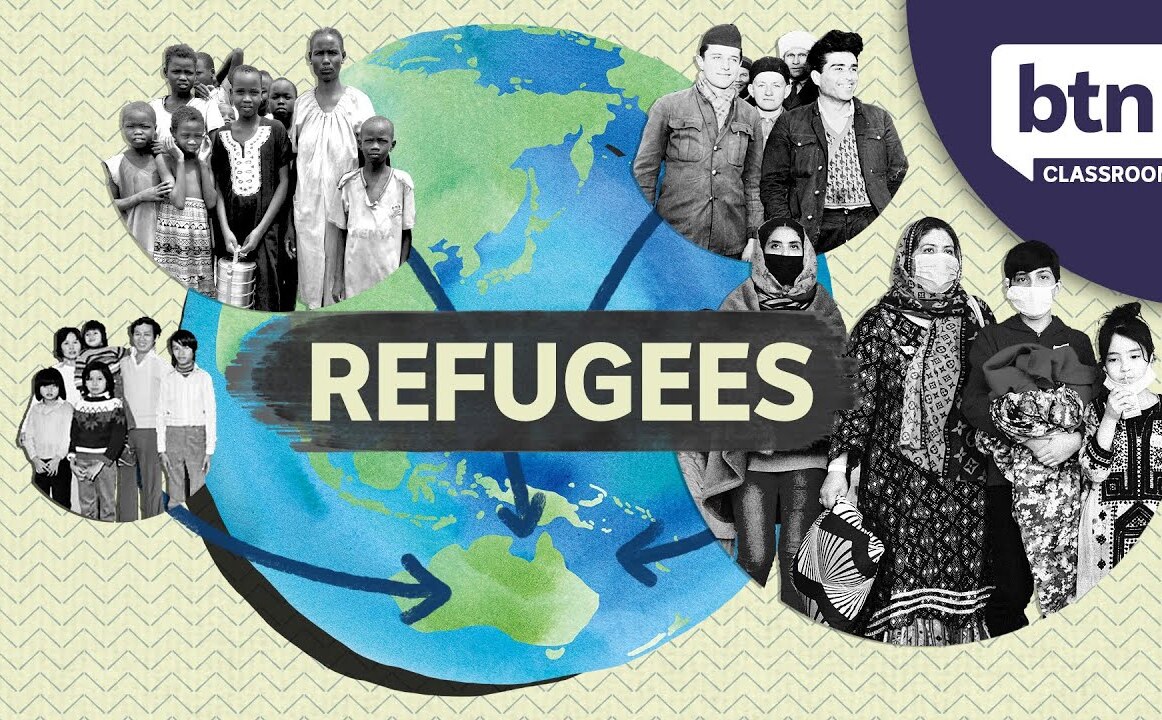
At a moment when the number of displaced people globally has reached a scale never recorded in modern history, Australia finds itself caught in a debate that critics are calling a failure of both moral leadership and basic human decency. The question is not complicated: when the world is burning with displacement crises and millions of people are desperately searching for somewhere safe to land, is it the right time to talk about cutting refugee numbers? Most Australians, if asked plainly, would probably say no. Yet that conversation is very much alive in the country’s political corridors right now.
A Crisis That Dwarfs Every Previous One
To understand what is at stake, the scale of global displacement matters. Right now, more people are in need of international protection than at any other point in recorded human history. Conflict, climate catastrophe, political persecution, and ethnic violence are all contributing to a wave of human suffering that has outpaced the capacity of international systems to respond. The United Nations High Commissioner for Refugees has been sounding this alarm for several years, and the numbers have only climbed.
Into this context, Australia, a wealthy, stable, geographically vast country with a long history of migration, is being urged by certain political voices to restrict, not expand, its humanitarian intake. Critics have described this posture as cruel populism, a cynical play to anxious domestic audiences at the expense of some of the most vulnerable people alive.
The Political Backdrop Driving the Rhetoric
Anti-migration sentiment has been bubbling up across Western democracies for years, and Australia is not immune. Febrile public discourse around borders, cultural identity, and housing pressure has made immigration a reliable political football. The trap that politicians often fall into is treating all migration as one undifferentiated issue, when refugee and humanitarian intake is a distinct, treaty-bound obligation that operates under entirely different logic to skilled or family migration streams.
Refugees are not economic migrants choosing to relocate for better wages. They are people who have typically fled violence, persecution, or life-threatening instability. The 1951 Refugee Convention, to which Australia is a signatory, sets out clear obligations. Using housing costs or wage pressures as arguments against humanitarian intake is, at best, intellectually dishonest and, at worst, a deliberate conflation designed to generate political heat.
What Does Australia Actually Owe?
Australia’s refugee resettlement program has historically been regarded as one of the better-run in the world, though its offshore detention policies have drawn sustained international condemnation over many years. The resettlement numbers the country accepts annually represent a tiny fraction of the global displaced population, yet even those modest figures are now under political pressure.
The argument for cutting intake rests on domestic sentiment, not on evidence that refugees cause the economic or social harms that critics imply. Research consistently shows that refugees, given adequate support, become productive members of the communities they join. The short-term costs of resettlement are real but manageable for a country of Australia’s wealth. The long-term returns, human and economic, are well documented.
Removing Australia from the Global Picture, A Fantasy
One of the more striking aspects of this debate is the underlying assumption that Australia can simply opt out of global humanitarian responsibility. The country sits in a region where displacement pressures are significant and growing. Climate change alone is projected to displace tens of millions of people across the Pacific and Southeast Asia in the coming decades. Australia cannot build enough walls to remain untouched by that reality.
There is also the matter of global standing. Australia presents itself as a principled actor on the world stage, a country that values human rights and international cooperation. Choosing this moment, when the need for resettlement places is at its most acute, to turn inward and shrink the humanitarian program sends a message to allies, partners, and the international community that those values are conditional. That is a reputational cost with long consequences.
The Human Beings Behind the Number
It is easy to talk about refugee policy in abstract terms of intake figures, processing pipelines, and political capital. It is harder, and more honest, to remember that each number represents a person. A family. A child who has seen things no child should see. A parent who made an impossible choice to leave everything behind because staying meant something worse.
Australia’s capacity to offer protection is not unlimited, but it is substantial. The country has the infrastructure, the wealth, and the institutional knowledge to do significantly more than it is currently doing. Choosing not to is a decision, not a necessity. And decisions made in the name of populist politics, rather than principle, deserve to be called what they are.
What a Different Approach Could Look Like
Expanding the humanitarian intake does not mean abandoning process or due diligence. Countries that have successfully grown their resettlement programs have done so with careful planning, community consultation, and support structures that help new arrivals integrate. Australia has done exactly this before, welcoming waves of refugees from Vietnam, the Balkans, and elsewhere, and the communities those arrivals built are woven into the country’s cultural fabric today.
The choice is not between compassion and responsibility. It is about whether a country chooses to meet a historic moment with generosity or retreats behind rhetoric that makes it feel insulated from a world it is very much part of.
As this debate continues to unfold, one question cuts through the political noise: if not now, with displacement at a historic peak and Australia’s capacity largely intact, then when exactly would be the right time to offer more?