





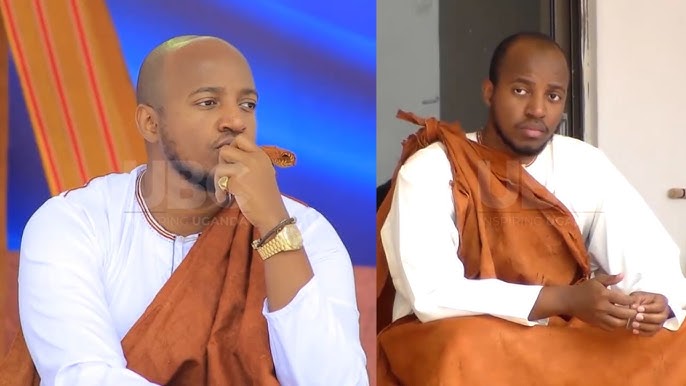
The Tooro Kingdom in western Uganda issued an urgent public statement on August 27, 2026, confirming that Omukama Oyo Nyimba Rukidi IV, the reigning king of one of Uganda’s most prominent traditional kingdoms, is alive but in a critical health condition. The communication, released directly through the Prime Minister’s Office, arrived amid a storm of online speculation and unverified reports that had already declared the monarch dead.
The Official Word From the Palace
The statement was deliberate and measured, the kind of language that royal offices use when they need to project calm without minimising the gravity of a situation. According to the official Tooro Kingdom communication, His Majesty is currently in a critical condition, and the Kingdom is calling upon the people of Tooro as well as the broader Ugandan public to remain composed and to keep the King in their prayers.
The office was also explicit in pushing back against misinformation. Earlier in the day, reports had begun circulating across social media platforms claiming that the Omukama had passed away. The Prime Minister’s Office categorically denied these claims, stating plainly that the King is still alive. It is a clarification that, while reassuring on one hand, does little to mask the seriousness of the underlying situation.
Who Is Omukama Oyo Nyimba Rukidi IV?
King Oyo holds a distinctive place not just in Ugandan cultural life but in the records of global royalty. He ascended to the Tooro throne in 1995 at the age of three, making him one of the youngest monarchs ever to take a royal seat anywhere in the world. His reign has spanned more than three decades, a period during which he has grown from a toddler guided by regents into a fully recognised head of one of Uganda’s four traditional kingdoms.
The Tooro Kingdom, based in the Fort Portal region of western Uganda, is historically rich and politically significant. It has navigated Uganda’s turbulent post-independence landscape, the abolition of kingdoms under Milton Obote, their restoration under Yoweri Museveni in 1993, and the complex dance between cultural authority and the modern Ugandan state. King Oyo has been a central figure in that ongoing story, and his face has become synonymous with Tooro’s identity both at home and internationally.
He is not merely a ceremonial figurehead. Over the years, King Oyo has used his platform to advocate for education, conservation, and the welfare of communities within Tooro. His visibility has made him a figure who carries emotional weight well beyond the geographic boundaries of the Kingdom.
Why the Death Rumours Spread So Fast
The speed at which false reports of his death travelled online says something uncomfortable about the current information environment. In Uganda and across much of sub-Saharan Africa, WhatsApp groups and Facebook pages have become primary news sources for millions of people. When a story carries emotional weight, and a royal health crisis certainly does, it moves faster than fact-checking can follow.
This is not the first time a prominent African leader or royal has been declared dead prematurely on social media. The pattern is familiar enough to have prompted many institutions and governments across the continent to invest in faster official communications. The Tooro Prime Minister’s Office appears to have responded relatively quickly here, issuing a direct statement to cut through the noise before rumours could calcify into accepted fact.
Still, the damage of misinformation moves quickly. By the time a correction arrives, the original false claim has often already been shared hundreds of times, believed by thousands, and become the emotional frame through which people interpret subsequent updates.
A Kingdom Asking for Prayers and Patience
What stands out in the Kingdom’s communication is the tone. It does not downplay the severity of the situation. The word “critical” is unambiguous in medical and public language, and the Kingdom chose to use it rather than softer phrasing that might have offered false reassurance. At the same time, the appeal for calm and prayers reflects a traditional approach to crisis, leaning on community solidarity and spiritual support as anchors during uncertainty.
For the people of Tooro, this is deeply personal. Many Ugandans who grew up watching King Oyo mature from a child on a throne to a grown monarch feel a generational connection to him. His reign is the only one they have ever known. The idea of that changing is, for many, genuinely disorienting.
At the time of publication, no further details have been provided regarding the specific nature of his condition, the location of his treatment, or the timeline of any expected updates. The Kingdom has asked for calm, and for now, that is where things stand.
What Comes Next
The Tooro Kingdom has not indicated when a further update will be provided. What is certain is that attention from across Uganda and from the Ugandan diaspora globally will remain fixed on any news coming out of the Prime Minister’s Office in the hours and days ahead. Traditional kingdoms in Uganda hold a unique space: they are not part of the formal government structure, yet they carry enormous cultural authority and public devotion.
As the situation develops, the most responsible thing anyone, whether journalist, social media user, or concerned citizen, can do is wait for verified information rather than amplify speculation. The Tooro Kingdom has made its position clear. King Oyo is alive. He is critically ill. And the people who love him are being asked to pray.
That is a heavy ask. But it is also, for now, the most honest one anyone can make.
As Uganda and the world wait for more news, it raises a question worth sitting with: how do we build the kind of information culture where official truth can move as fast as rumour, so that families, communities, and kingdoms do not have to grieve twice?