








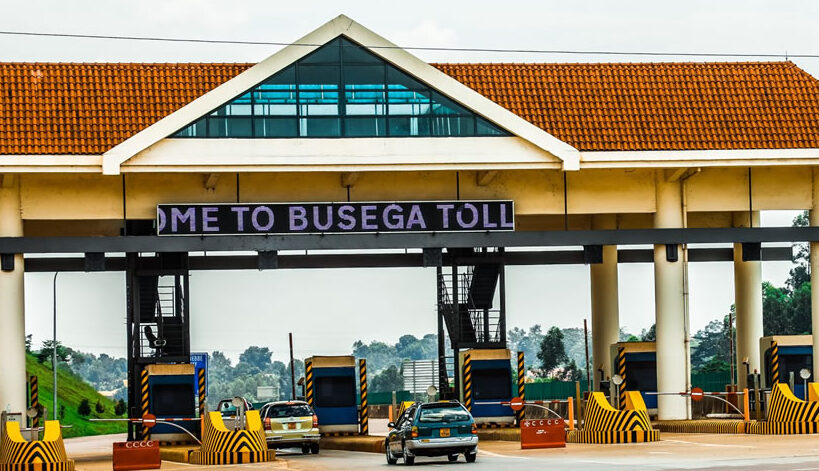
For years, Pinnacle Security Ltd operated in the shadow of a French multinational on Uganda’s flagship road project. It collected tolls, kept watch over accident scenes, and patrolled the tarmac while Egis Operations SA handled the technology and managed the revenue systems. It was, by any honest assessment, a hands-on apprenticeship. When Egis eventually decided to exit after heavy financial losses, it did not look far for a replacement. It pointed to Pinnacle.
That endorsement, backed by legal clearance from Uganda’s Solicitor General and Attorney General, culminated in a formal novation agreement signed on May 8, 2026. The deal transferred Egis’s full operation and maintenance contract, including both known and unknown contractual liabilities, to the local company. Pinnacle was no longer a subcontractor. It was now the principal operator of the Kampala Entebbe Expressway, the only toll expressway in the country.
Three months later, that arrangement is under serious threat.
From Subcontractor to the Hot Seat
The transition from Egis to Pinnacle did not happen overnight or without process. According to reporting by Chimpreports, the groundwork began in late 2024 through a series of meetings between Egis and Ugandan government officials held across both France and Kampala. On October 10, 2025, Egis Chief Executive Officer Patrick Viellard wrote formally to Uganda’s Ministry of Works and Transport, requesting that all rights and obligations under the contract be transferred to Pinnacle Security Ltd.
Viellard’s letter made the case plainly. Pinnacle had supported the project since the proposal stage in 2019. It had built up practical knowledge of the road’s operations from the ground up. Egis also offered to transfer its employees to Pinnacle and provide continued access to the tolling technology through a service level agreement, essentially offering a safety net during the handover period.
The legal machinery moved. The Solicitor General weighed in. The Attorney General gave clearance. All three parties signed the novation agreement. On paper, the transition was clean, thorough, and properly sanctioned.
Parliament’s Infrastructure Committee Has Other Ideas
Parliament’s Committee on Physical Infrastructure has now recommended that Pinnacle’s contract be terminated immediately. The committee’s concern centers on the tolling system itself, specifically on weaknesses it says make it extremely difficult to verify cash transactions and, by extension, protect government revenue from leakage.
The recommended fix is a significant structural shift. The committee wants the Ministry of Works and Transport to take direct operational control of the road. Toll collection, meanwhile, would move to the Uganda Revenue Authority, a body with established enforcement machinery and revenue accountability systems. The committee has also called for a forensic audit covering the entire period of operations under both Egis and Pinnacle, including an investigation into Shs314.36 million reportedly tied to irregular free passes issued through the system.
These are serious allegations. A forensic audit is not a routine review. It signals that the committee believes the problems on the expressway go beyond administrative sloppiness and may involve deliberate manipulation of the revenue system.
What the Audit Could Uncover
The Shs314.36 million flagged in connection with irregular free passes is the kind of figure that tends to grow under forensic scrutiny. Free passes on toll roads are not inherently suspicious. Emergency vehicles, certain government vehicles, and contractually exempted users typically qualify. The question is whether those exemptions were applied correctly, consistently, and with proper documentation.
If a forensic audit finds that free passes were issued outside those categories, it opens questions about who authorized them, whether the figures were accurately reported to the government, and whether Egis, Pinnacle, or both bear responsibility. The novation agreement transferred not just the contract but also the liabilities, which means Pinnacle may find itself answering for decisions made before it was even the principal operator.
A Foreign Firm Waits in the Wings
What gives this story its sharpest edge is the timing. While Parliament moves to dismantle Pinnacle’s position, reports suggest that at least one foreign firm has already begun positioning itself to take over the expressway business. The identity of that company has not been confirmed, but its presence in the conversation raises an uncomfortable question: Is the push against Pinnacle driven purely by governance concerns, or is there a commercial interest working in the background?
Uganda has form here. Major infrastructure contracts have historically attracted intense behind-the-scenes lobbying, and the Kampala Entebbe Expressway, as the country’s only toll road and a major corridor connecting the capital to its international airport, is not a small prize. The traffic volumes, the revenue potential, and the strategic value of the route make it attractive to any operator with an eye on East African infrastructure markets.
The Bigger Question for Ugandan Infrastructure Policy
Beyond the immediate drama of who runs the expressway, this episode raises a more fundamental issue about how Uganda manages the transition from foreign-led to locally-led infrastructure operations. Egis’s departure was itself a warning sign. A French company with significant operational experience reported heavy losses on a project it had managed from the start. That alone should prompt questions about the financial model underpinning the expressway, including whether toll rates, traffic volumes, and government support arrangements are sustainable for any operator, local or foreign.
If Parliament terminates Pinnacle and the Works Ministry takes over operations, the government would be stepping into an operator role it has not previously held on this project. That carries its own risks. If a foreign firm steps in instead, Uganda returns to the same dependence on external expertise that the Egis-to-Pinnacle transition was supposed to move beyond.
Pinnacle, for its part, finds itself in a position few companies ever want to occupy: legally recognized as the rightful operator of a national asset, yet fighting for survival before it has had a full financial year to prove its worth. The novation agreement gave it the contract. Parliament’s committee may yet take it away.
The Kampala Entebbe Expressway was built to be Uganda’s model infrastructure project. Right now, it is a model for something else entirely: the gap between signing a deal and actually keeping it. As the forensic audit looms and the foreign firm circles, one question hangs over the whole situation. Should a country’s most strategically important road be run by the company that knows it best, or by the institution that can account for every shilling that passes through its gates?