








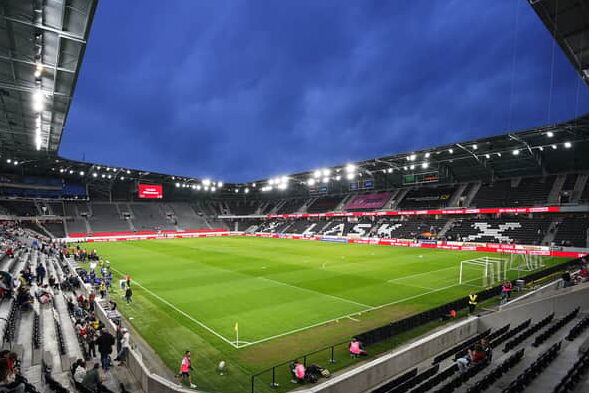
There are bad nights in European football, and then there are nights that carve themselves permanently into a club’s collective memory. Celtic experienced the latter kind in Linz, Austria, where a four-goal aggregate lead evaporated completely against LASK, leaving the Scottish champions eliminated 5-4 on aggregate after extra time. It was a result so improbable it almost defied sporting logic.
A Lead That Should Have Been Unassailable
Going into the second leg at the Raiffeisen Arena, Celtic sat on a cushion that most clubs in European football would consider safe enough to sleep on. Four goals. Plural. The kind of margin that invites a manager to think about rotation, to ease key players through ninety minutes without full exertion, and to plan for the group stage draw with quiet confidence.
What followed instead was a second-half implosion that Celtic’s own manager described as “majorly disappointing.” That phrase, delivered in the clipped understatement of a man who has seen a lot of football, somehow still felt inadequate for what had unfolded on the pitch. LASK, to their enormous credit, refused to treat the tie as finished. Celtic, for reasons that will be analysed and debated across Glasgow for weeks, appeared to believe it already was.
O’Neill Steps Into the Spotlight and Doesn’t Flinch
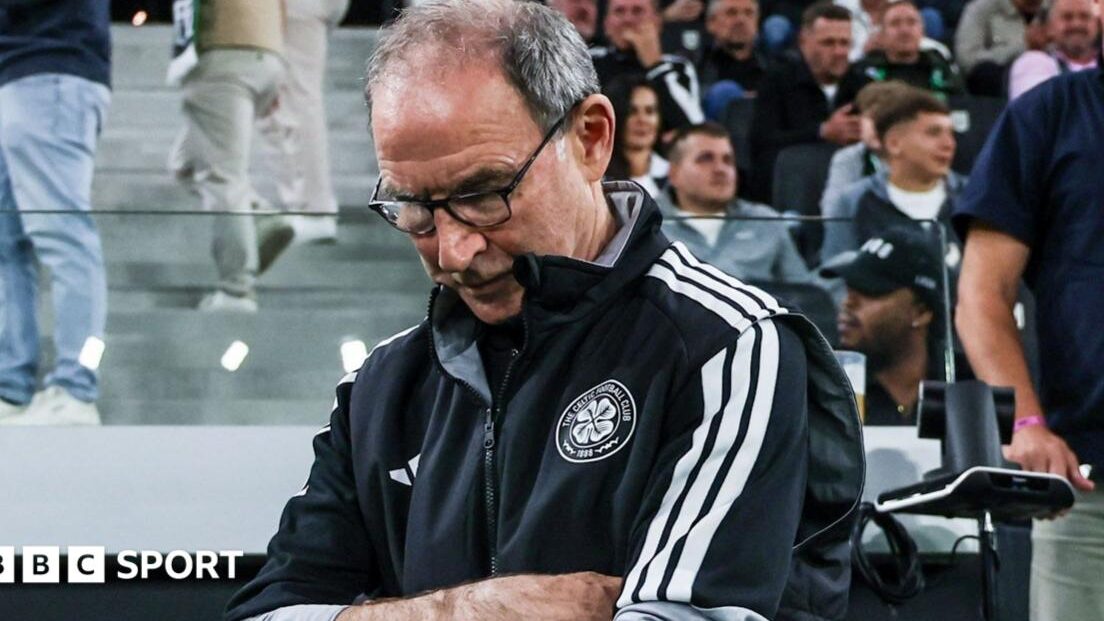
When the final whistle confirmed the unthinkable, Celtic manager Martin O’Neill did something that has become rare in the modern game: he stood at the microphone and accepted personal responsibility without conditions, qualifications, or deflections toward his players.
“I’m responsible for this one,” he told reporters after the match, words reported by BBC Sport that landed with the full weight of a man who understands what accountability looks like in practice. There was no mention of bad refereeing, no hint of blaming fatigue, no passing the burden to individual errors. Just a direct, unvarnished admission that the decisions made, the shape chosen, the approach to the second leg, all of it fell under his watch.
O’Neill then drew a comparison that gave his words even greater context. He referenced the 2003 UEFA Cup final, a night in Seville that remains one of the most celebrated occasions in Celtic’s modern history even in defeat, when the club reached the pinnacle of European competition before falling to José Mourinho’s Porto. That loss, he said, took him a long time to process emotionally. But he was clear about the distinction between then and now. A final is one thing. A qualifying round against LASK, with a four-goal buffer already banked, is another matter entirely.
History Makes This Cut Deeper
Context matters here, and it makes the result sting considerably more. This is not Celtic’s first painful exit at the Champions League play-off stage in recent memory. Last season, the club went out to Kazakh side Kairat Almaty on penalties, a result that shocked Scottish football at the time. That elimination was bad. This one, measured purely by the squandered opportunity, is arguably worse.
To lose a tie from four goals up in the aggregate is extraordinarily rare in top-level European competition. It requires a combination of defensive fragility, a shift in momentum so dramatic it becomes self-reinforcing, and perhaps a psychological softening that sets in when a team believes its work is already done. Whatever the precise cocktail of factors was in Linz on this occasion, Celtic will need to understand it clearly before the next European campaign begins.
What O’Neill’s Honesty Reveals About the Rebuilding Job Ahead
For all the pain of the result, the Celtic manager’s post-match candour offered something valuable: clarity. O’Neill was open about the fact that this Celtic squad is nowhere near a finished product. “We know that we are a million miles from the finished article,” he said, adding that this was something the club already understood going into the tie. It reads less like an excuse and more like a map of the work still ahead.
Managing a club of Celtic’s scale comes with enormous expectation built into every season. The fan base is vast, passionate, and deeply invested in European progress. Each summer, qualification for the Champions League group stage or, at minimum, a strong Europa League run represents a commercial and cultural priority. Falling short in a qualifying round, especially in this fashion, costs the club both financially and in terms of prestige.
But O’Neill’s willingness to own the moment, rather than disappear behind diplomatic non-answers, suggests a manager who intends to look the failure directly in the face before moving forward. That kind of attitude does not guarantee improvement, but the alternative, deflection and excuse-making, virtually guarantees stagnation.
The Road Back Starts Now
Celtic will drop into European competition at a lower level following this exit, a consequence that carries real weight for a club that measures itself against the continent’s elite. The domestic season continues, and the focus in Glasgow now shifts back to the Scottish Premiership, where Celtic’s squad depth and quality should reassert itself against familiar opposition.
But the LASK night will linger. A four-goal lead, surrendered. An exit confirmed in extra time. A manager standing alone in the post-match glare and saying, simply, that he is responsible. It is the kind of night that either breaks a squad’s belief or galvanises it into something harder and more resilient.
Which version of Celtic emerges from Linz will define the rest of this season more than any domestic derby or trophy run. The question is not just what went wrong in Austria. It is what Celtic and Martin O’Neill intend to do about it. Do you think taking full public responsibility is still the mark of a great manager, or does the result ultimately speak louder than the words?