





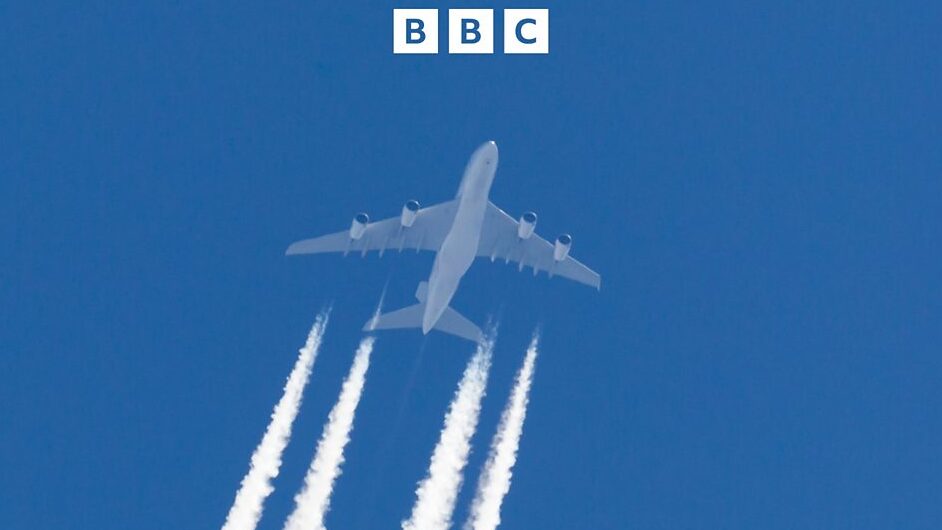
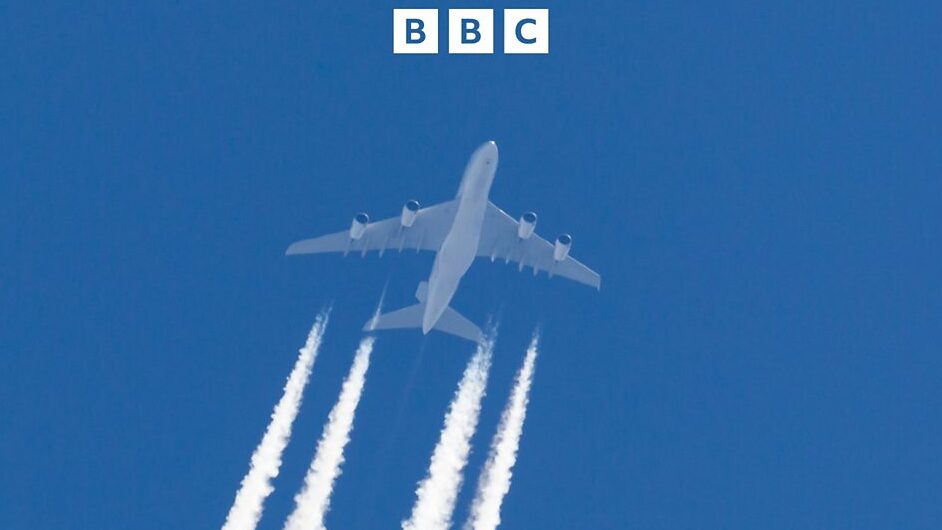


Look up on a clear day almost anywhere in the world and you will likely see them: long, white streaks drawn across the sky like chalk lines on a blue chalkboard. They appear innocent enough, even beautiful in a certain light. But those vapour trails left behind by commercial aircraft are doing something far less poetic at the atmospheric level, and the aviation industry is increasingly being asked to confront it.
What Exactly Are Vapour Trails?
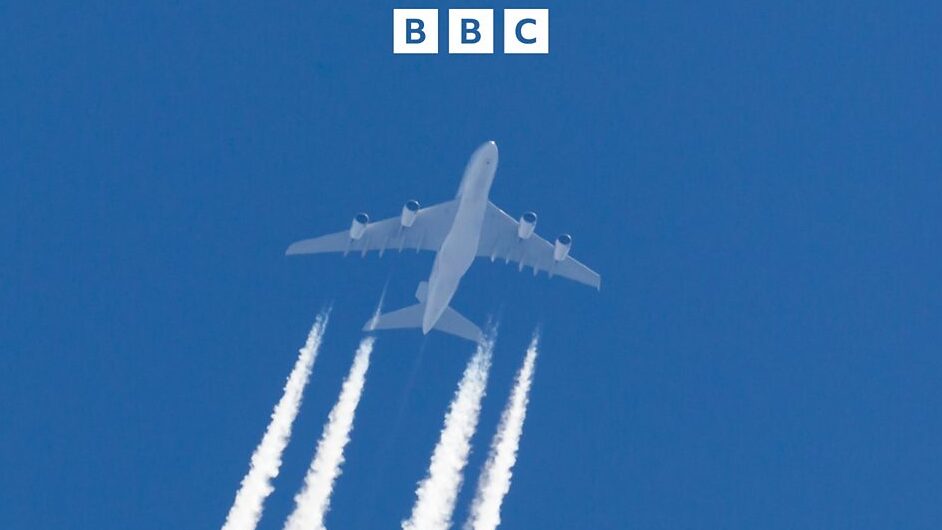
When jet engines burn fuel at high altitude, they release hot exhaust gases into an environment that is intensely cold and often saturated with moisture. The result is a rapid condensation process, producing the white streaks formally known as contrails, short for condensation trails. Under the right atmospheric conditions, these trails can persist for hours, spreading outward into thin, wispy clouds that are nearly indistinguishable from natural cirrus formations.
That persistence is where the problem begins. Short-lived contrails that dissolve in minutes have a negligible effect on the atmosphere. But the ones that linger, spreading across large sections of sky, behave more like a thermal blanket. They trap outgoing heat from the Earth’s surface, preventing it from escaping into space and, in doing so, contribute to the warming of the atmosphere below.
A Warming Effect That Rivals Fuel Emissions
For years, the conversation around aviation’s environmental footprint centred almost exclusively on carbon dioxide emissions. CO2 is the obvious culprit: it accumulates in the atmosphere and drives long-term warming. But persistent contrails, along with related phenomena like contrail cirrus clouds, produce a warming effect that some researchers argue is comparable in scale to the cumulative CO2 released by the entire aviation sector over decades.
This is not a fringe position. The science behind contrail-induced warming has been building steadily, and it is now being discussed seriously within policy and industry circles. The atmospheric impact of vapour trails has become a central topic in broader conversations about how aviation can reduce its total climate footprint, not just its carbon output.
How Contrails Trap Heat
Cirrus clouds, whether natural or contrail-formed, interact with radiation in two competing ways. They reflect incoming solar radiation back into space, which has a cooling effect. But they also absorb and re-emit outgoing infrared radiation from the Earth’s surface, which warms the atmosphere. At night, when there is no incoming sunlight to reflect, contrails are almost purely warming agents. During the day, the net effect still leans toward warming because their heat-trapping capacity outweighs their reflective properties under most conditions.
The geography of flight paths matters enormously here. Busy corridors over the North Atlantic, Europe, and North America see the heaviest contrail formation, and the atmospheric conditions in those regions often favour persistence. A single transatlantic flight can leave behind a contrail system that spreads across hundreds of kilometres of sky.
Can the Industry Do Anything About It?
The encouraging finding is that contrail formation is not entirely inevitable. Research suggests that a relatively small proportion of flights, those that pass through specific humidity conditions at altitude, are responsible for the majority of warming-linked contrails. In theory, rerouting those particular flights to avoid the most sensitive atmospheric zones could dramatically reduce the overall warming effect.
Airlines and air traffic management bodies in Europe and the United States have been running trial programmes to test exactly this. The logic is appealing: small adjustments to flight altitude or path, sometimes adding only a few minutes to journey time, could sidestep the atmospheric conditions that allow contrails to persist and spread. The fuel cost of those detours is real but potentially far smaller than the climate benefit gained.
The Role of Next-Generation Fuels
Sustainable aviation fuels, commonly known as SAFs, are often discussed as a pathway to lower carbon emissions. But they may also affect contrail formation. The soot particles in conventional jet exhaust act as nuclei around which ice crystals form, and SAFs tend to produce fewer of those particles. Fewer nuclei means fewer ice crystals and, potentially, contrails that are less dense and shorter-lived. Early studies in this area have produced promising results, though the technology remains expensive and not yet available at the scale the industry needs.
Hydrogen-powered aircraft, which several manufacturers are developing for the 2030s and beyond, present a more complex picture. Hydrogen combustion produces water vapour as its primary byproduct, which could actually increase contrail formation even as it eliminates CO2 emissions. It is a reminder that in atmospheric science, solutions rarely arrive without their own complications.
What This Means for Passengers and Policymakers
For ordinary travellers, this is not a call to stop flying. It is a call to understand that the climate cost of a plane ticket is more layered than the carbon offset calculators on airline websites suggest. Booking direct flights, which reduce the total time spent at altitude, is one small practical step. Supporting policies that require airlines to account for non-CO2 warming effects is another.
For policymakers, the science is clear enough to act on. The European Union has already moved to include aviation’s non-CO2 climate effects in its broader climate accounting frameworks, a shift that could reshape how carbon credits and environmental regulations apply to the sector. Other jurisdictions are watching closely.
The sky above us has always been shared space. Every vapour trail is a reminder that what goes up into the atmosphere does not simply disappear. It lingers, spreads, and warms, with consequences that ripple far beyond the flight path of any single aircraft.
So here is the question worth sitting with: if rerouting a fraction of daily flights could meaningfully reduce atmospheric warming at a relatively low cost, what is actually stopping the aviation industry from making that the global standard right now?