











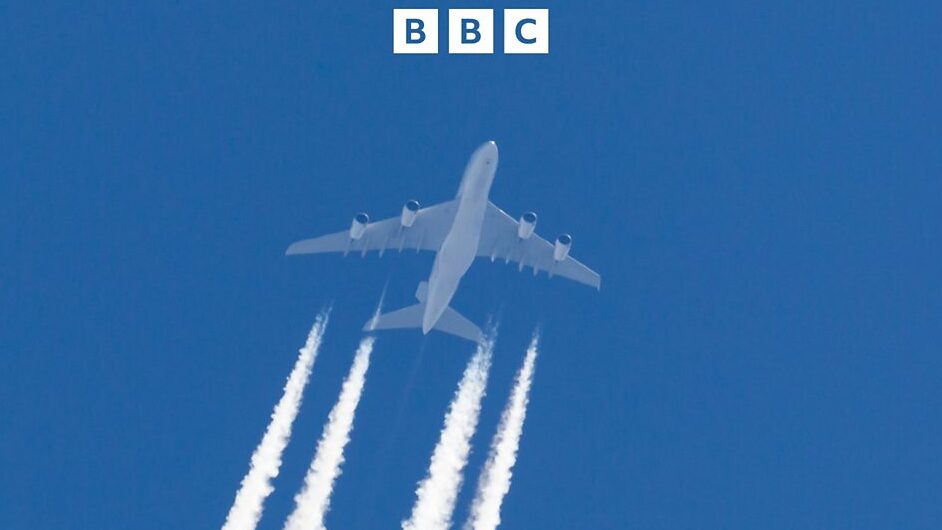
Look up on a clear day almost anywhere in the world and you will likely see them: long white streaks drawn across the sky by passing aircraft, fading slowly into wispy cloud-like smears. For most people, vapour trails are nothing more than a visual footnote to modern travel. But climate scientists have been raising the alarm for years about what those trails actually represent, and the picture is considerably less picturesque than it looks from the ground.
What Are Vapour Trails, Exactly?
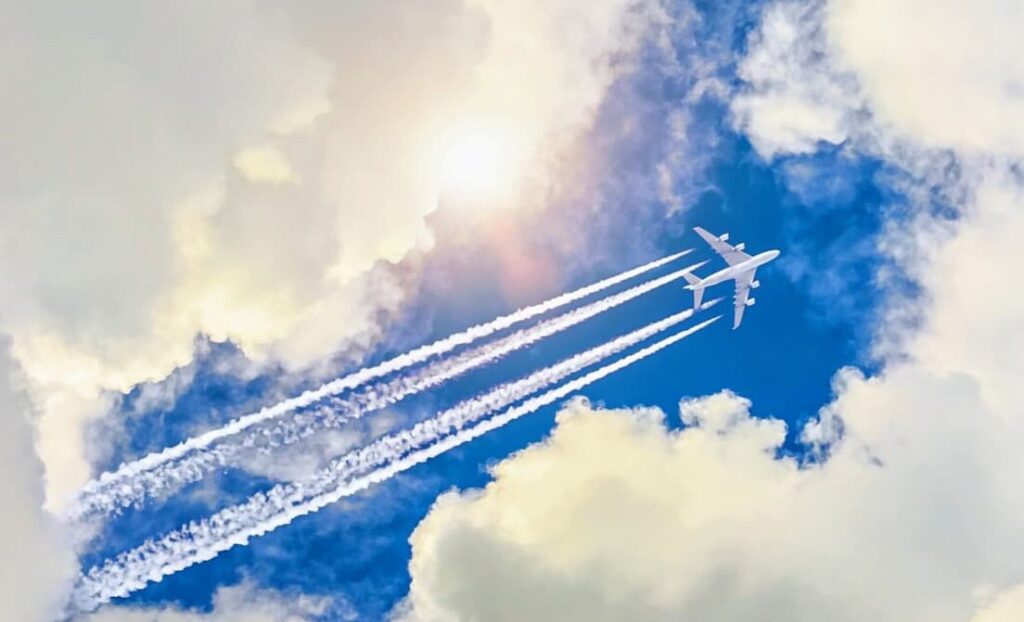
Vapour trails, technically known as contrails, form when the hot, humid exhaust from jet engines mixes with the cold, low-pressure air of the upper atmosphere. The moisture freezes almost instantly into tiny ice crystals, creating the white streaks that linger for minutes or sometimes hours depending on atmospheric conditions. They look harmless. They are not.
The core concern, now backed by a growing body of research and covered in detail by outlets including BBC science coverage, is that these ice crystal clouds trap outgoing heat radiation from the Earth’s surface, preventing it from escaping into space. This is the same greenhouse mechanism that makes certain gases so damaging to the climate, except with contrails the effect is happening at altitude and in a form that has, until recently, received far less public attention than carbon dioxide emissions from jet fuel.
Warming Beyond Carbon: The Contrail Problem
Here is where the story gets particularly uncomfortable for the aviation industry and for frequent flyers. Carbon dioxide from aviation is a well-documented problem. Planes burn enormous quantities of fossil fuel, and the resulting CO2 accumulates in the atmosphere for centuries. That much people know. What is less understood is that contrail-induced warming may actually rival or exceed the warming caused by all the CO2 aviation has ever produced.
The reason is the nature of the warming each mechanism causes. CO2 is a long-lived, cumulative problem. Contrails, by contrast, are short-lived but their warming effect is immediate and intense. They function like a thin, temporary blanket spread across portions of the sky, and when millions of flights are operating daily across the globe, that blanket becomes remarkably comprehensive.
Researchers have found that the warming effect of contrails is not uniform. It depends heavily on where a flight takes place, at what altitude, during which hours of the day, and under what atmospheric conditions. A flight crossing a humid, cold region at night may produce contrails that cause significantly more warming than the same flight crossing a drier, warmer part of the sky during daylight hours. During the day, contrails also reflect incoming solar radiation, which partially offsets the warming. At night, no such offset exists, making night flights disproportionately problematic from a contrail perspective.
Why Has This Taken So Long to Enter the Mainstream?
Part of the reason contrails have flown under the radar in climate discussions is the difficulty of measuring their impact precisely. Unlike CO2, which stays in the atmosphere for hundreds of years and can be tracked cumulatively, contrails form and dissipate within hours. Their effects are transient, localised, and harder to model. That complexity has made it easy for the issue to get sidelined in favour of the more straightforward carbon conversation.
There is also the question of industry incentives. Airlines have spent decades building public communication around their carbon reduction pledges, investing in sustainable aviation fuel research and carbon offset programmes. Introducing a second, separate warming mechanism into that narrative complicates the message, and not in a way that benefits the business case for business class.
Can Anything Be Done?
The encouraging news is that contrail formation may be one of the more tractable aviation climate problems. Unlike carbon emissions, which require fundamental changes to fuel chemistry or propulsion technology, contrails can theoretically be reduced by relatively simple operational changes. Adjusting flight altitudes by even a few thousand feet in specific atmospheric conditions can dramatically reduce the chances of persistent contrails forming.
Some aviation researchers and tech companies have been working on predictive tools that allow airlines and air traffic controllers to identify, in advance, which flight paths and altitudes are likely to produce warming contrails on any given day. The idea is to route flights around those atmospheric corridors, accepting a small increase in fuel burn in exchange for a significant reduction in contrail-related warming. Early studies suggest this trade-off is favourable, with modest fuel cost increases yielding large climate benefits.
The challenge is implementation at scale. Air traffic management is a complex, internationally coordinated system, and introducing climate-based routing into it requires buy-in from airlines, regulators, and governments across dozens of jurisdictions simultaneously. Progress is happening, but the pace is nowhere near what the science suggests is necessary.
What This Means for Passengers
For anyone who flies regularly, the contrail issue adds a layer of nuance to how we calculate the climate cost of our travel. Carbon offset calculators, which have become a standard feature on many booking platforms, typically do not account for contrail warming at all. This means that even travellers who conscientiously offset their flights may be significantly underestimating their actual climate impact.
There is no simple consumer fix available yet. You cannot choose a contrail-free flight the way you might choose a direct route or an extra legroom seat. But pressure from informed passengers can accelerate the timeline on which airlines and regulators treat this as a serious operational priority rather than a scientific footnote.
The sky is not just a backdrop for your window seat view. It is a system, and every trail we leave in it has consequences that linger well after the plane has landed. The question worth sitting with is this: as aviation prepares for a future that must reckon seriously with its climate footprint, are we ready to demand that airlines address not just the carbon in their exhaust but everything else their jets are quietly doing to the air above us?