




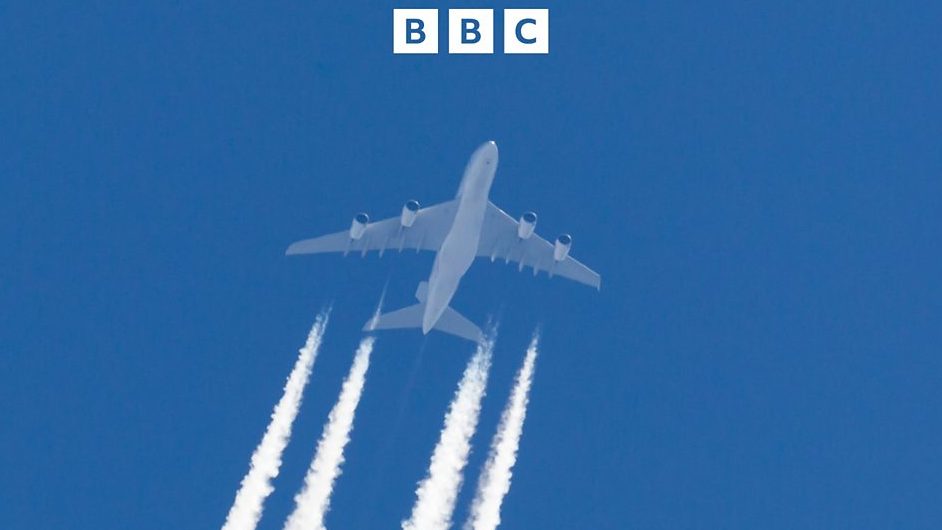
Look up on a clear day almost anywhere in the world and you will likely see them, those long, white, thread-like streaks stretching across the blue sky in the wake of a passing aircraft. For most of us, they are simply part of the scenery, a visual shorthand for the modern age of travel. But scientists have been raising the alarm about what those trails actually represent for the climate, and the findings are harder to brush off with every passing year.
What Are Vapour Trails, Exactly?
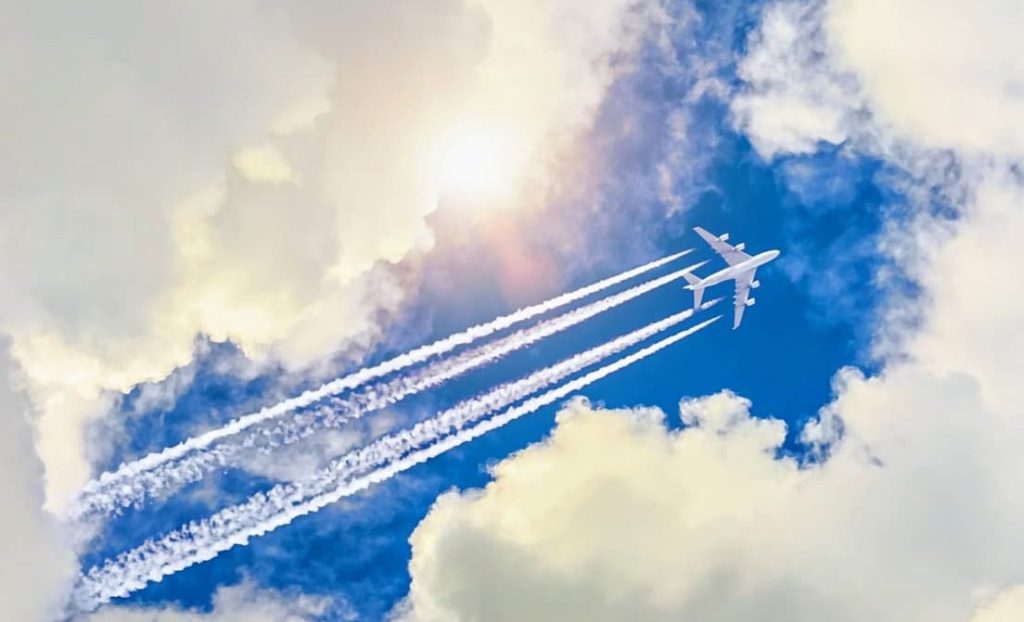
Vapour trails, more formally known as contrails, form when hot, humid exhaust gases from an aircraft engine mix with the cold, low-pressure air at cruising altitude. Water vapour condenses and freezes almost instantly around tiny soot particles, creating the streaky white clouds we see from the ground. Under certain atmospheric conditions, these trails dissolve within seconds. Under others, they spread out and persist for hours, eventually blending into a thin, wispy layer that can be almost indistinguishable from natural cirrus cloud cover.
That second scenario is where the trouble begins. Vapour trails from aircraft contribute to warming in the atmosphere, acting like a blanket that traps heat radiating from the Earth’s surface rather than allowing it to escape into space. The effect is not trivial. Some researchers argue that the warming caused by contrail cirrus clouds may actually rival, or even exceed, the warming caused by aviation’s carbon dioxide emissions when measured over a short time horizon.
Why This Matters More Than CO2 Alone
The aviation industry’s carbon footprint is already a major talking point in climate discussions. Planes burn enormous quantities of jet fuel, releasing CO2 that lingers in the atmosphere for centuries. But CO2 is only part of the aviation climate story. Non-CO2 effects, including contrail formation, nitrogen oxide emissions, and the aviation-induced cloudiness they produce, have a warming influence that is shorter-lived but potentially more intense in the near term.
This distinction matters a great deal when countries and companies are trying to calculate how much their aviation sectors actually contribute to global warming. If policy only targets CO2 without addressing contrail warming, a significant slice of the problem gets left on the table.
The Altitude Factor
One of the more striking things about contrail science is that relatively modest changes in flight paths could make a real difference. The warming effect of contrails depends heavily on where they form. Certain altitude bands and geographic regions are far more prone to producing persistent, heat-trapping contrail cirrus than others. In theory, rerouting flights around these sensitive atmospheric zones, even at a slight cost in fuel efficiency, could sharply cut the overall climate impact of aviation without grounding a single plane.
Modelling studies suggest that a relatively small percentage of flights are responsible for the vast majority of contrail warming, because those particular routes happen to pass through air that is supersaturated with ice. Targeting those flights specifically, rather than applying blanket restrictions across the industry, could be a surprisingly efficient way to chip away at the problem.
The Technology Challenge
Progress is being made, though slowly. Aviation technology companies and airlines have begun experimenting with real-time contrail forecasting tools that allow flight dispatchers to identify and avoid high-risk atmospheric corridors. Satellite imagery and improved meteorological data are making it increasingly possible to predict, with reasonable accuracy, where persistent contrails are likely to form on any given day.
Sustainable aviation fuels also offer some promise here. Because they tend to produce fewer soot particles when burned, they could reduce the number of ice nuclei available for contrails to form around, potentially resulting in trails that are thinner, shorter-lived, and less climatically damaging. But sustainable fuel production remains nowhere near the scale needed to power global aviation, and the economics are still daunting for most carriers.
What Passengers Can Actually Do
For the average traveller, this is admittedly a lot to absorb. You book a flight, you get on a plane, and somewhere above the clouds a chain of atmospheric chemistry begins that you have essentially no control over. But awareness does matter. Consumer pressure has historically played a role in pushing airlines toward greener practices, from fuel-efficient fleet upgrades to carbon offset schemes of varying quality.
Choosing carriers that are actively investing in contrail avoidance research, or that openly report on their non-CO2 climate impacts, is one way to vote with your wallet. Flying less frequently where practical, or combining trips to reduce the total number of flights taken, still carries real weight. And keeping the political pressure on for stronger aviation emissions regulation, including regulation that captures contrail warming and not just CO2, matters enormously given how slowly governments have historically moved on this issue.
A Problem Written Across the Sky
There is something almost poetic about the fact that one of aviation’s most significant climate contributions is also one of its most visible. The vapour trail streaking overhead is not just a sign that someone is travelling. It is a legible mark of our collective relationship with the atmosphere, written in ice crystals and engine exhaust across a shared sky.
The science is becoming increasingly clear that those streaks deserve far more attention than they have historically received. Aviation regulators, airlines, and the broader tech sector working on climate solutions now have both the data and, increasingly, the tools to act. The question is whether the urgency will match the scale of what is actually at stake.
So here is something worth sitting with the next time you spot a contrail overhead: should the climate cost of flying account for more than just the carbon in the tank?