






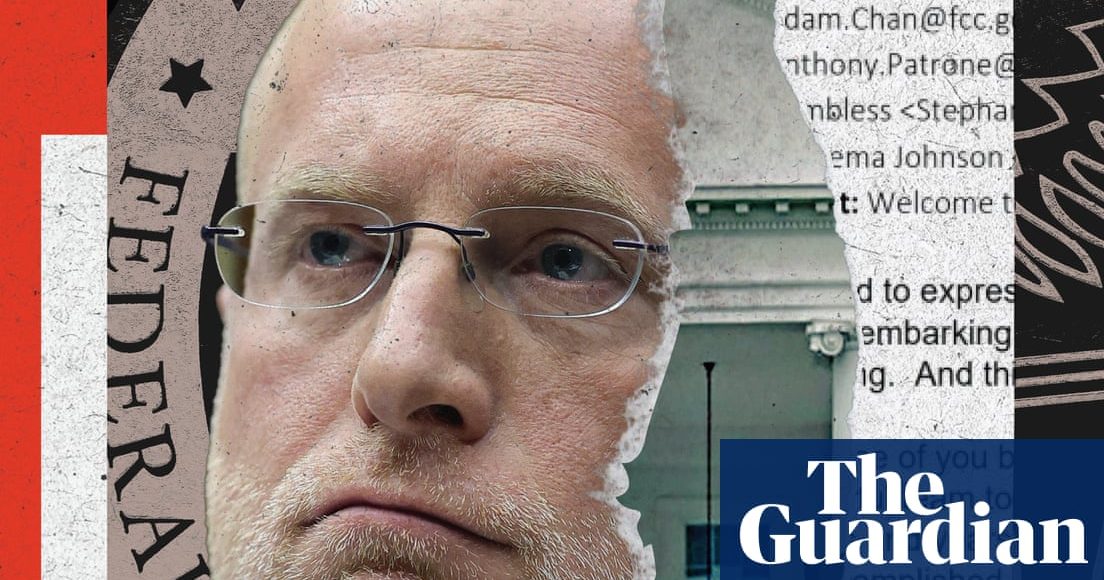
The Federal Communications Commission is supposed to be one of Washington’s great walls of separation, a body whose credibility rests entirely on its distance from political pressure. That wall, if a new cache of internal documents is anything to go by, may have some very significant cracks in it. Documents reviewed by The Guardian show that FCC chair Brendan Carr has maintained a pattern of White House meetings, scheduled calls with senior Trump administration officials, and direct communications with producers at Fox News.
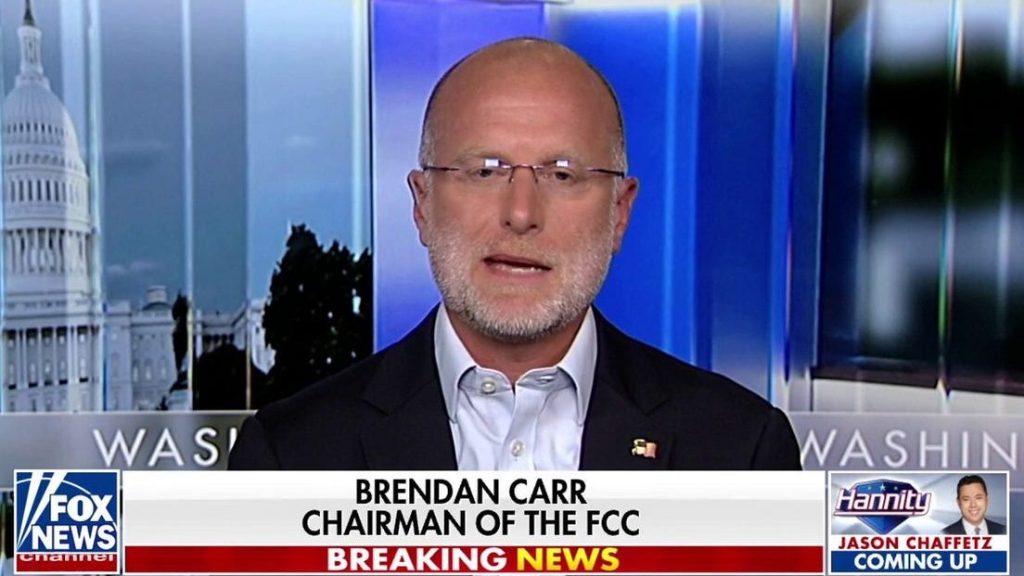
This is not a story about a bureaucrat who occasionally bumps into political figures at Washington cocktail parties. What the Guardian’s investigation appears to document is something far more structured: a consistent, recurring set of contacts between the country’s most powerful media regulator and the administration he nominally operates at arm’s length from, as well as outlets his agency is tasked with overseeing.
Why This Matters More Than Most Washington Scandals
The FCC regulates broadcasting licenses, telecommunications infrastructure, and media ownership rules. Every major television network, radio station, and broadband provider in the United States operates under its authority. The commission has the power to grant licenses, renew them, and in extreme cases pull them altogether. When a chair of that body is in regular contact with a sitting White House and with producers at one of the country’s most-watched cable networks, the question of regulatory capture stops being theoretical.
Regulatory capture is the phenomenon where an agency meant to serve the public interest begins, consciously or not, to serve the interests of those it is supposed to regulate or the political actors who appointed its leadership. It is among the quietest and most corrosive forces in modern governance, rarely dramatic enough to dominate a news cycle but consequential enough to reshape entire industries over time.
The contacts documented by The Guardian do not, in isolation, prove that Carr has made decisions in exchange for those relationships. But they raise a straightforward and serious question: can a regulator who is in routine contact with a political administration and with media organizations that stand to benefit from favorable regulatory outcomes actually be independent?
The Right-Wing Media Angle
The Fox News dimension of this story deserves particular scrutiny. Fox is not just any media company. It is the highest-rated cable news network in the United States, and it operates broadcast affiliates that fall directly under FCC licensing authority. Any communication between the FCC chair and Fox News producers that goes beyond standard stakeholder engagement protocols warrants explanation, not because the contact itself is automatically improper, but because the power asymmetry is so stark.
An FCC chair who communicates regularly with Fox producers holds leverage over the company’s broadcasting licenses. That leverage, even if never explicitly exercised, shapes the dynamic of every interaction. Journalists and media scholars have long argued that even the appearance of coziness between regulators and regulated entities corrodes public trust in the regulatory process, regardless of what is actually said in those meetings or on those calls.
A Pattern, Not an Anomaly
What makes this story stick is the word “pattern.” A single meeting with a White House official is unremarkable. A scheduled call with a Trump administration figure is explainable. But internal documents that reveal a consistent rhythm of contacts, across multiple officials and across a major media organization, suggest something more systemic than accidental proximity.
Washington has seen plenty of regulators who leaned politically in one direction or another. What is less common is documented evidence of the architecture of those relationships laid out in black and white. The Guardian’s reporting, built on what the outlet describes as internal documents, offers precisely that kind of structural evidence.
The Broader Context of Media Power in 2026
This story lands at a moment when the relationship between political power and media infrastructure has never been more consequential. Consolidation in the broadcasting industry has accelerated over the past decade. Ownership of local television stations, once spread across hundreds of independent operators, has concentrated into the hands of a smaller number of large groups. The FCC’s decisions on ownership caps, license renewals, and merger approvals carry enormous financial and informational consequences for the American public.
If the chair of that commission is making those decisions while maintaining close ties to one political administration and one ideologically aligned media giant, the public has every reason to ask whether the playing field is level. Smaller broadcasters, independent media, and communities that depend on diverse local news coverage all have a stake in the answer.
What Accountability Looks Like Here
Accountability in this context is not straightforward. The FCC chair serves at the pleasure of the president who appointed them, so a degree of political alignment is baked into the system. But there is a meaningful difference between shared broad philosophy and operational coordination. The former is inherent to any political appointment. The latter is a different matter entirely.
Congressional oversight committees have the authority to subpoena records and call officials to testify. Media advocacy organizations and public interest groups have already spent years watching Carr’s tenure with considerable concern. This latest reporting is likely to intensify both formal and informal scrutiny of how the commission has conducted itself under his leadership.
The FCC declined to comment in any detail that would clarify the nature or frequency of the contacts described in the documents, which is itself a telling posture for a body that is supposed to operate transparently in the public interest.
The Question No One in Washington Wants to Answer
There is a version of this story where everything documented turns out to be within the letter of applicable ethics rules. Washington is a city of meetings, calls, and relationships, and the rules governing what regulators can and cannot do are often less restrictive than the public assumes. But legality and propriety are not the same thing, and the public’s reasonable expectation of an independent FCC is not satisfied simply by pointing to the absence of a formal violation.
The deeper question is structural. Should the chair of the nation’s primary broadcast regulator be in this kind of ongoing contact with a White House and with a major media company at all? And if the answer is that current rules permit it, perhaps that tells us something important about whether those rules are still adequate for the media landscape of 2026.
The documents are out. The contacts are on the record. Now the question for readers, journalists, lawmakers, and anyone who cares about who controls the information flowing into American homes is this: at what point does proximity to power become a problem for the person whose entire job is to keep that power in check?