





On Monday, August 18, 2026, Pennsylvania Attorney General Dave Sunday stepped before cameras and delivered news that rattled one of America’s most recognizable college campuses: more than a dozen people, described as primarily Penn State University students, had been charged in connection with a cocaine trafficking operation that used fraternity houses as its base of business.
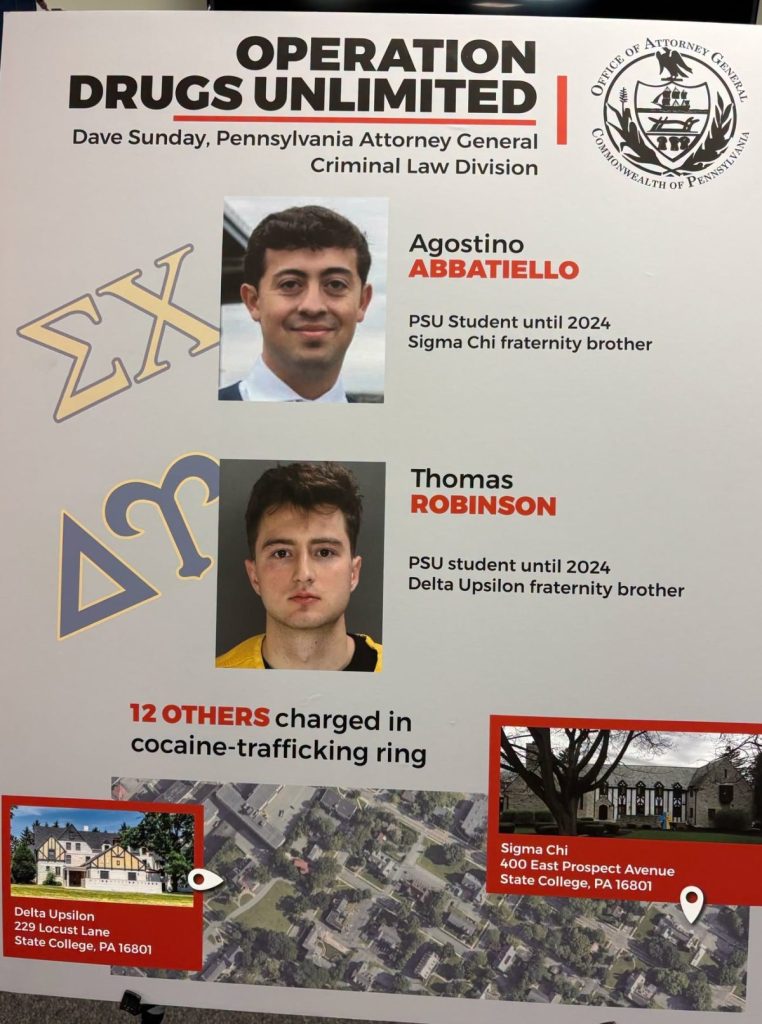
The charges named 14 individuals. According to Sunday’s office, the ring cut, packaged, and distributed cocaine mainly to Penn State students, using at least two off-campus fraternity houses as operational hubs. The fraternities identified were Delta Upsilon and Sigma Chi. Delta Upsilon was placed on interim probation following the announcement. The cocaine trafficking allegations sent shockwaves through a university community far larger than its State College address might suggest.
The Operation: What Authorities Say Happened
The picture painted by Sunday’s office is not a casual side hustle. This was organized. Cocaine was reportedly processed and packaged inside the fraternity houses before being moved out to buyers across the Penn State student population. The attorney general’s language was pointed: this involved “primarily college students and two fraternities,” a framing that puts the Greek system squarely at the center of the investigation rather than treating the houses as incidental locations.
That distinction matters. There is a significant difference between a single student making bad decisions in a dorm room and a structured operation using institutional social spaces to move a controlled substance. The former is a personal failing. The latter is a criminal enterprise, and Sunday’s office appears to be treating it as exactly that.
Delta Upsilon, Sigma Chi, and the Weight of Interim Probation
Both fraternity chapters involved are off-campus organizations, which adds a layer of complexity to how the university responds administratively. Delta Upsilon’s placement on interim probation signals that Penn State is not waiting for the legal process to conclude before taking action. Interim probation is typically a holding measure, one that restricts the organization’s activities while an institution investigates and determines next steps.
For Sigma Chi, no probationary status was immediately announced in Monday’s statements. The distinction between the two chapters’ current standing may reflect different levels of alleged institutional involvement, though authorities have not elaborated publicly on why one chapter faces immediate administrative consequences while the other does not.
Greek life at large American universities has long operated in a complicated space, enjoying the social prestige of tradition while sometimes resisting meaningful oversight. When something like this surfaces, the conversation almost always circles back to accountability structures and whether universities have the will, or the tools, to enforce them properly.
A University Community Reckoning With the News
Penn State is not a small school tucked away from public scrutiny. It carries enormous cultural weight, a massive alumni network, and a football program that keeps it perpetually in the national spotlight. News of a cocaine trafficking ring operating inside its fraternity ecosystem does not stay local. It travels.
For students who had no connection to either fraternity or the alleged ring, Monday’s announcement arrives as an uncomfortable reminder that serious criminal activity can exist quietly alongside ordinary campus life. For parents sending children to large residential universities, it raises the kind of questions that no admissions brochure is designed to answer.
For the 14 individuals now facing charges, the road ahead is a legal one, with consequences that could reshape the rest of their lives. College is supposed to be where people figure things out. Getting charged in a cocaine trafficking case is a very different kind of education.
What Comes Next
The attorney general’s office has not indicated whether additional charges or individuals might be added as the investigation continues. Legal proceedings for the 14 accused will move through the Pennsylvania court system. Penn State will face internal and external pressure to demonstrate that its oversight of Greek organizations is more than ceremonial.
Questions about how an operation of this scale allegedly went undetected for long enough to become the subject of a formal attorney general announcement will take time to answer. Universities, Greek councils, and law enforcement agencies will all have something to account for in the months ahead.
The story here is not just about cocaine. It is about what institutions see, what they choose not to see, and who ends up bearing the cost when the willful blind spot finally comes into the light. So here is the question worth sitting with: when a drug trafficking operation runs inside an officially recognized social institution on a major university campus, who is truly responsible, and are current systems anywhere near equipped to prevent the next one?