




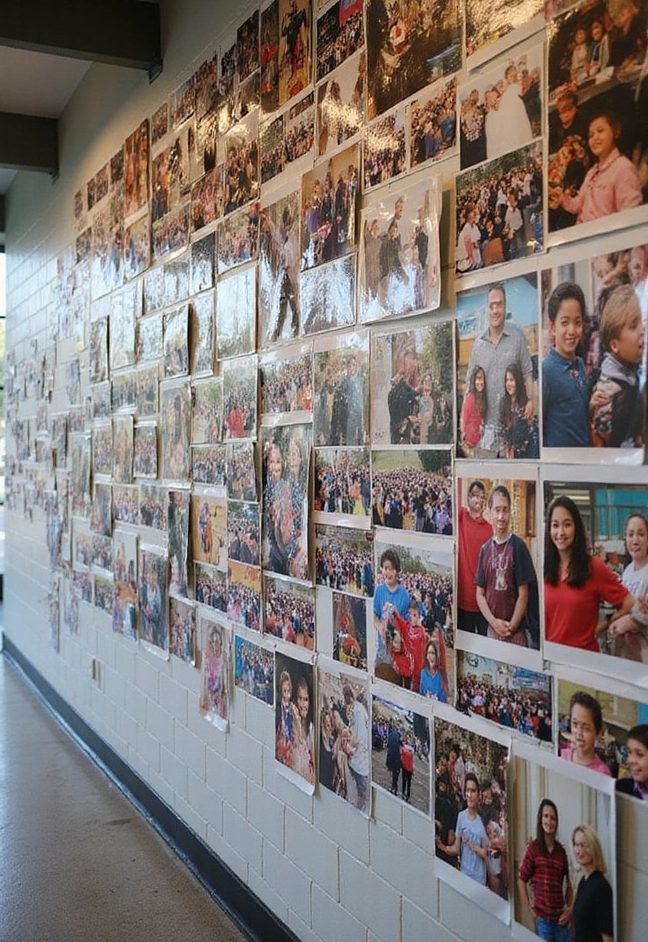
For as long as social media has existed, schools have treated their online presence like a community noticeboard. Sports days, science fairs, reading weeks, nativity plays, the photos pile up on websites, Facebook pages, and Instagram accounts, each one intended as a warm, inclusive record of school life. Most parents scroll past them with a smile. But a growing number of child safety experts, parents, and tech researchers are raising a question that cuts through all that warmth rather sharply: what happens when those images fall into the wrong hands?
The Routine That Became a Risk
The practice of schools photographing and publishing images of pupils online is not new. It has become, over the past decade and a half, almost completely normalised. A school without a photo gallery on its website feels oddly absent, like a shop with no window display. The intent is almost always positive. Schools want to show prospective families what daily life looks like. They want to celebrate achievements. They want to build community.
But the digital landscape those images enter is not a closed, controlled environment. Once a photo is published online, even behind a basic login, its journey becomes unpredictable. Screenshots can be taken. Images can be scraped by automated tools. Facial recognition technology, which has become dramatically more accessible in recent years, can match a child’s face across multiple platforms in seconds. The conversation around how school-posted pupil photos could be misused is no longer a fringe concern reserved for overprotective parents. It is a mainstream safeguarding issue.
What “Misuse” Actually Looks Like
When people hear “misuse of children’s photos online,” the mind often jumps to the most extreme scenarios. Those scenarios are real and documented, but they are not the only risk. The spectrum of harm is wider than most schools, and most parents, tend to appreciate.
At one end, there is the uncomfortable but relatively lower-stakes problem of a child’s image being used without consent in commercial or misleading contexts. Stock photo aggregators and AI image training datasets have, on multiple occasions, been found to contain photos scraped from public-facing school websites. A child’s face, posted by their primary school in Leeds or Lagos, might end up as training data for a facial recognition model without anyone in that child’s family ever knowing.
Further along the spectrum, there are documented cases of images being harvested by individuals with harmful intent. Child protection organisations have consistently warned that publicly accessible photos, especially those include identifiable details like a school uniform, a child’s first name in a caption, or a geographic tag, can be used by predators to build profiles of potential targets.
The Metadata Problem Nobody Talks About
Then there is a technical layer that even tech-savvy parents rarely think about. Digital photographs contain metadata, invisible data embedded within the image file itself. Depending on how a photo is taken and processed before being uploaded, that metadata can include the precise GPS coordinates of where the photo was taken, the date and time, and the device used. Most major platforms strip this data on upload, but not all school websites do. A photo posted directly to a WordPress school website may carry far more information than the smiling faces it shows.
Schools Are Not Villains, But They Need Better Frameworks
It would be deeply unfair to cast schools as negligent actors in this story. The vast majority of teachers and administrators posting pupil photos online are doing so with nothing but good intentions and, often, with explicit parental consent obtained at the start of each academic year. The problem is that the consent frameworks many schools use were designed for a digital world that no longer exists.
Signing a paper form agreeing that the school may use your child’s image in “school publications and the school website” made reasonable sense in 2008. It makes considerably less sense in 2026, when that same consent might technically cover images being indexed by search engines, appearing in Google Images results, or being accessible to anyone on earth with an internet connection. The language has not kept pace with the technology.
Several education authorities have started to update their guidance, encouraging schools to use password-protected photo galleries, to avoid including children’s full names in captions alongside their images, and to audit their existing online photo libraries for content that may have been posted under outdated consent policies. These are sensible steps, but implementation is inconsistent and often under-resourced.
What Parents Can Actually Do
Parents are not powerless here, even if it can feel that way. There are practical steps worth taking. First, read the consent form your child’s school sends home each year with actual attention. If the language is vague or broad, ask the school directly where photos are published, how long they stay up, and whether the website is publicly indexed by search engines.
Second, know that consent can be withdrawn. If you have previously agreed to your child’s image being used and you have changed your mind, most schools are legally required to accommodate that request under data protection law, including the UK’s GDPR framework. This does not mean demanding every historical photo be scrubbed from existence, but it does mean you have more control than you might realise.
Third, and perhaps most usefully, talk to your child. Children who understand why some information and images are kept private, and who feel comfortable flagging anything that feels wrong, are meaningfully safer in digital environments than those who have simply been told “don’t talk to strangers online.”
The Bigger Picture
This issue sits inside a much larger reckoning that societies across the world are having about children and digital spaces. The age at which children own smartphones is dropping. Their digital footprints, created partly by their own actions and partly by the institutions around them, are growing longer. And the tools available to exploit those footprints are becoming cheaper and more sophisticated every year.
Schools are trusted institutions. That trust is not misplaced, but it does carry responsibility. The fact that posting pupil photos online has always been done is not a sufficient reason to continue doing it without rigorous, regularly updated safeguards. Good intentions are not a data protection strategy.
The question worth sitting with is this: if a school would not allow a stranger to stand outside the gates photographing children and publishing those images publicly, why should the digital equivalent be treated any differently?