







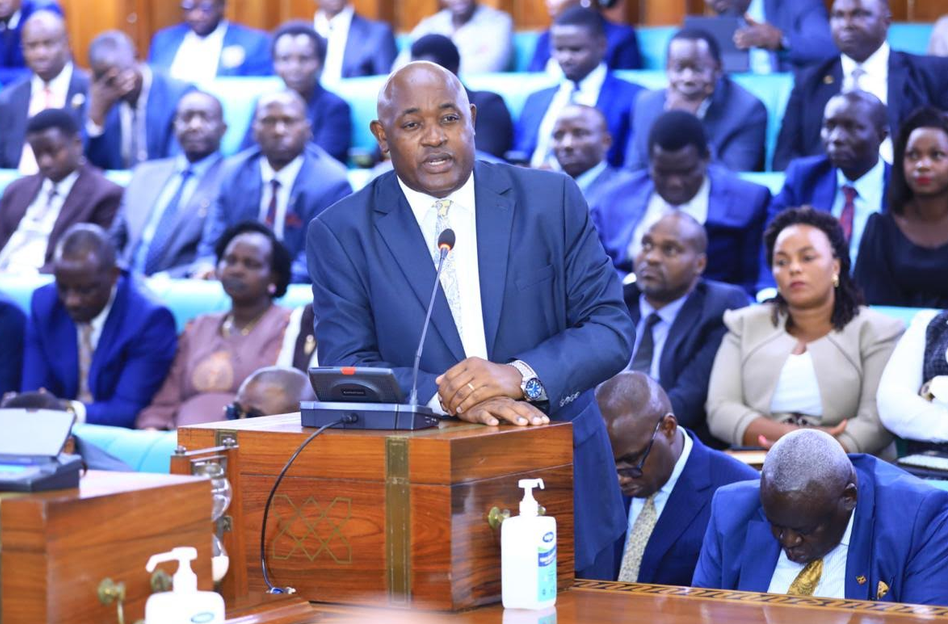
Uganda’s Health Minister Dr Chris Baryomunsi has drawn a firm line in the sand, telling medical interns across the country that August 15, 2026, is their last chance to report to their assigned health facilities or permanently lose their internship placements. The warning comes as a bitter dispute over intern welfare and a contested training policy shows no sign of cooling down, with the standoff now spilling onto the floor of Parliament and threatening to trigger a broader strike by doctors nationwide.
A Deadline With Real Consequences
Baryomunsi’s message was direct and unambiguous. Speaking in Parliament, the minister said he would contact hospital directors on the deadline date to determine who had shown up for duty and who had not. Those absent without reporting, he made clear, would be treated as having voluntarily given up their internship placements.
“My message to the interns is that we expect them to report. And on the 15th of this month, I will ask the directors of the hospitals to give me an update in terms of who has reported, and those who will not have reported will be considered to have forfeited their placement for internship as we handle their issues,” the minister said.
It is a hard stance, but the minister balanced it with an appeal to empathy. He acknowledged that the interns’ concerns are legitimate and that government is actively working to address them. His ask: trust the process, show up, and allow the dialogue to continue from inside the system rather than from the outside looking in.
What the Interns Are Fighting For
The interns did not simply wake up one morning and decide to boycott their postings. Their collective decision to stay away from assigned health facilities stems from unresolved welfare concerns and strong objections to a training policy they consider unfair. The specifics of that policy have become a flashpoint, with the Uganda Medical Association backing the interns’ position and actively encouraging them not to report until government takes concrete action.
That backing from a professional body as significant as the UMA gives the interns’ cause considerable weight. These are not students throwing a tantrum. They are freshly trained medical professionals whose cooperation is critical to keeping Uganda’s public health facilities functional, particularly in under-resourced areas where they are often the primary source of care.
Parliament Gets Involved
The matter reached the national legislature when the Leader of the Opposition Joel Ssenyonyi rose in the House to present a letter from the Uganda Medical Association addressed to the Health Minister, medical professionals, key stakeholders, and the wider public. Ssenyonyi noted that he received the letter both in his capacity as a parliamentary stakeholder and as a member of the public.
The letter outlined the association’s position on intern welfare and contained a pointed warning: if government does not address the issue of facilitating medical interns within 14 days, doctors across the country will proceed with industrial action. That is not a veiled threat. It is a countdown.
Ssenyonyi’s decision to table the matter in Parliament signals that this dispute has outgrown the Ministry of Health’s corridors. It is now a public governance issue, one that touches on how Uganda treats its young healthcare professionals and whether the country is serious about sustaining a functional public health workforce.
The Bigger Picture for Uganda’s Healthcare System
Strip away the political theatre and the ultimatums, and what remains is a deeply uncomfortable truth: Uganda’s medical internship system has welfare gaps serious enough to push an entire cohort of fresh doctors to collectively refuse deployment. That is not a small thing.
Medical internships are not optional extras. They are the bridge between medical school and independent clinical practice. They are where theory meets reality, where young doctors build the confidence and competence that will define their careers. When interns feel so unsupported that they would rather risk losing their placements than report for duty, something in the system has gone seriously wrong.
The UMA’s threat of a nationwide doctors’ strike adds another layer of urgency. A strike by medical professionals in any country disrupts care for the most vulnerable. In Uganda, where public hospitals serve millions of people who have no private healthcare alternative, a work stoppage would not be a political inconvenience. It would be a health emergency.
Room for Resolution?
Baryomunsi did leave a door open. His language, while firm on the deadline, was careful to signal that government is not dismissing the interns’ concerns. “We respect them, we respect what they are raising, and we feel concerned about them,” he said, urging them to resume duty while dialogue continues.
Whether the interns and the UMA find that reassurance sufficient is the question that will define the next few days. The minister’s appeal to goodwill only works if there is enough trust in the system to act on it. And right now, that trust appears to be running dangerously low.
For Uganda’s young doctors, this is more than a contract dispute. It is a statement about whether the government values the people it trains, deploys, and depends on to keep its citizens healthy. The answer to that question will come not from speeches on the floor of Parliament, but from what happens in the days after the deadline passes.
Do you think the government is moving fast enough to protect the welfare of Uganda’s medical interns, or is this a crisis that has been allowed to fester for too long? Share your thoughts below.