




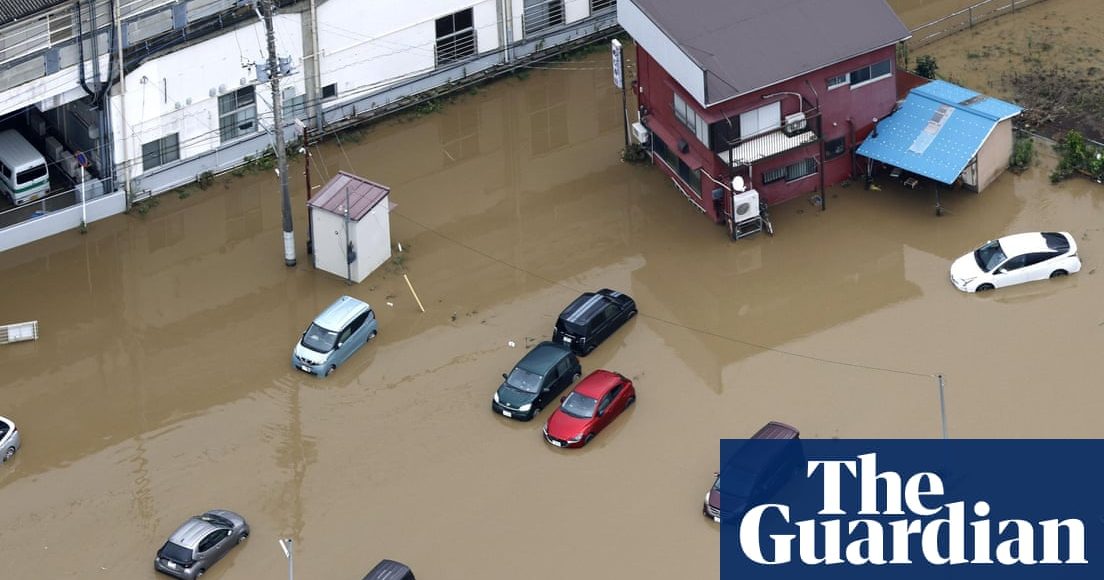
Eastern Japan woke up on Friday, August 14, 2026, to a landscape barely recognisable from the night before. Torrential rain had hammered Chiba prefecture, the flat coastal region that sits just east of Tokyo, with a ferocity that weather officials called unprecedented. At least four people lost their lives. Nearly 7,000 travellers found themselves stranded inside Narita International Airport with nowhere to go. And authorities scrambled to move more than 400,000 residents out of harm’s way before the ground gave way beneath them.
When a Month’s Rain Falls in a Single Night
The numbers tell the story with brutal efficiency. Chiba recorded 115 millimetres of rainfall in a single hour on Thursday night. To put that in perspective, meteorologists note that the same figure represents the prefecture’s typical rainfall for the entire month of August. In one hour. The sheer volume overwhelmed drainage systems, swelled rivers, and turned low-lying roads into moving streams that no vehicle could safely cross.
Landslide warnings went out across the region as saturated hillsides threatened to collapse. Power outages knocked out electricity to roughly 45,000 homes, leaving residents in the dark as water crept closer to their doorsteps. Emergency services fielded calls from people trapped in cars, in ground-floor apartments, and in basements that had begun to fill.
According to reporting from The Guardian, the flooding risk remained high even as rainfall began to ease, a warning that forecasters frequently issue in the hours after extreme events when water continues to drain off saturated ground and pile into rivers already at capacity.
Narita Airport Becomes an Unlikely Refuge
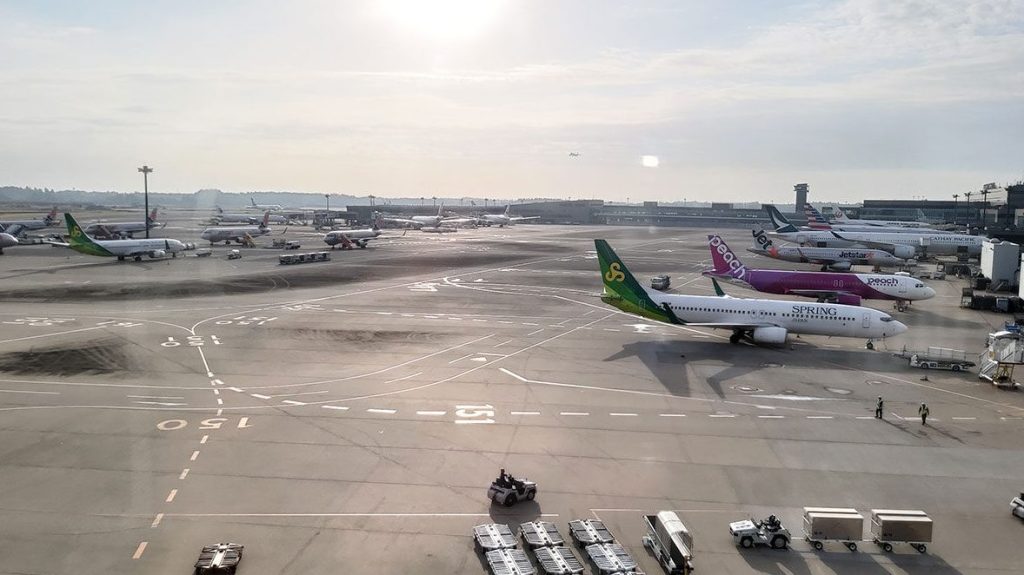
For almost 7,000 people, the chaos had a very specific address: Narita International Airport, one of the principal gateways into and out of Japan. Flooded access roads made it physically impossible for passengers to leave the terminal complex. Buses stopped running. Train lines suspended services. Taxis had nowhere safe to travel. The result was a vast, fluorescent-lit holding pen filled with exhausted, frustrated travellers sitting on departure hall floors, draped across luggage, waiting for conditions to improve.
Airport authorities worked through the night distributing water and food. Staff set up resting areas and kept arrivals boards updated as best they could, though flight disruptions compounded the misery for anyone hoping an early departure might be their escape route. For many, it was not. The stranded crowd represented a cross-section of the world: returning Japanese residents, international tourists, business travellers, families heading home after summer holidays.
Scenes like these carry a particular weight at Narita, an airport that processes tens of millions of passengers annually and has long been a symbol of Japan’s seamless, clockwork infrastructure. To see it overwhelmed by weather is a reminder that no amount of engineering genius fully insulates a country against nature operating at the far edge of its range.
400,000 Ordered to Leave Their Homes
Beyond the airport, the evacuation scale was staggering. Authorities issued orders covering more than 400,000 people across Chiba and surrounding areas, directing residents to leave their properties and move to designated government buildings and community shelters. Gyms, schools, and municipal halls filled with families carrying overnight bags, elderly residents in wheelchairs, and people clutching pets they refused to leave behind.
Japan has a well-practised evacuation culture, built over decades of responding to typhoons, earthquakes, and tsunamis. Residents generally understand the drill, and local governments maintain detailed emergency protocols. Even so, the speed of Thursday night’s rainfall left little time for orderly preparation. Some people were already asleep when the warnings arrived. Others had only minutes to gather essential documents and medications before conditions made leaving on foot too dangerous.
Landslide Risk: The Hidden Danger
Flooding is the obvious threat in events like this, but landslides represent a quieter, often deadlier companion. Chiba’s topography includes slopes and hillsides that, when saturated, can shear away with very little warning. Japan’s land agency and meteorological authorities issued landslide caution advisories across multiple zones, urging people in elevated areas not to wait for visible signs of movement before relocating. By that point, it is frequently too late.
The four fatalities confirmed so far may not represent the final count. In the aftermath of events this severe, some deaths surface hours or days later as rescue teams reach areas that were initially inaccessible. Search and recovery operations continued Friday morning as authorities worked to assess the full extent of the damage.
A Pattern That Japan Cannot Ignore
Japan is no stranger to extreme rainfall. The archipelago sits in a part of the Pacific where warm, moisture-laden air masses collide with geographical features in ways that make intense precipitation almost routine during summer months. Typhoon season runs from roughly June through October, and even non-typhoon rainfall events regularly push weather records.
But the language officials and meteorologists used to describe Thursday’s event, specifically the word “unprecedented,” carries particular weight in a country where extreme weather is so thoroughly documented and studied. When Japanese weather authorities reach for that descriptor, it signals something genuinely outside the established range of experience, not merely a bad storm but a statistical outlier that forces a reassessment of what the region’s infrastructure must be built to withstand.
Urban planners, civil engineers, and disaster management officials across Japan have spent years upgrading drainage capacity, reinforcing riverbanks, and building underground cisterns beneath major cities to absorb excess rainfall. Tokyo famously completed a massive underground flood-diversion system designed to handle exactly these kinds of events. Yet Chiba’s experience on Thursday suggests the goalposts keep moving. Infrastructure designed to handle the worst storms of the past may simply be undersized for the worst storms of the present.
What Happens Next
In the immediate term, attention turns to assessment and recovery. Engineers need to inspect roads, bridges, and slopes for structural damage before evacuation orders can be lifted. Power companies are working to restore electricity to the 45,000 affected homes. And Narita airport is slowly returning to normal operations as access routes reopen and stranded passengers finally begin to disperse.
For the 400,000 people under evacuation orders, the question is when, not whether, they can return. Japan’s disaster management system is thorough, but the process of declaring areas safe takes time, and residents who come home to damaged or flooded properties face a lengthy ordeal regardless of when they get back through their front doors.
The wider question, the one that events like this force onto the national conversation, is whether Japan’s already formidable disaster preparedness framework needs to be recalibrated for a new reality. When 115 millimetres of rain can fall in a single hour in August, the old baselines start to look like historical footnotes rather than planning guides.
As relief efforts continue and the full human cost of this storm becomes clearer, one question lingers: if one night of rain can strand 7,000 people at a major international airport and displace 400,000 from their homes, what does Japan’s next generation of infrastructure need to look like, and who is willing to pay for it? Share your thoughts below.