











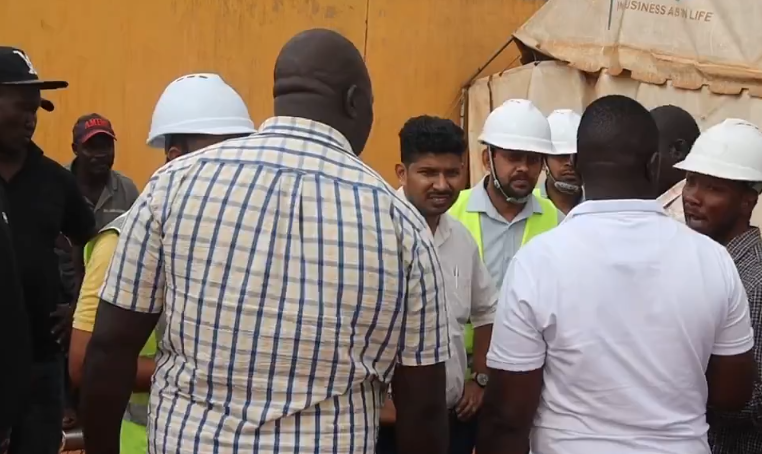
A group of maize traders in Luweero District took matters into their own hands this week, physically blockading the entrance of PRO Industries Pte Limited’s sprawling plant in Ndibulungi, Butuntumula Sub-county, after the company allegedly refused to pay for maize supplies delivered more than two months ago. With their trucks parked firmly at the factory gate and no sign of backing down, the traders turned what began as a commercial grievance into one of the most visible confrontations between local suppliers and a foreign-backed investor that Uganda has seen in recent memory.
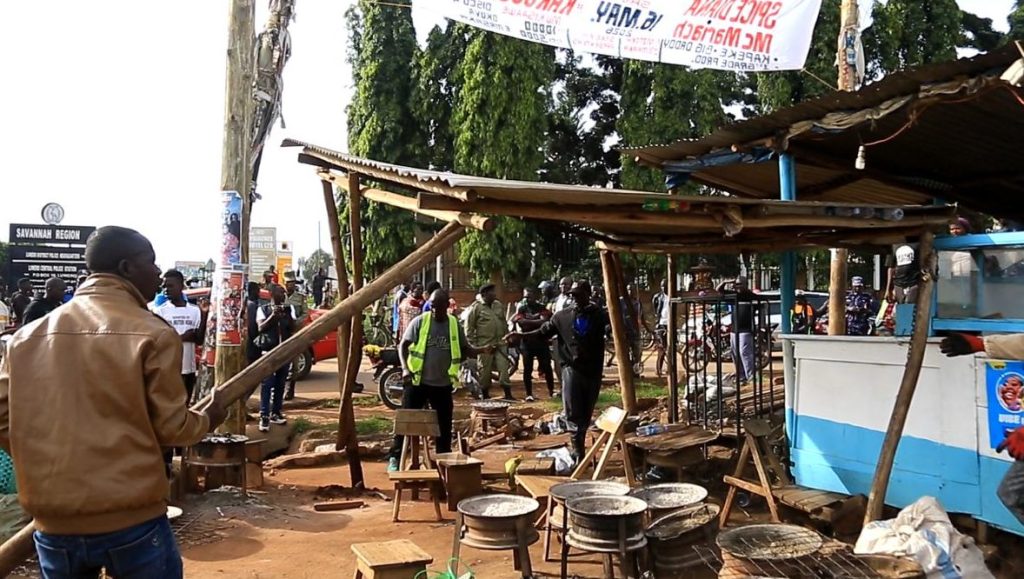
A Standoff That Police Could Not Defuse
Security forces were deployed to the Ndibulungi site as the protest took hold, but their presence did little to convince the traders to clear the road. The traders held firm, insisting they would not move until every shilling owed to them was settled. It was a display of collective frustration that spoke louder than any formal complaint filed in an office somewhere.
The anger was raw and unapologetic. “What did these so-called investors come to do here? They must give us our money. What kind of investors are these,” one trader demanded, according to a report by Chimpreports. Another trader cut straight to the point, calling on the company to simply return the grain if payment was off the table. “Give us back our maize. What kind of investor are you who cannot pay suppliers,” the trader said.
These are not the words of people who feel heard. They are the words of people who have run out of patience.
The Company Behind the Gate
PRO Industries is no small operation. The company runs a manufacturing plant at the same Ndibulungi site valued at $100 million, roughly equivalent to Shs380 billion, built to produce ethanol and extra-neutral alcohol, commonly referred to as ENA. The plant was officially commissioned by President Yoweri Museveni in December 2025, positioned as a flagship of the government’s push to add industrial value to agricultural production across the country.
At that launch, company officials painted an optimistic picture. They told the President that PRO Industries sourced raw materials directly from thousands of maize farmers in Luweero and neighboring districts, and that production would scale to over 300,000 litres per day before the end of 2026. It was the kind of announcement that generates applause in boardrooms and hope in farming communities.
But the traders now camped at the factory gate represent the gap between that promise and the reality on the ground. For them, the grand figures and commissioning ceremony mean very little when their phone calls go unanswered and their bank accounts remain empty.
Not the First Time PRO Industries Has Made Headlines for the Wrong Reasons
Wednesday’s protest is not the company’s first controversy since its high-profile debut. Back in March 2026, the Standards, Wildlife and Utilities Court in Makindye delivered a conviction against PRO Industries for illegally discharging untreated industrial waste into the Ngaju Wetland, located on the same Ndibulungi site. The case had been brought by the National Environment Management Authority (NEMA) after the company was found in breach of the conditions attached to its Environmental and Social Impact Assessment certificate.
The court fined PRO Industries Shs75 million and ordered it to restore the damaged wetland within 30 days, with NEMA overseeing the process. The company had admitted to the breach, which at the time raised questions about how seriously its management was treating its obligations to both the environment and the communities around it.
Taken together, the wetland conviction and the current payment dispute sketch a portrait of a company that has struggled to match the scale of its ambitions with the discipline those ambitions demand.
What This Means for Uganda’s Agro-Industrial Push
Uganda has spent years trying to attract serious investment into agro-processing, knowing that raw commodity exports leave most of the economic value on the table. When a plant like PRO Industries arrives with a nine-figure investment and presidential endorsement, it is supposed to signal that the country is turning a corner. Local farmers and traders are meant to benefit through reliable markets and fair prices, not just proximity to a shiny new factory.
The Luweero standoff raises uncomfortable questions about how investor commitments to local supply chains are being monitored. There appears to be no mechanism that compelled PRO Industries to pay its suppliers within a reasonable timeframe, and the traders had no real recourse short of physically blocking the road. That is a structural gap, not just a corporate failing.
For the maize traders of Luweero, the math is simple. They delivered their product. They expected payment. They did not get it. No amount of rhetoric about agro-industrialisation changes that equation. And for the farmers who grow the maize that eventually finds its way into the supply chain, a company that treats its immediate suppliers this way is not exactly inspiring confidence.
Where Things Stand Now
As of this writing, the traders remain at the factory, their trucks still occupying the entrance. No formal resolution has been announced. PRO Industries has not issued any public statement responding to the traders’ demands. Police continue to monitor the situation.
The standoff has drawn attention well beyond Butuntumula Sub-county. It touches on broader debates about the rights of small traders in dealings with large corporations, the enforcement of payment obligations in Uganda’s commercial ecosystem, and whether the government’s investment promotion machinery does enough to protect local suppliers once foreign investors set up shop.
A $100 million factory and a Shs75 million wetland fine. Commissioning ceremonies and unpaid maize traders sleeping outside the gate. For a company that positioned itself as a partner to thousands of farming households, the distance between the branding and the behavior is striking. The question worth sitting with is this: if investors cannot be trusted to pay the people who supply their raw materials, who exactly is the investment meant to benefit?