




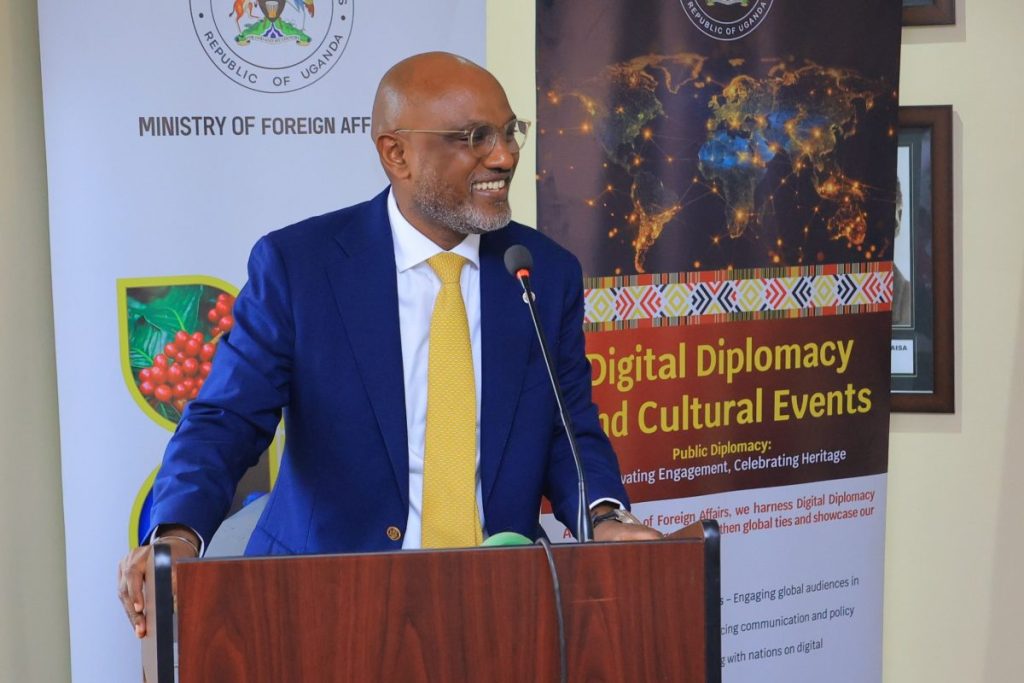
Uganda’s diplomatic machinery has a new hand on the wheel. Ambassador Adonia Ayebare officially assumed leadership of the Ministry of Foreign Affairs on Tuesday following a formal handover ceremony held at the ministry’s headquarters in Kampala, wrapping up a transitional period that had lasted close to two months.
The End of a Steady Interlude
Haruna Kyeyune Kasolo had been holding the fort as Acting Minister of Foreign Affairs, and by most accounts he kept things running without turbulence. The handover, which followed the swearing-in of three newly appointed ministers by President Yoweri Museveni at State House, marks the formal close of that interim chapter.
At the ceremony, Kasolo offered Ayebare his congratulations and a genuine word of encouragement as the ambassador prepares to take on one of the most demanding portfolios in any government. As reported by Mbu, Kasolo reflected on how Uganda’s diplomatic work had continued to advance national interests, build on strategic partnerships, and deepen the country’s ties with regional and international partners during his tenure.
It was a gracious send-off, the kind of institutional moment that speaks well of a government when it goes smoothly. And this one did.
Who Is Adonia Ayebare?
Ayebare is no stranger to the corridors of international diplomacy. His background as an ambassador means he arrives at the ministry not as someone learning the language of foreign affairs for the first time, but as someone who has already lived it. That professional grounding is exactly what the role demands, particularly at a moment when Uganda’s external relationships carry significant weight on multiple fronts including trade, security cooperation, and regional integration.
He takes over a ministry that has been described, even by his predecessor in this handover, as one that has kept moving in the right direction. That is both a compliment to Kasolo’s stewardship and a clear signal of what the expectations are going forward.
What the Transition Says About Uganda’s Diplomatic Direction
Cabinet reshuffles and ministerial transitions are never purely administrative. They send signals, both domestically and abroad, about where a government’s priorities sit. Appointing an experienced ambassador to lead the Foreign Affairs Ministry suggests a desire for continuity married with deeper professional expertise at the helm.
Uganda’s foreign policy has long revolved around a few core pillars: protecting national interests, cultivating economic partnerships, and playing an active role in regional affairs, particularly through bodies like the East African Community and the African Union. With Ayebare now in charge, the expectation is that these pillars will not only hold but be built upon with the kind of insider knowledge that comes from years of representational work at the international level.
Regional Context Matters
The Great Lakes region remains one of the most diplomatically complex neighbourhoods on the continent. Uganda sits at a crossroads of competing interests, fragile peace processes, and evolving trade corridors. The foreign affairs docket is never a quiet one, and whoever holds it needs both diplomatic fluency and political steadiness. Ayebare’s ambassadorial background positions him to navigate that complexity with less of a learning curve than a political appointee without diplomatic experience might face.
Kasolo’s Legacy in the Role
It would be easy to overlook the contribution of someone who served in an acting capacity, but Kasolo’s period at the ministry was not insignificant. Keeping a major ministry on course during a period of leadership transition requires institutional knowledge, composure, and a willingness to maintain momentum without overreaching. The smooth handover itself is a reflection of how that interim period was managed.
A New Chapter Begins
With the oath taken at State House and the keys now formally passed at the ministry’s headquarters, Uganda’s foreign affairs agenda moves into its next phase. The relationships that have been cultivated, the negotiations that are ongoing, and the partnerships still being built will now be Ayebare’s responsibility to steward, deepen, and where necessary, recalibrate.
For Ugandans watching from outside the walls of diplomatic headquarters, the question worth sitting with is this: given the complexity of Uganda’s regional relationships and the growing importance of economic diplomacy on the continent, what specific priorities should Ambassador Ayebare put at the very top of his agenda as he settles into one of government’s most consequential offices?