








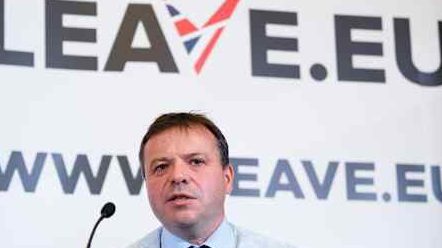
A story that cuts right to the heart of press freedom in Britain broke on August 8, 2026, and it carries the kind of weight that lingers. Arron Banks, the Brexit campaigner and prominent figure within Reform UK, is alleged to have bankrolled private investigators to scrutinise Gabriel Pogrund, the editor of the Sunday Times’ Insight investigations team, after Pogrund published a series of damaging stories about Nigel Farage and dug into the financial workings of the party.
The allegation, reported by The Guardian, has placed Banks at the centre of a deeply troubling question: did a powerful political operative use hired surveillance to intimidate, or at the very least monitor, a journalist whose work was proving uncomfortable for his circle?
What Banks Actually Said
Banks has not exactly been subtle in his response. When asked whether he had targeted the reporter, he delivered a line that is hard to read as anything other than a confirmation wrapped in bravado: “When you live by the sword, you die by the sword.” It is the kind of remark that is designed to signal toughness while stopping just short of an outright admission. Whether it holds up as a defence is another matter entirely.
That phrase carries a specific charge. It positions Pogrund’s journalism as an act of aggression that somehow warranted a counter-strike. It is a framing that many in the press freedom community will find not just troubling, but a direct challenge to the foundational principle that journalists investigating matters of legitimate public interest should be free to do so without fear of being placed under personal surveillance.
Who Is Gabriel Pogrund?
Pogrund is not a fringe blogger or a partisan commentator. He is the editor of the Sunday Times Insight team, one of the most storied investigative units in British journalism, with a legacy that stretches back to landmark investigations including the thalidomide scandal in the 1970s. His recent work focused on Nigel Farage and the finances surrounding Reform UK, making him precisely the kind of journalist that powerful political figures tend to find inconvenient.
Investigative journalism of this nature requires sources to trust reporters, and sources trust reporters when they believe those reporters are not themselves being watched. The alleged use of private detectives against Pogrund, if substantiated, would represent exactly the sort of chilling tactic that discourages sources from coming forward and, by extension, the public from learning what it has a right to know.
The Reform UK Connection
Banks has been a central figure in the broader political movement that ultimately crystallised into Reform UK, with deep ties to the Brexit campaign that reshaped British politics. His relationship with Nigel Farage is well documented and long-running. That Pogrund’s reporting specifically covered Farage and the party’s finances adds a clear layer of personal motivation to the alleged decision to hire investigators.
Reform UK has grown into a significant political force, and scrutiny of its finances is not only legitimate journalism, it is a democratic necessity. Political parties that seek to govern must be prepared to have their funding examined. When the response to that scrutiny is alleged counter-surveillance rather than transparency, it raises serious questions about what exactly is being protected.
Why This Matters Beyond the Headlines
The use of private investigators against journalists is not a new tactic in Britain. The phone-hacking scandal that engulfed the press in the early 2010s put paid to the News of the World and sent shockwaves through the entire industry. Since then, the question of who is watching whom has never fully left public consciousness. But those scandals involved newspapers going after celebrities, royals, and crime victims. This alleged case flips the script entirely: a political figure is accused of deploying surveillance against a journalist covering political accountability.
That distinction matters enormously. A democracy’s health depends on its ability to scrutinise those who hold or seek power. Private investigators pointed at journalists who perform that scrutiny function as a deterrent, a message to the next reporter considering whether to pursue a story that powerful people do not want told.
Press freedom organisations are likely to take a close interest in how this story develops. The Press Gazette, which covers the British media industry in depth, has long tracked cases where journalists face intimidation or legal pressure designed to suppress reporting. The targeting of an investigative editor with private detectives would rank among the more aggressive alleged examples in recent memory.
The Legal and Ethical Dimensions
Hiring private investigators is not inherently illegal in the UK. What investigators are instructed to do, however, can quickly cross lines. Accessing private communications, obtaining personal financial data through deceptive means, or conducting surveillance in ways that amount to harassment can all carry legal consequences. Whether the investigators allegedly hired by Banks stayed within legal boundaries is a question that may well attract attention from regulators and potentially law enforcement.
Ethically, the picture is starker. The Society of Editors and other bodies that set standards for conduct in public life would struggle to characterise the alleged surveillance of an investigative journalist as anything other than an attempt to undermine the free press.
A Pattern Worth Watching
This is not the first time Banks has found himself in contentious territory involving journalism and political scrutiny. His financial links, his relationship with the Brexit campaign, and his associations have attracted sustained investigative attention over the years. Each time, he has met that attention with a combative posture. The “sword” comment fits a long-established pattern of treating press scrutiny as warfare rather than as the normal friction of public life.
What happens next will be telling. If Banks doubles down, it may draw further attention to the very reporting he allegedly sought to counter-investigate. If he retreats, it signals that the public and political response has landed harder than expected. Either way, Gabriel Pogrund and the Sunday Times Insight team are unlikely to stop asking questions.
The deeper issue here is one that every voter, regardless of party allegiance, should sit with: if the people who fund and shape political movements can direct private investigators at the journalists covering those movements, what does that mean for the quality of information reaching the public before they cast their votes? That is not a rhetorical question. It is the one this story demands you answer for yourself.