





When technology journalist Ben Wodecki boarded what should have been a perfectly unremarkable flight to Las Vegas in June 2026, he was not expecting a scene that would stay with him long after the plane touched down. He had logged enough air miles to read flight crews the way some people read weather, and what he saw in the faces of the cabin staff rushing to the rear of the aircraft stopped him cold. Something was very wrong.
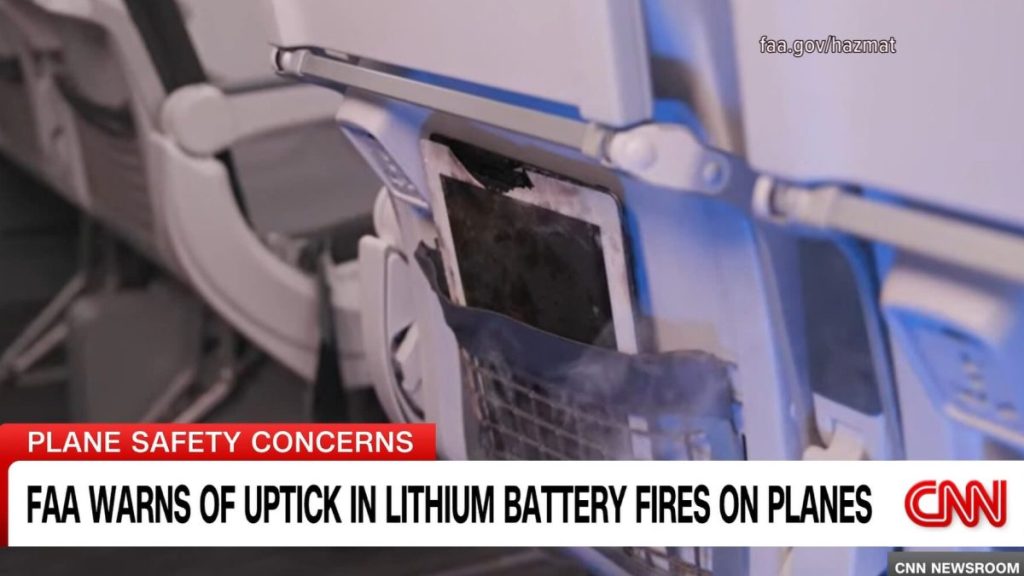
Smoke began curling from the back of the cabin. Passengers, wide-eyed and alarmed, moved away from the source. A fellow traveller’s battery pack had overheated and caught fire, igniting a seat in the process. Crew members doused the device in a container of water and the pilot brought the aircraft down hard and fast at Harry Reid International Airport in Las Vegas, where fire crews were already waiting on the runway. It was, by any measure, a dramatic conclusion to what had started as an ordinary day of flying.
A Growing Crisis in the Cabin
The Las Vegas incident is not an isolated curiosity. It is the latest, most vivid illustration of a problem that the aviation industry has been tracking with rising anxiety for years. Lithium-ion batteries, found in everything from smartphones and laptops to vapes and portable chargers, have become one of commercial aviation’s most serious safety concerns. Jonathan Nicholson of the UK’s Civil Aviation Authority (CAA) put it plainly: for the airline industry, lithium-ion batteries are “if not number one, within the top three risks”, and have held that position for several years running.
The numbers support the anxiety. Power banks and vapes are now considered the leading sources of fire risk on passenger aircraft. The threat is not theoretical. An Air Busan aircraft was destroyed entirely following a battery-related fire, a catastrophic loss that sent a chill through the industry and prompted urgent conversations about what passengers are allowed to carry, and where.
Why Lithium-Ion Batteries Are So Volatile at Altitude
Lithium-ion cells are energy-dense by design. That is precisely what makes them so useful and, under certain conditions, so dangerous. When a cell is damaged, improperly manufactured, overcharged, or simply ageing, it can enter a state known as thermal runaway, a chain reaction in which the battery generates more heat than it can dissipate. Temperatures can climb to several hundred degrees within seconds. The fire that results is notoriously difficult to extinguish with conventional methods, burns intensely, and can reignite even after it appears to be out.
On the ground, a battery fire in a bag or a pocket is a serious but manageable event. At 35,000 feet, travelling at around 900 kilometres per hour, the calculus changes entirely. Crew options are limited. Response time is compressed. And the consequences of losing control are catastrophic.
The Seat Gap Problem
One of the more insidious risks involves devices sliding between or beneath aircraft seats. The gap between a seat cushion and the frame can trap a phone or small device and, if the seat mechanism is then adjusted, crush the battery. A crushed lithium-ion cell is a fire waiting to happen. Airlines have been urging passengers not to attempt to retrieve devices that fall into seat gaps themselves, instead, calling for crew assistance, precisely because the act of fishing around for a dropped phone can make a dangerous situation far worse.
Checked Luggage: An Even Bigger Problem
The warnings about checked baggage are particularly urgent. When a lithium-ion device catches fire in the cabin, crew can see it, respond to it, and fight it. When a fire starts in the cargo hold, detection is slower and suppression far more difficult. This is why aviation regulators around the world advise, and in many cases require, that lithium-ion devices travel in the cabin rather than in checked bags. A power bank in your suitcase is not just an inconvenience to airport staff: it is a genuine hazard at altitude.
What Airlines Are Doing, and What Passengers Must Know
The response from airlines has grown more assertive. Safety briefings now frequently include specific warnings about battery-powered devices. Gate announcements remind travellers to keep power banks in carry-on luggage. Some carriers have introduced restrictions on the watt-hour capacity of batteries permitted on board. And crew training has been updated to include protocols for dealing with thermal events involving consumer electronics.
But regulation can only do so much. The real variable is passenger behaviour. Every year, millions of travellers board aircraft with ageing, third-party, or uncertified battery packs, cheap chargers bought online that have never been tested to any meaningful safety standard. A power bank that cost the equivalent of a few dollars on an e-commerce site may look identical to a certified product but behave very differently when subjected to the pressures of flight.
Vapes present a slightly different but equally pressing issue. Most vaping devices use lithium-ion cells, and because they are small and often forgotten in jacket pockets, they are easily overlooked during security checks. Regulations in many countries prohibit using vapes on aircraft, but the battery risk exists regardless of whether the device is being actively used.
The Industry’s Uncomfortable Reality
Aviation has always managed risk through rigorous systems, redundancy, and protocol. But lithium-ion batteries represent a particular challenge because they are everywhere, they are personal, and the passengers carrying them rarely think of themselves as carrying a hazard. The Air Busan disaster, Wodecki’s Las Vegas experience, and the CAA’s frank assessment all point to the same uncomfortable truth: the single most dangerous item on many flights today is not a restricted substance or a prohibited weapon. It is sitting in your jacket pocket, quietly charging your phone.
The industry is caught between the convenience that passengers demand and the safety standards that flying requires. Until battery technology itself evolves, whether through solid-state alternatives or other innovations, the gap between those two realities will need to be managed very carefully, at 35,000 feet, with limited options and very little margin for error.
So, next time you toss a power bank into your bag before heading to the airport, it might be worth asking yourself: do you actually know what is inside that charger, and when did you last check whether it still meets safe operating standards? Your fellow passengers are counting on the answer being yes.