






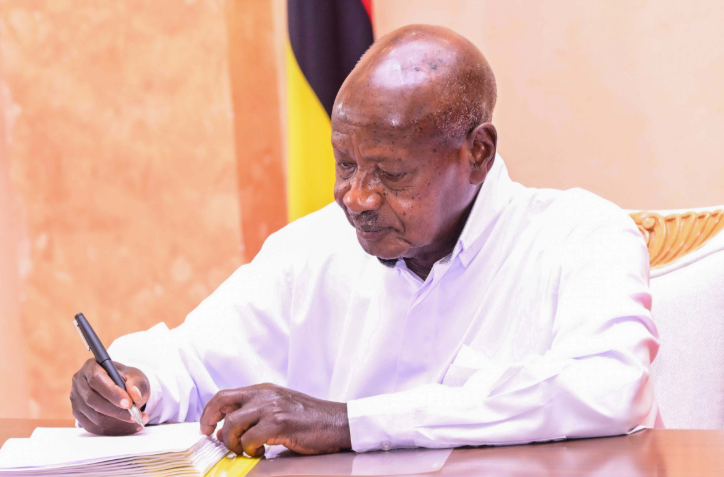
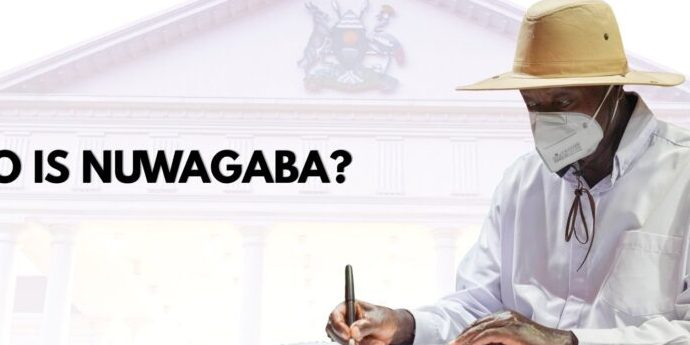
President Yoweri Museveni stepped firmly into one of Uganda’s most charged public debates this week, defending his personal intervention on behalf of Stephen Nuwagaba, a young man he described as a victim of torture and mistreatment carried out by elements within the country’s own security apparatus. The statement, lengthy and combative by any measure, also took direct aim at veteran journalist Andrew Mwenda, whom Museveni accused of distorting the facts and pulling public attention away from far more serious questions about corruption and misconduct inside certain security agencies.
A Presidential Statement With Real Weight
Museveni’s decision to weigh in personally was striking on its own. Heads of state do not typically issue detailed, named rebuttals to individual journalists. The fact that he did signals that the Nuwagaba case has touched something deeper in Uganda’s political anatomy than the average security incident.
According to NTV Uganda’s reporting, the President confirmed that Nuwagaba had approached him as someone who had suffered abuse at the hands of security personnel. Museveni said the young man received medical treatment both locally and abroad, and that formal investigations had been opened into claims that specific security operatives were responsible for the alleged abuse.
That last part matters. Investigations inside Uganda’s security sector are not a given. They are often promised, rarely concluded, and even more rarely publicised. A sitting president publicly committing to one, and then attaching his name to the outcome, raises the stakes considerably.
The Mwenda Dimension
Andrew Mwenda is not a peripheral figure in Ugandan public life. He is one of the country’s best-known commentators, a founder of The Independent magazine, and a man who has spent decades shaping how Uganda’s educated class consumes political information. His views carry weight, which is precisely why Museveni chose to address him directly rather than let his critique stand unchallenged.
Museveni’s charge was pointed: Mwenda, he argued, had misrepresented the Nuwagaba situation and, in doing so, had helped muddy waters that the President felt needed to remain clear. The underlying message was that focusing on the optics of presidential intervention, rather than the substance of alleged torture by security forces, was a disservice to the public and, frankly, a distraction from accountability.
Whether one agrees with that framing or not, it places Mwenda in an uncomfortable position. If the core allegation of torture holds up under investigation, then criticism of Museveni’s intervention becomes harder to sustain on principle. If it doesn’t, the President will have spent significant political capital on a case that backfires.
Torture, Accountability, and Uganda’s Ongoing Security Question
The warning Museveni issued to Uganda’s security agencies was unambiguous. Torture, extrajudicial actions, and abuse of power will not be accepted. Those are strong words, and they echo commitments Uganda has made under international human rights frameworks, commitments that critics have long argued are honoured more on paper than in practice.
Uganda’s security sector has operated in a complex space for decades. The same agencies credited with maintaining relative stability in a difficult regional environment have also attracted persistent allegations of unlawful detention, physical abuse, and operating outside civilian oversight. This tension is not unique to Uganda, but it is particularly sharp in a country where the presidency and the military have been so closely intertwined for so long.
What makes Museveni’s statement notable is that it does not simply defend the security services or wave away the allegations. Instead, it acknowledges a problem, names it as corruption and misconduct within specific elements, and frames the Nuwagaba case as evidence of exactly that. That is a more nuanced position than many expected, and it puts the burden squarely on the investigating bodies to follow through.
What This Means for the Broader Conversation
Uganda heads into the next electoral cycle with a political environment that is already tightly wound. Questions about who controls the security forces, how they treat ordinary citizens, and whether oversight mechanisms have any real teeth are not abstract. They affect real people, people like Stephen Nuwagaba, who reportedly had to travel abroad for medical treatment after an encounter with state agents.
That detail alone should give every Ugandan pause. A young man allegedly tortured, seeking treatment outside his own country, and requiring the intervention of the head of state just to get there. If that is the baseline experience, the system has failed well before anyone gets to a press statement or a media debate.
Museveni’s willingness to acknowledge that failure publicly, even while using it as a cudgel against a critical journalist, does open a door. The question is whether anyone walks through it. Will the investigations into the security personnel involved produce results? Will those results be made public? Will anyone be held to account in a way that creates a genuine deterrent?
History, in Uganda and across the continent, offers reason for caution. Presidential statements have launched investigations before. Those investigations have, with regularity, disappeared into institutional silence. The Nuwagaba case may be different, given the level of public attention and the personal credibility Museveni has now attached to the outcome. Or it may not.
A Story Still Being Written
For now, this is a story with no clean ending. A young man alleges torture. A president says he believes him and has acted. A respected journalist says the framing is wrong. An investigation is reportedly underway. The public is watching.
What Uganda gets out of this moment depends entirely on what happens next. Not in the press conferences or the social media debates, but in the actual process of investigation, evidence, and consequence. That is the only measure that will ultimately matter to Stephen Nuwagaba, and to every other person in Uganda who has ever found themselves on the wrong side of a uniform with no one powerful enough to take their call.
So here is the question worth sitting with: when a president has to personally intervene to ensure a torture victim receives care and an investigation is opened, what does that say about the systems that were supposed to handle it without his involvement? And more pressingly, what changes if he hadn’t?