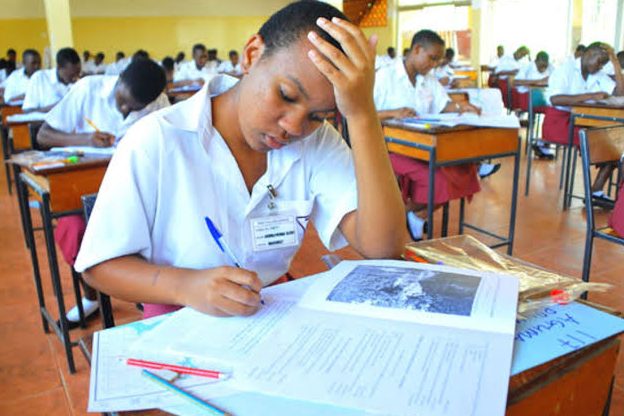
Uganda’s education calendar has reached a decisive milestone. The Uganda National Examinations Board, widely known as UNEB, has confirmed that more than 1.6 million candidates are set to sit this year’s national examinations, a figure announced after the board formally closed its late registration window. The closure of that registration period now clears the path for the verification of candidate details, a process that must be completed before school registers are released for parental confirmation.

That number, 1.6 million, is not just a statistic. It is a snapshot of an entire generation of Ugandan students whose academic futures now hinge on what happens in examination halls across the country over the coming months. For parents, teachers, school administrators, and policymakers, this figure carries enormous weight.
What Closing the Late Registration Window Means
The late registration period exists as a final safety net for candidates who missed the standard registration deadline. Schools, private candidates, and special-needs learners often rely on this window to ensure no eligible student is locked out of the national examination process. With UNEB now having shut that door, the administrative machinery shifts into a different gear entirely.
Verification of candidate details is arguably the most painstaking phase of exam preparation. Every name, photograph, registration number, and school affiliation must be cross-checked to eliminate errors that could later cause grief, such as a student showing up at an examination centre only to find their name missing from the register. Getting this right at scale, across more than a million and a half candidates, demands serious logistical coordination.
Once verification wraps up, school registers go out for parental confirmation. This step matters more than many parents realise. It is the last official opportunity for families to flag discrepancies in their child’s details before examination cards are printed and distributed. A wrong name or date of birth on an exam certificate can follow a student for life, complicating university admissions, job applications, and official documentation. Parents should treat the confirmation exercise with urgency, not as a bureaucratic formality.
The Scale of 1.6 Million and What It Reflects
To put 1.6 million candidates in perspective, that is a number larger than the entire population of several African capital cities. Uganda’s consistent growth in examination candidature reflects a broader demographic reality: the country has one of the youngest populations on the continent, with a large cohort of school-age children moving through the education system every year.
It also reflects years of government and civil society investment in school enrolment campaigns, particularly at the primary level under the Universal Primary Education programme, and at the secondary level under Universal Secondary Education. Children who entered primary school during the early expansion years of those programmes are now old enough to be sitting O-level and A-level examinations. The 1.6 million figure is, in many ways, the harvest of those earlier enrolment drives.
According to NTV Uganda, the announcement came directly after UNEB concluded the late registration exercise, with the board now moving into the candidate verification stage ahead of the register release.
Pressure Points for Schools and Teachers
A candidature of this size does not sit in a vacuum. Behind each of those 1.6 million registrations is a school, a set of teachers, and a classroom that has been preparing students for months, sometimes years. The pressure on educators is real and it is building. Teachers at both primary and secondary levels are working against a backdrop of resource constraints, large class sizes, and in some cases, incomplete syllabi coverage due to disruptions that have affected school calendars in recent years.
School administrators, for their part, are juggling the logistical demands of ensuring that every candidate has the correct documentation, that examination rooms are arranged to meet UNEB standards, and that invigilators are properly briefed. Any slip in that chain has consequences that ripple outward to the candidates themselves.
What Candidates Should Be Doing Right Now
For the students at the centre of all this, the message is straightforward: the administrative side is UNEB’s job. Your job is preparation. With the registration phase closed and the exam season drawing closer, the most productive thing any candidate can do is commit to structured revision, identify weak subject areas, and seek support from teachers rather than waiting for the exam room to reveal the gaps.
Past papers remain one of the most reliable revision tools available. They offer a window into how UNEB frames questions, what topics tend to recur, and how time should be allocated during the actual examination. Libraries, online platforms, and school resource centres all offer access to these materials.
Looking Ahead to Results and What They Represent
When results eventually come in, the numbers will be analysed, debated, and used to shape education policy. Pass rates, grade distributions, and subject-level performance data will all feed into national conversations about curriculum quality, teacher training, and resource allocation. Every percentage point in those results represents thousands of individual stories: students who beat the odds, students who fell short of their potential, and students for whom a single exam outcome will redirect the trajectory of their lives.
That is the weight that rests on this season. And it begins, quietly but definitively, with a list of 1.6 million names.
As Uganda gears up for what may be its largest national examination season to date, the question worth sitting with is this: is the country’s education infrastructure, from teacher quality and school resources to examination logistics and post-results support, genuinely ready to serve every single one of those 1.6 million young people as well as they deserve?