



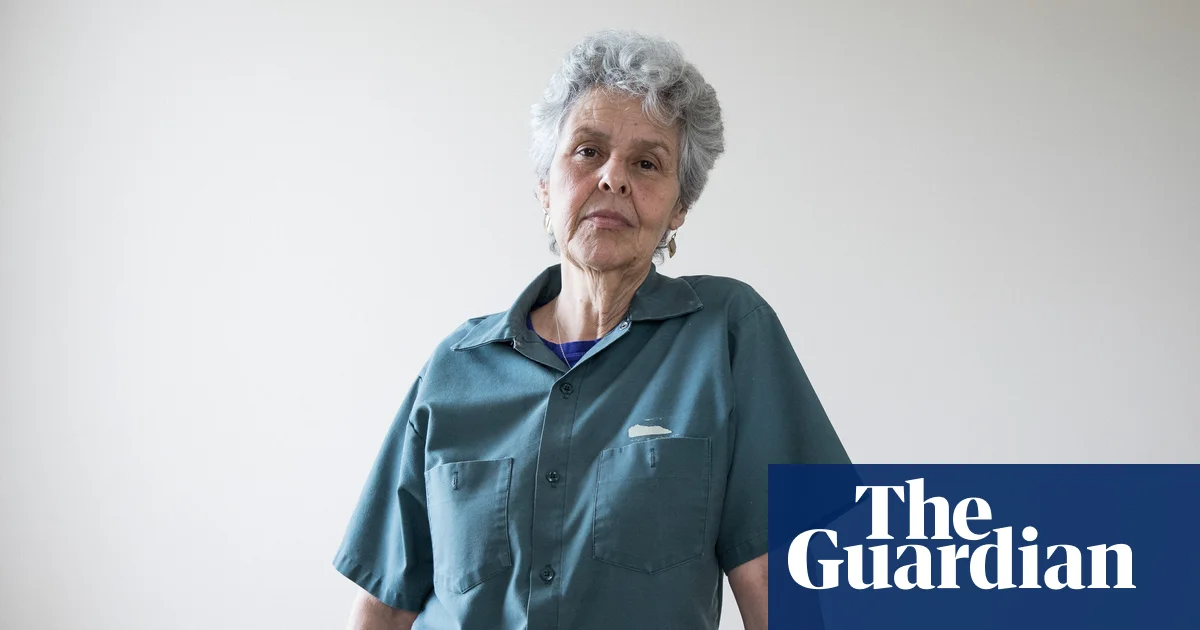
A coalition of human rights advocates, legal figures, and celebrated names from British theatre is pressuring the Home Office to reverse its refusal to grant a visa to Judith Clark, a 77-year-old American woman who was once a member of the radical 1970s group the Weather Underground and who has since built a widely recognised record of personal transformation and rehabilitation advocacy.
Clark was invited to the United Kingdom by the Royal Shakespeare Company to speak about restorative justice, drawing on her experience of incarceration and the inner work she undertook across decades spent in prison. The Home Office, however, denied her entry. The decision has now drawn vocal opposition from figures including the barrister and life peer Helena Kennedy, actor Harriet Walter, and theatre director Phyllida Lloyd, all of whom have written urging the government to reconsider.

Who Is Judith Clark?
Clark’s name carries weight in American criminal justice circles for reasons that go well beyond her radical past. She was convicted in connection with a 1981 armoured car robbery in New York that resulted in deaths, a crime that brought her a sentence of 75 years to life. Over the following decades, she became known inside prison walls and eventually far beyond them as someone who had genuinely confronted the consequences of her actions, worked extensively with other incarcerated people, and transformed herself into a figure cited frequently in conversations about what meaningful rehabilitation actually looks like.
She was granted parole in 2019 after then-Governor Andrew Cuomo commuted her sentence, a decision that itself generated significant public debate in the United States. Her release was not a quiet one. It landed in the middle of an already charged national conversation about criminal justice reform, and Clark stepped into that conversation thoughtfully rather than defensively.
The Theatre Connection That Made Her Case Visible in Britain
Clark’s story crossed the Atlantic in a particularly striking way through the work of actor Harriet Walter. Walter’s acclaimed portrayal of prisoners in the Donmar Warehouse all-female Shakespeare trilogy drew directly from Clark as an inspiration, with Clark’s presence informing Walter’s performances as Brutus in Julius Caesar and Prospero in The Tempest. That artistic lineage gives the current visa refusal a particular irony: a woman whose lived experience shaped some of British theatre’s most discussed recent work is now being told she cannot set foot in the country that celebrated it.
The RSC’s invitation was, by any reading, a serious and considered one. Speaking about restorative justice at the invitation of one of the world’s most prestigious theatre companies is not a casual appearance. It signals institutional confidence in Clark’s credibility as a voice worth hearing. The Home Office’s refusal cuts directly against that judgment.
What the Campaigners Are Arguing
Those urging Home Secretary Shabana Mahmood to overturn the decision are making a straightforward case: that decades of demonstrated rehabilitation ought to carry weight in how governments assess individuals. The argument is not that Clark’s past should be erased or minimised. It is that her past, and what she has done with it, are precisely the point.
According to reporting in The Guardian, Helena Kennedy, Harriet Walter, and Phyllida Lloyd are among those who have signed the appeal, lending the campaign a combination of legal, cultural, and artistic authority that is difficult to dismiss as fringe or sentimental.
The framing matters. Restorative justice, the subject Clark was invited to address, is not a radical concept in contemporary criminal justice discourse. It is actively discussed in British policy circles, courts, and prisons. Bringing in someone who has lived its principles from the inside rather than studied them from the outside is exactly the kind of direct testimony that advocates of criminal justice reform argue is most valuable.
The Broader Question About Rehabilitation and Border Policy
Britain’s visa system allows the Home Office significant discretionary power when it comes to individuals with serious criminal convictions abroad. That power exists for understandable reasons. But the Clark case raises a legitimate question about whether those discretionary assessments adequately account for elapsed time, demonstrated change, and the specific purpose of a visit.
There is a difference between refusing entry to someone who poses a current risk and refusing entry to a 77-year-old woman travelling to speak at a cultural institution about her journey from violence to accountability. Treating those two scenarios with the same bureaucratic logic produces outcomes that are, at minimum, worth scrutinising publicly.
The campaigners are not asking for the rules to be rewritten. They are asking for judgment to be applied, and for the rehabilitation that those rules claim to value to actually count when real decisions get made.
What Happens Next
The ball sits with the Home Office. A spokesperson has not publicly responded to the campaign at the time of writing. Whether Mahmood’s office engages with the substance of the appeal or maintains the refusal will say something meaningful about how the current government weighs its stated commitment to criminal justice reform against the procedural instincts of border control.
Clark, for her part, has spent a long time being patient. She waited years for parole. She has spent the years since building a credible public record. Waiting for a visa decision, however frustrating, is unlikely to be the most difficult thing she has had to sit with.
But the people campaigning on her behalf are right to press the point publicly. These are exactly the kinds of cases where visibility creates accountability. And the question of whether rehabilitation actually means anything to the institutions that claim to believe in it deserves a clearer answer than a quietly refused visa.
So here is the question worth sitting with: if a society says it believes in rehabilitation, but then bars the rehabilitated from participating in that society’s cultural conversations, what does it actually believe?